


6th MVF Congress Workshop: “Vaccination Pact for Germany”
20.12.2023 08:41
In keeping with the spirit of Chancellor Olaf Scholz, who in his 2021 New Year's address on Covid-19 called for: "Let's do everything together." On April 24, 2024 / online via Zoom.
Managers and those responsible
- Self-help / patient associations
- Health insurance (GKV / PKV)
- Institutions of self-government
- Patient representatives
- Doctors and pharmacists
- Health Professions
- Supply manager
- Federal and state politics
- Pharmaceutical and medical technology companies
- Service providers and consultants
Greetings from the editor

Ladies and Gentlemen
Dear Colleagues,
The WHO has set vaccination targets for many years. However, achieving them seems a long way off. Vaccine hesitancy is spreading, despite the current severe cold wave, in which COVID-19 plays a significant role. Nevertheless, vaccination rates for influenza, COVID-19, and all other vaccine-preventable diseases remain unsatisfactory. There is even a National Vaccination Plan for Germany, according to which an influenza vaccination rate of at least 75% is to be achieved.
"Corona fatigue leads to vaccine fatigue." This is the headline of the German Federal Association for Health Information and Consumer Protection (BGV) in a recent press release (1). It complains that, as the incidence of coronavirus has declined, vaccination against coronavirus has long since ceased to be an issue for many, but that this also applies to other important vaccinations: "Corona fatigue is accompanied by a veritable vaccine fatigue."
Vaccination targets, vaccination agreements, and awareness campaigns certainly help, but relatively little; low-threshold vaccination offers, such as those we discussed at our last specialist conference in 2023 (2), are more helpful.
Now Germany needs the next step: Who is responsible? Or better: Who takes responsibility and also
Are we fulfilling our duty to implement the extremely sensible vaccination recommendations of the WHO, the STIKO (Scientific Institute for Health and Safety), and the SIKO (Institute for Health and Safety)? One thing is clear: so far, the voluntary approach by healthcare stakeholders hasn't quite achieved what we would have hoped. Otherwise, the actual vaccination rates would be higher, even if they vary regionally. However, they all have one thing in common: They are all far too low. For now!
What needs to be done? Who is responsible? Who will take on a coordinating role? How can we improve things?
These and similar questions will be addressed at the "Vaccination Pact for Germany" conference, to which I cordially invite you. In the spirit of Chancellor Olaf Scholz, who, in his 2021 New Year's address on Covid-19, called for: "Let's do everything together" (3).
With kind regards
Your professor Dr. Reinhold Roski
Publisher “Monitor Health Services Research”
“
Literature:
1 https://bit.ly/3j778xn
2 https://t1p.de/ygg0z
3 https://t1p.de/hble9
Contact
If you have any questions about the workshop congress, please contact Anke Heiser
- per email to [email protected] or
- by phone at 0228 – 76368033
Speakers & Lectures
Here you will find the speakers (in chronological order) of the conference workshop "Vaccination Pact for Germany," which will take place online on April 24, 2024, from 2:50 p.m. to 6:00 p.m. The presentations and their audio recordings will be available to anyone interested (once the speakers have approved them). We would, of course, welcome any new subscribers who would thereby demonstrate that our work is valued. The documentation of the online event can be found in the March 24 issue of MVF and in an 8-page special edition.
Speakers
Prof. Dr. Reinhold Roski,
MVF editor
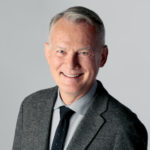
Theme
Welcome and moderation
Speech
5 MVF Vaccination Congresses: a synthesis: We need a social and, above all, political consensus to increase vaccination rates for all vaccine-preventable diseases
Speaker
Dr. Michael Hubmann, Professional Association of Pediatricians and Adolescent Doctors
(BVKJ)
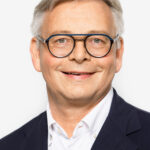
Theme
Overcoming vaccine fatigue – What concrete solutions and political demands does digitalization offer (example: app to increase HPV vaccination rates) – results of an RWD analysis
In 2018, the WHO warned of rising infection rates internationally for diseases that are demonstrably preventable through vaccination (Leong 2018). In Germany, the Robert Koch Institute's (RKI) vaccination surveillance has shown steady and even increasing vaccination rates for the vaccinations recommended by the STIKO for childhood and adolescence since 2008 (Rieck et al. 2022). But even in our modern vaccination system, vaccinations are increasingly being questioned, not least due to the coronavirus pandemic. Germany is lagging far behind the WHO's vaccination targets, especially with booster vaccinations and vaccinations for adolescents and adults.
Vaccination rates are relatively high for diseases with complicated courses and for basic immunizations before school entry, which are closely accompanied by preventive examinations. Nevertheless, there is room for improvement in the vaccination of children and adolescents in Germany. The lack of vaccination, especially in young children, is often justified by the fact that the corresponding diseases rarely have serious courses or do not lead to complications or secondary diseases. This is the case, for example, with rotaviruses, where parents are more likely to forgo vaccinating their infants. The lack of an additional injection or the use of the 5-dose combination explains the lower vaccination rates for hepatitis and pneumococcus.
The situation is quite different for HPV, however, where significantly lower vaccination rates are known and significant gender differences in vaccination rates are evident compared to the other vaccinations recommended by the STIKO. Here, vaccination rates are far below the targets of the WHO and the EU Commission. In addition to decreasing doctor visits from the age of 9 (Poethko-Müller et al. 2018), aspects such as trust, education, but also effort and cost-benefit considerations play a key role in the HPV vaccination decision (Betsch et al. 2019; Heinemeier et al. 2021).
Using the example of HPV vaccination and the results of an RWD analysis, concrete solutions for overcoming vaccination fatigue are presented and necessary prerequisites for achieving high HPV vaccination rates in Germany are discussed.
Speaker
Dr. Cornelia Hösemann, Saxon Vaccination Commission (SIKO)

Theme
How can the vaccination rates recommended by STIKO and SIKO be achieved? (working title)
Speaker
Dr. Julia Lämmel, AOK PLUS
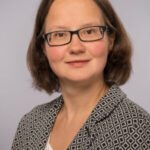
Theme
Impulse lecture: What obstacles are there to the implementation of Section 132e SGV V?
Speaker
Susanne Dolfen, Pharmacist. Head of the Pharmaceuticals Department
AOK Saxony-Anhalt

Keynote speech (without charts)
What obstacles are there to the implementation of Section 132e SGV V?
Congress Chair
Prof. Dr. Reinhold Roski
Publisher “Monitor Health Services Research”