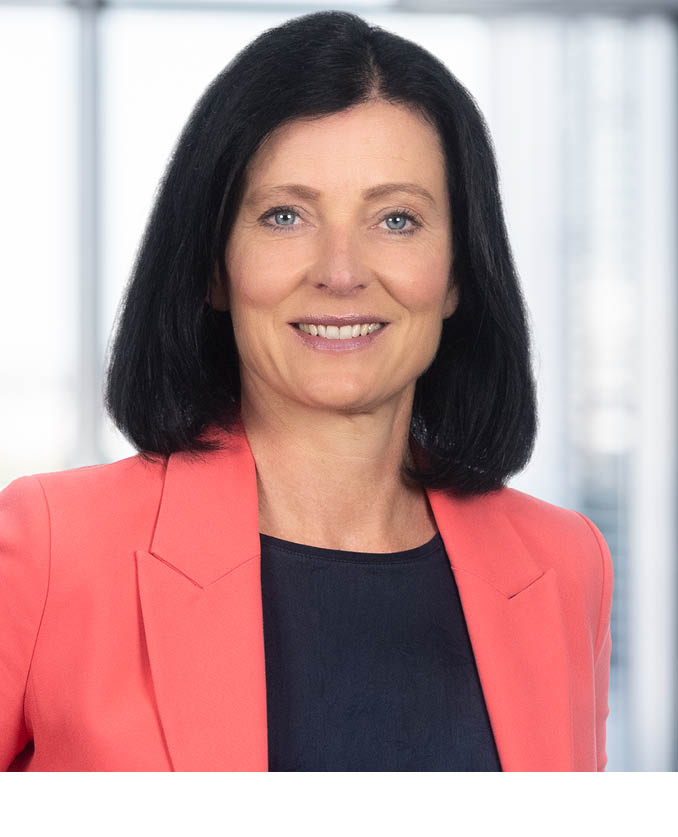
“Enabling more regionality with a coalition of the willing”
In the cover interview with “Monitor Healthcare Research”, Daniela Teichert, the CEO of AOK Nordost, not only dispels narratives such as a shortage of doctors and deaths in hospitals. She also uses many examples to show what a large, responsible health insurance company can do for the benefit of its insured people in their respective region, if they want to. Your petition: “The DNA for more regionality should also be characterized by a focus on real care problems, on people, on patients at the center of improvement efforts and on results orientation. Those who focus primarily on costs will lower quality – those who focus on quality will lower costs.”
>> Ms. Teichert, the number of clinics and their accessibility, especially in rural areas, have been critically monitored since the debate about minimum quantities for the special care of extremely premature babies. Last year, when the WiZen study on the effectiveness of care in oncology centers was published, it was said that such results would give extreme parties even more support. The background to all this is that the results of this project, which is funded by the Innovation Fund and has a positive resolution, almost inevitably suggests that cancer patients should be directed to specialized centers. The patients there would have massive survival advantages, which would mean that hospitals with unsatisfactory outcomes would have to close. As the head of the largest health insurance company in the north-east of the Federal Republic, what do you say about this?
The distances in large states such as Brandenburg or Mecklenburg-Western Pomerania are already rather long. Therefore, for many patients, little will change as a result of the new regulations on minimum quantities. For example, anyone who suffers from cancer in rural areas and cannot be treated on an outpatient basis will have to take a longer journey to a specialized treatment center. But it's worth it: in return, the likelihood of complications from their treatment is reduced for these patients. And the likelihood of dying from the disease also decreases. For example, according to a large study, breast cancer patients are twelve percent more likely to survive if they are treated at a certified breast cancer center. And that is certainly more important for most affected patients than treatment that is closer to home but of lower quality.
There is also another aspect: the discussions about distances and routes are primarily led by residents who do not seem to have to make use of such treatments at the moment. If they are affected by such illnesses at some point, their view of the question of distance may also change. I do think that these affected people also accept a slightly longer journey in search of the best treatment. The available data already shows us this “voting with your feet”.
This shows the tension between, on the one hand, providing care that is as close to home as possible, but on the other hand, which should be of the highest possible quality. A claim that is held particularly high in Germany.
In order to bring about meaningful changes here, the central prerequisite is an exchange with the other participants in the healthcare system about specific healthcare issues on site. A good example are the contracts with a dozen doctor networks, which can also be expanded into collaborations with other regional healthcare providers. In addition, we have successfully concluded special contracts and innovation fund projects with hospitals and general practitioners and also involved nursing facilities. For example, we are also involved in a joint venture with KV Brandenburg for innovative healthcare in the state of Brandenburg, for which we founded IGiB GbR specifically. One successful result of this collaboration so far is the IGiB-StimMT flagship model in Templin, which is a pioneering model for outpatient and inpatient care.
Briefly about the Templin flagship project of structural migration: How can things continue after the KV Brandenburg has left?
If you look at the factual content, KV Brandenburg is apparently not concerned with an exit, but rather with a switch. There are opportunities to answer the questions raised within the given framework of the consortium - the Sana Hospital Templin, the KV Brandenburg, the doctor network "Gesund in Templin" and the mayor of the city of Templin - for the Templin central health region. We see a good opportunity for the members of the consortium to discuss and implement possible solutions in discussions with each other at short notice.
What are the lessons learned from such collaborations?
The improved exchange through such collaborations makes us as AOK Nordost smarter. If doctors say in a confidential conversation, for example, that healthy diabetics are more welcome in the DMP or that for business reasons they have to devote their time to healthy patients in an inappropriate way and cite business reasons for this, then this is the case Questions. However, these have little or nothing to do with a general “de-economization” of the healthcare system. Rather, these questions relate to whether there is something wrong with our healthcare system's structures, processes, collaboration and - above all - incentives.
And what does the other side of the coin look like?
Of course, there are also hurdles and resistance to these cooperative approaches. However, this often does not lie with the people with whom we talk about solutions, nor with the different interests that we reconcile with our partners in contractual business. Difficulties often arise due to the given regulations. That's why we have to dare to be even more regional in Germany, we have to enable coalitions of the willing, set up free trade zones in SGB V and ensure greater use of local expertise.
What does that mean specifically?
For the positioning of health insurance companies in the supply market, this means that they move closer to the specific supply situation in the regions. To achieve this, the health insurance companies must sharpen their planning accordingly and develop concrete solutions with their partners in the region. An example of this is the Cardiolotsen project that we developed together with Vivantes. The cardiologists contact the patients on site in the hospital immediately after heart surgery and provide them with support and advice for a year after they are discharged, so that they have to go back to hospital less often.
Of course, there are still central regulations. Hardly anyone will have the idea of suddenly regulating the approval and prices of medicines and other products individually at regional level. But it should be allowed to ask whether all care structures and processes need to be regulated down to the last detail at the central level. We see that this is often the subject of criticism, which often results in clear dissatisfaction. On the other hand, despite healthcare becoming increasingly hybrid, health is still a local good. This applies to the fight against disease as well as to the resources that can be used to maintain health.
Deficits in health care are repeatedly criticized. Which are they? And is there an urban-rural difference between, on the one hand, so-called rural areas and structurally weak regions as well as medium-sized centers and metropolises and urban centers?
Almost all of us know this: first you wait a long time for an appointment with a specialist and when it finally takes place, you usually don't get there on time and instead sit in the waiting room for hours. I can well understand that patients still see potential in coordination between general practitioners and specialists, but also between general practitioners, hospitals and care providers. I don't even want to talk about double or triple anamnesis processes and diagnoses here. And these descriptions reach us not only from so-called rural areas or structurally weak regions, but also from cities and metropolitan areas. That is why, with our “Health Care 2030” program, we are committed to making care regional, holistic and patient-oriented. The AOK Nordost is strongly committed to this and is campaigning for everyone involved to finally dare to make a move and organize health care in a much more networked, interdisciplinary and therefore efficient manner and close to home.
Is a possible solution for care in rural areas a greater focus on the outpatient sector?
In addition to the exchange with our partners, we try in a variety of ways to improve our knowledge of healthcare and expand our expertise. For example, when analyzing treatments in hospitals, we look at the question of whether the patients treated there could also have been treated on an outpatient basis. There are various research options to answer this question; One of them is the approach of the so-called outpatient sensitive hospital cases (ASK), which was developed by Professor Sundmacher, among others. Here it becomes clear that the proportion of hospital cases that could in principle have been treated on an outpatient basis is very often over 20 percent and ranges up to 60 percent. And even if we change the direction and look at the hospital cases from the AOK-insured population in the middle areas, it becomes clear that often more than one in five hospital cases could in principle have been treated on an outpatient basis. Despite all possible criticism of such approximate indicators: There are considerable opportunities and potential here!
Does a health insurance company have to be regionally anchored in order to ensure the best regional care? What requirements are needed?
If you ask about the requirements - on the insurance side they are not so bad, because some health insurance companies still have “regional references” in their DNA from their history: operational focuses, regional craft-related focuses or even references to municipalities and districts. But that's not enough. More building blocks need to be added. Let me answer it with a small advertising block for AOK Nordost. Last month, this year's MSD Health Awards were presented in Munich for outstanding changes in the German healthcare system. According to the jury, their award is based on three points in particular: Award-winning solutions must address real deficits in care, they must focus on the patient and they must have proven their results in an independent evaluation. Since 2014, six AOK Nordost projects have been included in the competition, they have been on the shortlist of the last ten projects six times, they have been awarded one of the top three prizes four times, including first prize twice. So: The DNA for more regionality should also be characterized by a focus on real care problems, on people, on the patient at the center of improvement efforts and on results orientation. And perhaps something else that we have picked up from competent doctors: Those who focus primarily on costs will lower quality - those who focus on quality will lower costs.
What do you specifically expect from health policy and especially from Federal Health Minister Karl Lauterbach at the “halfway point” of the current government period?
My wish in this regard is directed not only to the Federal Minister of Health, but above all to the legislator, to the Bundestag. My wish based on the experiences of the last three or four years is not to regulate everything in the area of healthcare centrally and in detail, but rather to increase the space for decentralized solutions and to create clear responsibilities for the results.
An equally frequently cited narrative is the aging of the practicing medical profession, which often leads to a shortage of doctors. Is that actually the case? Do we really have too few doctors in the three federal states in your health insurance fund, Berlin, Brandenburg and Mecklenburg-Western Pomerania?
Of course, the boomer generation also exists in the medical profession. And it cannot be denied that the focus of doctors on a so-called “work-life balance” has certain effects. But we should also take note of the facts here. In 1990 there were 238,000 working doctors in Germany, twenty years later in 2010 there were 340,000 and in 2022 there were even 421,000 doctors. Between 2012 and 2021, around 10,000 women and men completed their medical studies every year. During the same period, the number of doctors working in outpatient care rose from 144,000 to almost 164,000.
If we take a complementary look at the hospital landscape...
...then a similar mock battle can be observed in the debate about hospital care. This creates the impression that a reduction in hospital capacity in Germany massively endangers healthcare. We urgently need changes here too – not only to maintain and stabilize care, but above all to improve patient care. Compared to the Netherlands, Germany has more than twice as many hospital beds and almost three times as many cases discharged from a hospital. Is it really that dangerous to live in Germany? I think no. And: In other European countries, patients are quite willing to accept longer travel times to the nearest hospital - if they receive better quality care there. So we shouldn't just look at the aging of the medical profession and derive worrying narratives from it, but rather ask ourselves whether the real challenge is not outdated structures, excessive regulations, unused digitalization potential and, above all, false incentives.
We live in a time of dual demographics. Not only are those treating and caring for people getting older, but also those insured, with more and more patients potentially suffering from multiple illnesses. How does a fund like AOK Nordost adapt to foreseeable problem areas and the associated challenges?
In my opinion, the guidelines for the development of our health care have been known for a long time and have been mentioned many times, not only by the AOK, since the turn of the millennium. However, the challenge that more and more people are getting older seems to have only now reached the broader consciousness of the Republic. This developing imbalance between the increasing demand and the limited supply of healthcare services cannot be solved by a single health insurance company. This needs to be thought about at all levels of society. Of course, one should hope for positive effects of digitalization. And of course, targeted immigration can also represent a solution here. But perhaps it is also about clarifying how much financial officials we as a society want to devote to the production of justice and how much people should care about maintaining health.
If it weren't for the excessive bureaucracy.
Everyone who has to do with illness and health experiences this aspect almost every day: There are problems in many areas of the healthcare system. Bureaucratic regulations, inconsistent processes, organizational deficiencies, incorrectly set incentives for the provision of services - if you look closely, it often becomes clear that we can save on some personnel deployment without any loss of quality and that significantly better quality of care can be achieved with the existing staff. In order to make progress here, the various current legal reform efforts in the health sector should
When it comes to health care, the question of how care can be improved and avoidable use of resources can actually be avoided should be a central component. Perhaps the new regulations can be examined for their contribution to “demographic resilience”. Simple and digitalizable laws are needed here in order to contain the burden of too many, overly complicated regulations as currently described by the Federal Chancellor.
What does that mean specifically for a health insurance company like AOK Nordost?
Such a development then also enables the health insurance companies, as representatives of the interests of insured persons and patients, to get involved more easily and better. After the AOK Nordost has long been committed to determining the future demands on healthcare, AGENON and IGES have been carrying out a needs assessment in the regions of Brandenburg since October 1st of this year on behalf of the state of Brandenburg. We expect that the actual needs will be reflected today and taking demographic developments into account, for example in five and ten years, and that the offers will then be geared towards this from the perspective of the insured and their living environment, i.e. in their region. Technically speaking, the middle ranges should be the basis and the principle of offer planning from the perspective of the insured should be: as much outpatient as possible, as much inpatient as necessary.
Furthermore, there simply needs to be more opportunities to test improvements aimed at early detection of diseases and more prevention. An example of this is the “HerzCheck” innovation fund project. The German Heart Center Berlin is investigating whether heart failure can be detected earlier: using MRIs that can be transported on trucks and bring the latest technology to rural areas. This brings with it the hope that early detection can not only reduce the individual suffering from illness, but also the resources required to combat the disease. Equipped with the right options, health insurance companies can be a driver of significant change and thus support adaptation to demographic change in the regions.
Let's look into the future, perhaps also as part of your "Health 2030" program: The morbidity orientation of risk structure compensation has long since led to a shift in competition between health insurance companies from the insurance market to the care market. How does a large fund like AOK Nordost have to position itself for the future today?
We firmly believe that the answer lies in holistic healthcare that integrates its services much better and always puts people at the center - from health promotion to all aspects of acute care and palliative care. In my opinion, it should not be important for a health insurance company in the future whether someone lives in the city or in the country and health insurance companies must be able to take care of regions in particular where more indications occur than elsewhere. In our view, the integration of services should take place via structures, indications and target groups. In the area of structures, we are working on outpatient care on the basis of our “Health 2030” program in accordance with the aforementioned principle of “as much outpatient care as possible, as much inpatient care as necessary.” This also requires changing requirements for hospital structures. When it comes to indications, we focus on “matters of the heart”, where-
The focus is on the early detection of heart failure and better care for those affected by it. Special target groups are children and people in inpatient care. But also our contract to improve the care of multimorbid patients, with which we are trying to achieve the appropriate
Supporting the DEGAM recommendation is one of them. Here, too, we get information in exchange with the specialist society, not least with regard to the quality assurance of these approaches.
One last question on a topic that is reluctant to be discussed in Germany: Pay for Result. Wouldn't it finally be time to reach a social consensus or at least discuss that patients and doctors are jointly responsible for the success of any intervention?
You are addressing a topic that is very important to me. We should pay more attention to, for example, what is achieved in the chain of diagnosis, therapy and care and what can realistically be achieved. This should become a basic approach in all of our design considerations. And we should also compare the results actually achieved with those that were actually intended to be achieved much more often and draw concrete conclusions from this as quickly as possible. It could really make sense here to tie the remuneration in the healthcare system at least partly to the result and to use this “pay for result” to also reward the healthcare providers' result-orientation. Regional free trade zones can be helpful for this approach. It is possible to act more freely there because it is possible to deviate from SGB-V regulations, which still cement structures that are too old, with the agreement of those involved locally. This requires regional associations of local service providers and a regional agreement with statutory health insurance companies. We can already use routine data to measure the quality of care in order to identify better cost-effectiveness. In order to include the patient perspective, these could theoretically be expanded to include patient-reported experience measures, or PREMS for short. Theoretical, but unfortunately not yet practical because the PREMS are not collected across the board. This can then move away from purely sectoral financing towards better integrated and more patient-oriented remuneration. <<
Ms. Teichert, thank you for the interview.
The interview was conducted by MVF editor-in-chief Peter Stegmaier.