


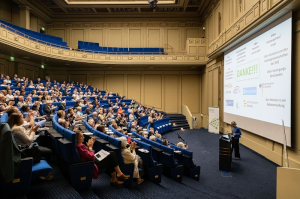
20 years of breast cancer centers – DKG certification as a model of success in oncology
20.06.2023 13:12
Breast cancer centers have been run by the German Cancer Society for 20 years. V. (DKG) certified. The certification of the breast cancer centers was initiated together with the German Society for Senology (DGS). This certification system has now been expanded to include almost all tumor types. Studies have already shown that the complex quality assurance system offers the best possible treatment for cancer patients. At the anniversary symposium in Berlin, experts came together to recognize what has been achieved and to formulate visions for the future.
“When we started the certification system twenty years ago with the certification of the first breast cancer centers, we could not yet foresee how much this would shape oncological care,” says PD. Dr. Simone Wesselmann, Head of Certification at DKG. “The successes are enormous. We're celebrating that this year. And of course we are committed to ensuring that the positive development continues in the interests of the patients.”
Certified centers are networks of inpatient and outpatient facilities in which all disciplines involved in the treatment of cancer patients work closely together. The centers cover the entire tumor-specific patient path: from early detection, diagnostics and therapy to aftercare and palliation. Studies show that the certification of cancer centers is beneficial for patients. Among other things, it has been proven that treatment in certified centers leads to significant survival advantages for patients compared to treatment in non-certified facilities, fewer complications occur and the accompanying or long-term consequences of the treatment and the disease are milder.
Learn from Hospital Reform Certification
In the future, oncological care should be provided in certified centers - according to the government commission in its third statement on hospital reform. Professor Michael Ghadimi, President of the DKG, said: “We have gained experience with the certification system for twenty years, and the legislature can and should make use of this so that patients benefit in the end.” The upcoming legislative process for hospital reform offers this opportunity ideal opportunity to implement the findings of the DKG certification system.
The system is also convincing for economic reasons. It has already been shown, as an example, for colorectal cancer centers that treatment costs in centers are lower than for treatment in non-certified facilities.
Federal Health Minister Prof. Karl Lauterbach reiterated his support for the certification system at the symposium: “The excellence of the breast cancer centers has saved the lives of many women. The good experiences with the certification system show that it is worthwhile for patients to invest in the quality of treatment. I worked intensively to introduce these certificates 20 years ago, together with the German Cancer Society. We are also following the findings of this successful model with the hospital reform: People should be able to rely on the fact that they will receive good care when they have to go to the clinic.”
Outlook at the symposium: Applying a successful model at the European level
A goal that was formulated at the symposium: to use the experiences from Germany more at a European level and thus help cancer patients across Europe. “The core of our system is universal: the treatment is based on guidelines and evidence and the focus is on the patients and their journey with the disease,” explains Professor Ullrich Graeven, spokesman for the certification commission and member of the DKG board. “These aspects are independent of the respective health system. We are confident that the quality system can be implemented in many countries.”
Another aspect that is already being used but will be further expanded in the future is knowledge-generating supply. Studies in the centers generate scientific knowledge directly from patient care. The study results are immediately applied in the centers - and thus further improve care. These promising synergies within the certification system are to be significantly expanded.