Image source: Bergmannsheil University Hospital Bochum
Opportunities and limitations of ECMO therapy for severe Covid-19
24.05.2023 13:19
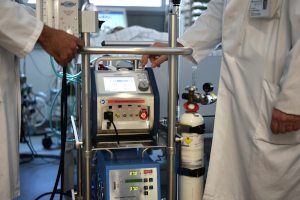
People with severe Covid-19 illness and respiratory failure were often mechanically ventilated during the corona pandemic and, in individual cases, were also treated with so-called ECMO (extracorporeal membrane oxygenation). A new multicenter study initiated and coordinated by the BG Bergmannsheil University Hospital discusses the benefits of this procedure for lung support in hospital patients in the central Ruhr area.
The working group retrospectively examined the case data of 149 mechanically ventilated Covid-19 sufferers from four locations of the University Hospital of the Ruhr University Bochum (Bergmannsheil Bochum, St. Josef Hospital Bochum, Knappschaftsklinik Bochum and Marien Hospital Herne). The results show a high mortality in the patient population under consideration. What is particularly striking is the old age of the patients and the fact that in deceased people there is a longer period of time from the onset of symptoms of the disease to hospital admission. The detailed results of the study were on April 20, 2023 in the journal “Scientific Reports” published.
- Fünf Jahre Pandemieforschung in Niedersachsen: Was haben Medizin und Gesellschaft aus der Corona-Krise gelernt?11.06.2026
Das Land Niedersachsen hat mit der Gründung des Covid-19 Forschungsnetzwerks Niedersachsen (COFONI) im Oktober 2020 Strukturen geschaffen, um die Corona-Pandemie zu bewältigen und auf zukünftige Gesundheitskrisen vorbereitet zu sein. Neuartige Krankheitsbilder wie Covid-19 und Long-/Post Covid, ...
Weiterlesen - Entwicklung der Anzahl vollstationärer Krankenhausfälle in Deutschland während und nach der Covid-19-Pandemie17.03.2026
Der Beginn der Covid-19-Pandemie bedeutete für die deutschen Krankenhäuser eine abrupte Veränderung des Leistungsgeschehens. So sank die Anzahl an Behandlungsfällen von 19,4 Millionen im Jahr 2019 auf 16,8 Millionen im Jahr 2020 und damit um rund 13 Prozent. Diese Veränderung war nicht nur ...
Weiterlesen - Warken: „Wir wollen die Versorgung von Long-Covid-Betroffenen weiter verbessern“16.03.2026
Bei ihrem Klinikbesuch in Dresden betonte Bundesgesundheitsministerin Nina Warken, wie wichtig eine bundesweit flächendeckende Versorgung für Kinder und Jugendliche ist, die an Long Covid erkrankt sind: „Durch den Aufbau von Spezialambulanzen werden junge Patientinnen und Patienten bestmöglich ...
Weiterlesen - 1. LongCARE-Symposium zeigt Fortschritte bei Forschung und Versorgung von Long Covid und ME/CFS04.02.2026
Das 1. LongCARE-Symposium hat rund 160 führende Expertinnen und Experten aus Wissenschaft, Klinik und Versorgungsforschung zusammengebracht, um aktuelle Erkenntnisse zu Long Covid, Post Covid und ME/CFS zu diskutieren. Nina Warken, Bundesministerin für Gesundheit, eröffnete die Veranstaltung ...
Weiterlesen


