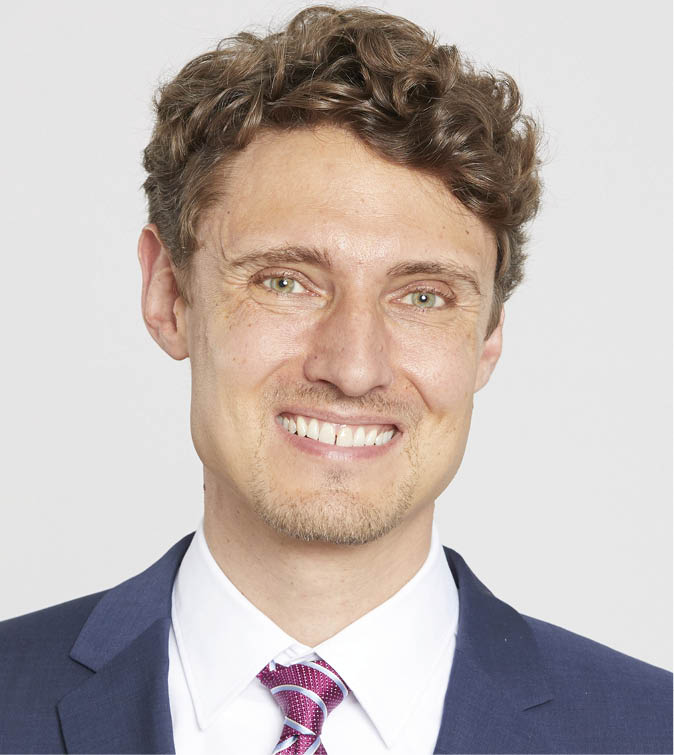
“Hospital reforms are always evolutionary processes”
Prof. Dr. Jonas Schreyögg, holder of the Chair of Management in Health Care at the University of Hamburg and member of the Expert Council for the Assessment of Developments in the Health Care System, is considered one of the most influential economists in this country. In an interview with “Monitor Healthcare Research” he has high hopes for the upcoming hospital reform, which he sees as an evolutionary step. But the litmus test is still pending that will show what will actually happen if regional hospital planning leads to the closure of entire hospitals. However, only after five or ten years will it be possible to say whether a model really works and which adjustment screws were the most effective.
>> “Science must advise politics and society transparently. This requires diversity of positions and evidence instead of eminence,” explained Bonn virologist Hendrik Streek, who has been well known since the SARS-CoV-2 pandemic – and after all also a member of the Federal Government’s Corona Expert Council – to the Tagesspiegel. Prof. Schreyögg, what experiences do you have as holder of the Professorship of Management in Health Care at the University of Hamburg, scientific director of the Hamburg Center for Health Economics (HCHE) and, on top of that, member of the expert council for assessing developments in the health care system with the topic “Evidence instead of eminence “, a dialectic that has accompanied us since the 90s? Specifically asked: When does scientific evidence make the leap into political reality?
I have the feeling that health policy - if you think back over the last ten to twenty years - is increasingly oriented towards the existing evidence. Of course there are always exceptions, but overall the direction is towards evidence-based decision making. Of course, we scientists are happy about that. But health policy is only one side of the coin, the other side is just as important, if not much more important: that of translation. The big question here is whether evidence-based health policy actually means that what is introduced is actually evidence-based.
So you see a difference between what the health
security policy based on the
existing evi-
denz decides and what will actually come into the real supply at some point later through the resulting laws?
Secure. At this interface, where intentions become reality, there are often massive distortions. But that shouldn't be surprising, because it's a big, indeed very big, step from what is agreed in a coalition agreement, for example, and what is cast into law after a democratic process, to what is actually implemented in... the practice comes. On this long journey, a variety of interests have to be taken into account and stakeholders have to be taken along with concessions of almost any kind in order to get them to cooperate. Therefore, it is usually not the case that a project, an idea or a supply
Innovations that were previously set up and evaluated by science in a clean, evidence-based manner are ultimately implemented in an evidence-based manner - that is perhaps what a scientist would imagine, but certainly not the reality.
Gerd Glaeske, who unfortunately died far too early - Professor of Health Services Research in Bremen and a member of the advisory board of “Monitor Health Services Research” from the very beginning - called throughout his life for an evaluation that takes place with the introduction of innovations and for policy impact research based on this.
We actually have a problem with this in Germany. In fact, even if a corresponding evaluation is actually required by law, it is not actually implemented that way. Many stakeholders duck away or are afraid of rigorous evaluations - this is a problem that we unfortunately live with.
Have to live? Or are there other options and paths?
Of course there are, you just have to want them from politicians.
Don't want politics?
Politicians often wanted to, but they are often very afraid of either doing something wrong or are afraid of not making innovations available to all citizens at the same time in order not to arouse discontent. In my opinion, it takes some courage to take the example of Great Britain or the USA, where regional and local pilot projects can be implemented and then evaluated against control groups, instead of rolling out interventions that are still being researched nationwide, as is often the case here.
Are you just talking about the political side here?
But no. This also happens with model projects run by health insurance companies. It would make more sense to legally stipulate from the outset that for far-reaching health policy projects that are capable of actually changing, and ideally improving, care, a randomized study with a control group must be set up at the planning stage.
For example, you are talking about the introduction of the disease
management programs.
DMP are a case in themselves, but in principle you are absolutely right. The politically formulated claim that all health insurance companies and service providers were obliged to do so created part of the problem of never being able to evaluate DMP in the context of a randomized experiment set up ex ante. There needs to be a rethink on the part of politicians, which we in the Council of Experts have repeatedly suggested.
What do you think is the reason for this resistance?
In Germany everyone always wants to please everyone. When it comes to innovations, the entire population should ideally have access to everything at the same time. This always doing everything right for everyone is largely a cultural question that we should slowly say goodbye to. I realize that this will be a long-term process. This is mainly because temporarily postponed introductions of innovations require explanation because one or more population groups have to be deprived of innovations in order to ultimately arrive at an improved version of an innovation that will then benefit everyone. Here we urgently need to discuss the principle of equal treatment and the underlying ethics.
Is this really a cultural problem? Or is it not simply the result of a health system as such?
For example, there is no American healthcare system like the German one. In the USA there are many, some of them extremely heterogeneous. It is not noticeable at all if, for example, an innovative care program is introduced in Pennsylvania - as was the case with pay-for-performance - but not in California or Texas. In Germany, which is much smaller, such a stepped-wedge approach would be difficult to maintain – at least at the moment.
Isn't it a question of communication?
Sure, like so many things. Such approaches not only require good study designs, but also very strategic communication concepts with good argumentative lines designed for the various target groups. If you were to design a project like this ex ante, from the idea to implementation, you could achieve much more in Germany than before, instead of often having to look enviously overseas or across the English Channel. Then there would be more innovations in this country based on ex ante randomized interventions with control groups.
These days, conclusions or interim balances have been drawn on two large-scale care models - on the one hand, ARMIN in Saxony-Anhalt and Thuringia, and on the other hand, family doctor-centered care, or HZV for short, in Baden-Württemberg. Both care models have been evaluated positively, but ARMIN is on the verge of extinction and the HZV is only used in two federal states. Both times because there is no regulation for a transfer to standard care or an obligation to provide better care. Why aren't there both?
Because the respective interests are too different.
Do the stakeholders determine the policy?
About the G-BA, the health care policy reality and how it is shaped by its authority to define the catalog of services to be reimbursed by the statutory health insurance companies. This determines what is included in standard care and what is not.
However, it is not defined here which model project will become standard care. Only politics can do this by changing certain paragraphs of SGB V.
You're right, health policy would have to decide on something like that.
Nobody complains if, despite the available evidence, lives and lifetimes were wasted by not introducing good care models and hospital costs were not avoided because - for whatever reason - the worse established system was preferred to the better new system. Why is there no legal right to – if evident – better care?
Evidence-based automation would certainly be desirable, but from a legal perspective - but I am an economist, not a lawyer - it is certainly questionable. Any decision that would follow such an automatism would inevitably affect future legislative periods. Politicians are already having a hard time making far-reaching decisions that only affect the budget for the current legislative period. I would therefore be skeptical at this point as to whether such an automatism is legally viable.
Another question arises here: What evidence actually needs to be available for such a step?
If we were to demand strict evidence with the highest level of evidence for political decisions, we would have problems with many care models. For example, if we look at the HZV or DMP you mentioned, there is no ex-ante randomization. But since the reality of care and our culture do not allow this, such an automatism cannot exist.
Unfortunately, you have robbed me of the illusion of a better world. This leads me to another question: Has care improved in the last ten to twenty years? Since this question is difficult to answer, we will “only” focus on the hospital sector, which you have been researching for a long time and, among other things, sat on the review board of the Bertelsmann Foundation, which called for fewer hospitals with the “Sustainable Hospital Care” report. What has happened in this good decade?
I have never been one to suggest running a lawnmower over the existing hospital structure. I don't think that makes sense or is appropriate and is also unrealistic. This is because, unfortunately, in the German context no matter how good and sophisticated the planning perspective is, you will not be successful. We are neither Denmark nor France nor Great Britain, where operations are much more centralized than ours. In our case, the federal states have sovereignty over hospital planning - whether they fulfill this task well or poorly remains to be seen. However, with federal self-determination in mind, the federal government can create the legal requirements and the legislative framework for a modern hospital landscape. That is the task of the federal government. And there is a lot to do if we just think about a very important prerequisite, such as the right remuneration that avoids false incentives and creates a better process and quality structure.
We already had that with the Hospital Structure Act from 2015 and now again with the currently discussed hospital financing law.
We made a lot of progress back then. And now there is a great opportunity to make further progress again. Hospital reforms are always evolutionary processes that must gradually address many necessary changes and, above all, eliminate disincentives in remuneration and distortions of competition. If the federal government takes on this mammoth task, which is certainly not easy, the ground will be prepared for better care in the hospital sector. Mind you: the soil, because implementation always takes place regionally, on the one hand through competition, and on the other hand in interaction with the municipalities, their circumstances, peculiarities and interests as well as the respective state politics.
Does the current hospital reform really prepare the ground well enough or is it just another step in evolution?
I think that we can take an important step forward again this time, but further steps will certainly be necessary in the next few years.
Where do you see the most far-reaching adjustment screws?
It certainly makes sense to introduce retention allowances. Although I don't think every hospital really needs retention fees. Some who, for example, only provide elective care, get along very well without this type of flat rate. However, due to the culture already discussed, it will not be possible to implement it politically in any other way in terms of the principle of equal treatment. It can also be argued that a flat rate for everyone will slow down the volume incentive more. However, there are many other further steps we would need to take; It remains to be seen whether these too are capable of gaining a majority.
For example?
For example, the definition of certain performance groups. If certain groups of procedures and services can only be reimbursed if certain structural requirements are met, the hospital landscape and the reality and quality of care it creates will change. But that won't happen overnight either, because it took a long time, for example, to develop the existing structural features.
There are currently three regional hospital reforms underway: Lower Saxony, North Rhine-Westphalia and Saxony-Anhalt. If you think about these three next to each other, which concept is the most advanced from an economic perspective?
At the end of the day, they are all models that will only show in a few years which one works better. First of all, it is absolutely welcome that federal states are making the effort to structure hospital planning and are not just continuing the status quo.
The question is: what will they do?
I am hesitant to answer this question. We will see whether service providers can effectively sue in the event of the closure of a specialist department or an entire facility, which has already happened in some cases. That is why it is extremely difficult for a federal state to reduce even individual beds, let alone close a department or even the entire building, despite the resistance of a hospital owner.
Are hospital reform approaches inherently unrealistic?
I am excited to see what results of the changed hospital planning we will see in the next few years. The litmus test is still pending that will show us what will actually happen if regional hospital plans lead to the closure of entire hospitals. Only when individual houses and providers can no longer claim their way into the supply system do plans become reality. Until then, there will be many public discussions about which hospital with which number of beds should be maintained and which should not. Opinions, fears and demands will collide here, although it is completely unclear how the whole thing will turn out. Despite everything, it is still good to formulate a goal and orientation in which direction a federal state wants to develop its care. We will then see whether orientation leads to action and at some point this becomes a new reality.
Which will again take a lot of time.
From a purely scientific perspective, it will only be after five or ten years that we will be able to say whether a model really works and which adjustment screws were the most effective. Only then, through the preparatory work of a few states, will we have a sustainable system that several federal states could welcome.
On the basis of an evident metaplan?
The way of planning and the importance of a plan itself is overestimated. Of course, it is right for a federal state to set a structured procedure, as happened in Lower Saxony, for example. However, the real processes that ultimately lead to a hospital being converted, closed or taken over will not primarily follow a plan, no matter how obvious it is. However, this can provide support.
Politics and science are overestimating each other?
Both can only provide one line of orientation. In the end it depends on which democratic forces are in a region
or – better – be victorious in a municipal association. Mayors, district administrators, state and federal officials, citizens' initiatives and of course service providers - they all have their own agenda. In this setting there is a black and white view in which it is often not possible to objectively show alternatives, let alone discuss and weigh up a kind of structural menu.
You need to elaborate on this please.
Hospital closures and bed reductions are usually just the hard endpoints that come into play in the worst case scenario. Sustainable planning would proceed differently by showing a bouquet of possibilities - a structural menu. Such a menu must always take into account local and regional circumstances, but also formulate conditions that can make better care possible. This could possibly be a regional care center with a ward with a certain number of beds that can accommodate older people for general medical observation. This can also include an outpatient surgery center, a helipad or 24-hour on-call pediatrics.
Wolgast immediately comes to mind here.
Exactly. After resistance from citizens, despite the closure of an inpatient pediatric ward, it was quite successful to provide adequate care via an on-call children's portal practice clinic. However, in order to create outpatient surgery centers, we need sector-level remuneration, for which a legal basis has already been created; The corresponding legal regulation is now missing. Then, little by little and more and more often, it will be possible to create supply structures that are as needs-based as possible and that, while maintaining high quality, do not allow costs to escalate. Incidentally, I am very confident about the latter: the cost of services in an outpatient or outpatient-inpatient setting is usually always cheaper than keeping a loss-making hospital with a wide range of technology and staff online.
And that with a nationwide average bed occupancy of 70 percent.
For many municipal buildings we are talking about occupancy rates of just 30 or 40 percent. And there are quite a few of them. This is accompanied by correspondingly high deficits and pressure to act on the municipal side and the respective sponsors. These locations need experienced moderators who are able to show paths to a possible future.
A big issue has always been and is sheer accessibility. It must also be the task of science to ensure that this dominance of the topic of accessibility is taken back in 20 minutes and converted into a quality discussion.
True, that is also the task of science. As a scientist and expert, I never tire of emphasizing that there is good evidence on this, for example when it comes to strokes and heart attacks. Here it is often the case that further distance actually leads to better outcomes if the right clinic is approached. However, in recent years this dictum of 20-minute accessibility has become much better understood by doctors and patients than before - here people vote with their feet because quality counts more and more. I have the feeling that this trend has been reinforced by Corona and that people are no longer going to the hospital around the corner, but are taking other routes. This in turn of course increases the misery for many houses, especially in the countryside.
Let's look into the crystal ball: what care reality will we have in ten years if the federal states' hospital reforms are successful. Will we get a Danish model?
I don't see that we will go towards Denmark because this Nordic country is really far from the German situation
is removed. Of course, we can learn a lot from the Danes when it comes to emergency care, including when it comes to digitalization. But in Denmark the planning and then execution are very strict, which – as previously stated – doesn’t really work for us. We see a situation that is more comparable to ours in France. There is something like a double specialist track, a similar hospital structure with university clinics and the social security system is also comparable. France has also achieved a lot in the hospital sector in recent years and is currently expanding regional health centers, for example, based on laws that have already been passed. This is certainly something we can and should orientate ourselves towards. This will also be a long process and no one will come here to cut Gordian knots with a powerful stroke. Politics and political consulting is always an evolutionary business in which everyone involved has to patiently and often constantly impart new knowledge. This is democracy in action and the way we prefer, slow but steady progress in an often very immobile system. In Great Britain and the USA it is completely different: There an innovation is constantly being introduced and often abolished again after a short time. This type of action would perhaps be good for us because we gain experience relatively quickly, but it also makes the whole system much more agile.
How does more quality come into the system?
We need more process and structural quality, but above all more sanctions. We currently have a very detailed quality assurance system in the inpatient sector with predominantly self-reported quality indicators. But we have almost no options for sanctions if a house deviates from the average for a long period of time. Things are different in the outpatient sector because (partial) license revocations for doctors are possible in every region. There is no such thing in the stationary sector.
Except for public reporting.
We have just published a paper that clearly shows that public reporting, above all, causes the worst to improve slightly, but the best unfortunately to worsen.
Why?
Quite trivial because there is no incentive to continue improving.
Ultimately, this is a marginal cost issue.
This can definitely be explained economically. But the shaming-blaming effect, which has already been shown in various other constellations, also comes into play here. No provider wants to see it written again and again in the newspaper: My hospital is once again one of the worst. But what's the point of being among the very best? The public does not notice the nuances of whether a house is one of the five or ten percent of the best. Therefore, there is no incentive to continue improving. If you wanted that, you would need additional incentives.
Which in turn would have to be created by politics.
Exactly. For this reason alone, I think the discussion about forming and grouping performance groups is good. However, one could also take the structural features that already exist, expand them and group them more strongly. Building on existing structures always makes implementation easier. But in Germany everything is a red flag when it comes to quality and sanctions.
What we saw in the discussion about pay-for-performance.
Unfortunately. But also because P4P was usually only discussed in this country in connection with the connection between remuneration and outcomes. P4P in an international context can also work in connection with certain structural or process parameters, which are much easier to translate into compensation than outcome parameters. But P4P can also be useful beyond hospitals, because we need stronger coordination, especially in the care of chronically ill people. Because this is usually missing, this large population in Germany is less well cared for than in many other countries with often much smaller overall budgets.
What should be done?
Better coordination must be incentivized. But not just from the hospital sector, but also from the health insurance companies. For example, a commission from the Heinrich Böll Foundation suggested public reporting for health insurance companies over ten years ago. To do this, of course, you have to define suitable indicators at the fund level beforehand, such as: How well have the funds managed to manage the insured through the health system? How often were duplicate examinations reimbursed? How often do insured people get an appointment with a specialist promptly? What is the rehospitalization rate? Every health insurance company could do its part to answer all of these questions. And if they complete this task well, the whole thing must be worth it for them. However, the health insurance companies not only need more leeway than before to set up and communicate such systems, but also greater legal certainty for data analysis.
What the legislator says in a Morbi RSA 2.0. could integrate.
You are absoluteley right. This would essentially be a further development of the purely morbidity-oriented RSA to a morbidity-oriented and quality-oriented RSA.
Then selective contracts would also be worthwhile again.
Which would be desirable. You just have to avoid another registration competition like with the DMP. This cost the system a lot of money, but on the other hand it also ensured that a lot of people were cared for in the DMP. Which also has its good side. <<
Professor Schreyögg, thank you for the interview.
The interview was conducted by MVF editor-in-chief Peter Stegmaier.