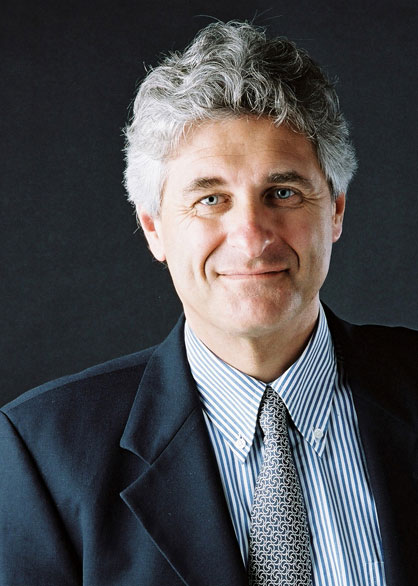
Prof. Dr. Peter T. Sawicki can't actually do anything that pleases the pharmaceutical industry: every decision he makes endangers the budget that is reimbursed to the industry by the solidarity system. Nevertheless, the head of IQWiG is convinced that our system is still a long way from prioritization if the existing resources were used better and more efficiently.
>> Dear Prof. Sawicki, your institute has published the results of the benefit assessment of long-acting insulin analogues for the treatment of type 1 diabetes mellitus. The result: They apparently found no evidence that the active ingredients “Detemir” and “Glargine” offer any additional benefit compared to human insulin. The IQWiG consulted a total of twelve studies that were suitable for a benefit assessment - at least in adults. Does it make you think that the industry itself could be to blame if it doesn't do better studies?
The industry only carries out studies that are legally required of it or from which it expects to benefit. However, fair head-to-head comparisons are rare because, from the industry's perspective, they always involve the risk that one's own product will flop. Either the companies are forced into such head-to-head comparisons or other sources of financing are created. However, such comparisons are essential in practice because when it comes to new products, doctors and patients are not interested in whether they are better than nothing, but rather whether they offer progress compared to the best therapy used to date.
Written comments on this preliminary report could be submitted until the beginning of August this year. Has anything changed in the central message of the IQWiG preliminary report - if comments were received, which is to be expected?
We are currently reviewing the statements and evaluating them. I can't anticipate the results.
Different construction site, similar cause: The Federal Joint Committee recently decided to suspend the final decision on the use of interstitial brachytherapy for localized prostate cancer. This decision is based on a preliminary report from your company, after it has not yet been possible to judge how brachytherapy should be evaluated in comparison to the most important alternative treatment methods. Why did you come to that conclusion?
This is also due to the lack of studies. And this is one of the most common types of tumors. To treat this carcinoma there are several options: either surgery and removal of the prostate, which can cause incontinence and impotence; You irradiate percutaneously or you use brachytherapy, in which small radioactive grains, so-called seeds, are introduced into the prostate. Fourth option: First you just wait and observe.
What did the assessment of the existing study result?
That it's so bad that you can't really say anything at all. This can not be it. Year 2009!
What was your recommendation?
Quite simply: good studies are needed! Then we will know, at least within a period of about five years, what to recommend to a patient, taking his or her preferences into account. It is also clear that this does not make the task of finding the appropriate individual treatment path any easier - but at least the choice is based on clear facts and not on hopes, fears and assumptions. However, the final decision is still made by the patient. Or at least it should. But he has to do it in an informed manner and for this he needs reliable study results.
To do this, doctors would certainly have to talk to their patients much more openly and honestly than before.
Secure. Patients need to be able to better understand the consequences associated with one treatment or another. In my opinion, a patient must therefore be actively informed about the consequences that a complete removal of the prostate, a radical prostatectomy, can have, for example how high the survival advantage is and whether an advantage has to be bought at the expense of more cases of impotence and incontinence. Then one patient will speak out against the operation and the other in favor, depending on individual preferences and personal risk assessments. In order to make this decision, you have to be able to give those affected reliable figures that say quite precisely how much longer you can live with which therapy and how much higher the risk of incontinence and impotence is, for example. Patients and doctors need this data so that they can finally make the right individual decisions instead of trying to decide which is better. However, perhaps the study will show that it is best to wait and do nothing at all. But nobody knows that today. So-called evidence-based medicine creates reliable conditions for truly individualized treatment that takes patients' autonomous decisions seriously.
What do you actually know?
Sometimes a lot if you really look into it. But sometimes too little. However, the recognition of ignorance is already a positive movement because it creates the prerequisites for closing this knowledge gap. Overestimation of the security of knowledge is often the problem. That's why it's a success in itself when the G-BA suspends a resolution in order to fill knowledge gaps and commissions studies itself. Because then we'll know better what we're talking about.
Isn't there a little hint of resignation there?
It's often frustrating because studies like this could have taken place years ago. We often waste far too much time arguing instead of simply testing out new technologies at an early stage to determine their benefits.
If this study were to come out with brachytherapy, it would be best to wait and do nothing at all. What will the medical profession or industry say?
If the study is good, you will have to accept the result. Some will probably then fuel the conspiracy theory that we only initiated the study to “make savings at the expense of the patients.” But that's not the case. For us, it's not about spending less money, but about spending it right.
Such a study, which randomly compares four different care modalities, is pure health care research.
Secure. But it's not rocket physics, just clean study design that has been tried and tested for decades, which ensures that reliable conclusions can actually be drawn in the end. If the groups differ from the outset in the selection of men, we ultimately do not know whether any differences in results can be attributed to the therapies or the structure of the groups. Then the argument just continues. The safest way to achieve structural equality is through randomization.
Which is what the industry is in dire need of.
That may be true. But healthcare is primarily about patients and not about the industry. Insurance money is not there to realize the wishes of the industry.
What does the industry want from you?
I should please be a little more conciliatory and, for example, in the case of insulin, let fives be straight. But I can't do that. I don't demand that industry and politics think and act like science.
Apparently that just doesn't add up.
Some are committed to shareholder value, others want to be re-elected and also have to balance the most diverse interests. But our role is completely different: we are supposed to describe what knowledge is there. This allows us to make things better than they are.
While the industry is supposed to provide the necessary basic data, you turn it into meta-analyses, but only from those studies that suit you - this is an accusation from the industry.
The accusation is not true. We review the existing studies according to evidence criteria. That's why the result is non-negotiable. What “fits” and what doesn’t is not arbitrary, but is scientifically justified in a pre-published report plan. We will present the plan and later the preliminary conclusions for public discussion. Anyone who has good arguments can bring them in at any time. If they are valid, they lead to a change in our approach.
Does it always have to be RCT?
If possible. But we recently presented a classic care study ourselves based on health insurance data from the AOK for insulin analogues. This wasn't an RCT, but a study based on real treatment data from which certain statements can be made. For example, there is a suspicion that the insulin analogue “Lantus” with the active ingredient insulin “Glargine” can promote cancer. Health insurance data are classic health care research data, which usually do not have the problem of a sample that is too small due to the large number of cases.
Do you recognize such studies?
As a signal, definitely, but that depends on the question. This insulin analogue study is about the best you can do without an RCT. However, the question always remains as to how one can interpret the results causally if one does not have two structurally identical groups.
Because you're not interested in describing the condition, but rather in the effect?
When it comes to health insurance data, in case of doubt you can only look at how many patients have been prescribed one or another combination of medications, for example; or how many sick people have been treated incorrectly, perhaps because they have chronic kidney failure and are still receiving a contraindicated medication. The statements that can be made here by evaluating cash register data are certainly all correct. An analysis of how many patients with dementia were not treated in accordance with existing guidelines would certainly be an important finding because it reveals incorrect care.
But that's not enough for you.
That's just the beginning. They can only make statements about causal relationships between cause and effect in experimental studies in which disturbance variables are equally distributed. Randomization then eliminates any interference because it is evenly distributed across the groups being compared.
Who do you see as having the responsibility to carry out a health services research study like that with brachytherapy? The industry or society?
This cannot be an industrial task, but must be a social task. No pharmaceutical company can want to carry out a study that examines various treatment options, for example those that are not related to a company's product. The shareholders would rightly condemn the CEO if he spent his money on something like that. In addition, the manufacturer will generally not objectively assess its own products.
That means: health services research has to be publicly funded? Or as the Council of Experts for the Assessment of Developments in the Health Care System (Bundestag document 16/13770) once again suggests in its sub-point 1219 that health insurance companies should be legally allowed to carry out health services research, for which a “fixed percentage of service expenditure” was proposed, namely 0. 1%, i.e. around 160 million euros. Would that be an approach?
With absolute certainty. But health insurance companies should spend one percent of the money they process on high-quality, controlled clinical studies that are embedded in patient care. So that we finally know what we are doing. There's so much we don't know. But: We could know! So let's use a very small part of the money we would spend anyway so that we can spend most of it more sensibly in the future.
Or even spend less?
I don't even see a need for rationing on the horizon at the moment if we finally manage to use our existing resources more efficiently. You can achieve good medicine with 250 billion euros per year - 160 billion of which comes from the health insurance budget; even very good medicine and without withholding anything that helps sick people. That's why saving is not my goal. I just want to make better use of the existing budget. And to do this we first need more knowledge. This would also be brilliant for the German universities, which would then be able to produce findings much more often that they could publish in high-class specialist journals such as “Lancet” or “New England Journal of Medicine”. Although German research is excellent in basic research and genetics, there is a serious lack of patient-applied and relevant research.
That would be location marketing for German research at its best. Maybe we should make it two percent instead?
One percent would be 1.6 billion per year. This could finance a lot of knowledge gain. But that would still be relatively small compared to the amount that pharmaceutical companies invest in research and development.
They invest around 15 percent of their sales in research and development and yet rarely produce any real innovations.
Which brings us back to RCT. If industry were to produce more real innovation - which is admittedly very difficult - we wouldn't need RCT at all. Great effects can also be seen with other methods. An example is the introduction of insulin or antibiotics. You certainly didn't need a randomized study for that. But if you want to know, for example, whether using a drug over five years reduces cardiovascular mortality by 0.5 percent, then you simply need two large, comparable groups that are treated differently.
So you see RCTs as a kind of microscope for utility?
Absolutely. Most innovations are simply no or minimal advances that require observation of many patients over a longer period of time in order to notice any effect at all. But that makes sense, because even minimal progress is important on the way to better medicine. In order to recognize this, we need adequate study designs.
Or also for effects that, unfortunately, are often not relevant at all for the clinician or the patient, as Professor Dr. Ludwig criticized in the last issue of “Monitor Health Services Research”.
If patients knew the small probabilities of benefit for which they would undergo certain treatments, their decisions would probably often be very different.
We'll touch on the topic of doctors who don't seem to know enough about what they're doing, but they do it. Certainly mostly with the best of knowledge and belief. But somehow.
This is largely due to the fact that in the current structure of the healthcare system, all service providers - whether doctors or hospitals - are paid based on the number of procedures billed. This creates a simple logic: the more measures I perform on the patient, the more money the doctor earns and the more money is spent overall.
Does the system itself tempt you to do more?
But yes. This is most evident among private patients. They are operated on more often than those with health insurance, even though they are healthier, and have more X-rays and more cardiac catheter examinations. One can already assume that a lot of this is unnecessary. But if it is unnecessary, it will only cause damage and also cost money.
This perverts the original intention of the medical profession that doctors should heal and not harm.
As a doctor, you can never be absolutely sure what will and will not work in a particular case; but you at least need information about probabilities. On the other hand, doctors should never intentionally harm or condone harm. Unfortunately, the system tempts doctors to do a lot even when the benefits are uncertain. In doing so, the doctor is acting contrary to the principle “first do no harm”. On the one hand, this is bad for the patients, and on the other hand, it is bad for the solidarity community that has to pay for the whole thing.
That could be corrected.
For example, by creating the possibility that doctors will no longer be paid based on billed procedures in the future.
Would that be effective here, in the land of the freelance professions?
Doctors also work as employees in hospitals and do a great job. Shouldn't this only work in private practice? You could at least try it out. I think that many practicing physicians are simply tired of running small businesses and constantly having to convince patients to do something. Or to treat them in such a way that the bill is primarily right for the practice - and not for the patients. Take a look at what IGEL offers for style flowers! Doctors, as shopkeepers in health stores, gamble away patients' trust.
They are talking about the de-economization of the medical profession, which the GKV-WSG has already done with the pharmacist profession by abolishing the percentage fee for each medication to be dispensed.
My suggestion would be to first group together those doctors who want this as employees in group practices or outpatient clinics. Doctors who want to work differently can of course do so. But I believe that many people would take part if all this administrative work was taken away from them.
And receive a fixed salary?
A good salary. How much that is can be debated. We should be guided by the salaries of doctors in our European neighbors. It would also be important that doctors only have to bear as little financial or administrative responsibility as possible. Specially trained practice managers would then be responsible for this and would be able to implement the not nonsensical requirements and requests of the health insurance companies much more efficiently. All this bureaucracy is not always pointless, it just needs to be handled differently than before. Or better yet, have it handled by someone who understands it. In any case, they are not doctors; they were not trained for this at all. Doctors should treat patients, nothing else. And their salary should not depend on whether they often perform colonoscopies on patients, for example, or simply talk to them.
Critics of this approach will surely reply that an employed doctor will no longer work as much as a freelancer.
I do not believe that. In any case, doctors in hospitals don't do that. They don't come later, they don't leave earlier, and they often work for free because some of them still don't get paid for overtime. Many medical professionals enjoy working as doctors, but the problem is that they often have to do non-medical tasks.
Efforts are currently being made to define new performance incentives for civil servants. And now you come with employed doctors.
You can combine performance incentives sensibly and intelligently with employment. The main reason, however, would be to create a new system in which the salary does not depend on how many procedures a doctor carries out and invoices for. If you want performance incentives, you could tie them to the quality of results - with corresponding bonuses. But here, too, you have to be careful that there are no false incentives - for example, that doctors only care about patients and results for which success bonuses are paid.
Currently, the new EBM 2009 is changing the established medical fee system from point values to euros, but it is essentially being continued unchanged, while the family doctor-centered contracts are already creating quality incentives.
Well, you could have taken an intermediate step there. But unfortunately, doctors are currently still hoping for more money through performance-based remuneration. But that can change quickly if doctors' job satisfaction falls even further. The medical profession itself is a nice profession that you enjoy doing, also because you get a lot in return from your patients. Which of course isn't possible if you have to stick to tough consultation hours of an average of six to seven minutes per patient. Then being a doctor is no longer fun.
What do you think about pay for performance?
The first thing you would have to do is assess the performance itself. What is important here is defining the right criteria. It shouldn't happen that, for example, patients with high blood pressure are randomly set to certain blood pressure values, as the KBV has now suggested. Something like this can quickly lead to negative incentives if certain, difficult-to-adjust patients are quickly sent to a colleague who can then have to deal with it. Or patients who do not have high blood pressure at all are quickly prescribed a pinch of antihypertensive medication.
These are classic disincentives.
Correct. And the doctors are supposed to document and evaluate them themselves. However, the basis of quality assurance is that you cannot ensure your own quality. Only someone from outside, from a pay-for-performance group or whatever, who looks through the files and sometimes interviews patients can do that.
Which is already happening with internal medicine registers today.
This is also practiced in other countries. You just have to get the fear out of your system first. If, on the one hand, the experience of the individual doctor and his empathy for the patient is combined with the mysticism of medicine and external evidence, quality comes almost naturally. A doctor must be allowed to just be a doctor again, instead of being a doctor at the crossroads between the well-being of his patients and his own well-being, as George Bernard Shaw described him.
This vision takes time. Is this a battle against windmills?
You have to have the time. I also don't expect everything to change over the course of my professional life. But I want to at least try to go in the right direction.
Wouldn't it be best to de-economize the entire healthcare system? Or would this idea, which would certainly be very, very far removed from the current system and all probabilities, be too radical for you?
That absolutely wouldn't work. Commerce should not be allowed to determine the actions of doctors in practices and clinics. When developing drugs and medical devices, the pursuit of profit cannot be avoided. The fact is that we live in a system in which medicine produces products that can be used to make a profit. This is a democratic decision. One could also decide to nationalize the pharmaceutical companies and relocate basic research to universities. That would also be a decision to be made in a democracy, which is theoretically conceivable, but not very likely - and which I don't think is sensible either.
As long as this fundamental system change does not happen, we will continue to have to tinker with the symptoms of a quasi-market whose conflict of goals between economics and medicine is insoluble.
I'm not that pessimistic. Even small changes that don't fundamentally call everything into question can have far-reaching effects.
For example, through a little thing like the fourth hurdle?
Correct. I actually consider a fourth hurdle to be a small legislative detail with a big impact. This approach would be a paradigm shift that could bring a lot of calm to the system. Because then every drug for which the industry receives approval would no longer be paid for, but rather it would first be checked whether the new drug is even necessary. And if it's not necessary, it wouldn't be paid for.
That's why you're already doing cost-benefit assessments.
We can only carry out cost-benefit assessments once the drug in question is already on the market. But that is far too late. Even the assumption of the costs by health insurance would have to be linked to proof of benefit. But that is not the case at the moment - although this is required by law. We have many medicines on the market that have not been adequately tested for their benefits. It is far too early for the manufacturers to carry out the necessary studies; often until it is suddenly too late. We see this with the example of the insulin analogue “Lantus”, which has been approved in Germany since 2000.
So one demand would be to carry out benefit assessments earlier?
Above all, comparative studies would have to take place earlier and faster; possibly also weighted differently. This means: If the 50th antihypertensive drug is introduced, one would have to observe very closely over a longer period of time whether it is really better than the other 49. But if someone were to introduce a drug that cures multiple sclerosis or successfully treats cancer quick test procedures are required.
Now the collaboration between IQWiG and the pharmaceutical companies isn't working quite so well.
The companies are pursuing delaying tactics. This is also logical because there is an irresolvable conflict between us. At the moment, our reports cannot actually produce any results that are positive for pharmaceutical companies. The medicines that we evaluate are already on the market, prescribed and paid for by health insurance companies at a price that the pharmaceutical companies themselves set: that is the maximum. At best, our reports can maintain the status quo. The pharmaceutical companies can therefore have no interest in a report from our institute being completed. They can only have an interest in slowing us down. They try to do that consistently. The companies would only start cooperating with us and the system if medicines were only paid for by statutory health insurance companies if there was proof of their benefits and cost-effectiveness.
Do you understand that?
If I represented a company, I would probably behave the same way. I also find pharmaceutical companies to be very consistent in their thinking. They say very clearly that they are not charitable companies and have to make a profit from medicines. This is logical and they also behave logically.
But they are also predictable.
Yes, of course. There will always be criticism of our reports until they are written by the industry itself. Until then, we will hear that the industry has too little influence, too few opportunities to be heard and too little say. Our system already provides for what is probably the most extensive comment and consultation process in the world.
And then a few weeks ago the Federal Joint Committee's cost-benefit assessment methodology was approved.
Yes, this is correct in principle. The legally prescribed instruments are just too cumbersome and too slow. New loops are drawn in again until decisions are made. In the coalition and before, everything was tried to ensure that the whole thing wasn't quite so sharp. You have created a good instrument, but you don't really want to use it. This is also a kind of waste of resources. But those are the rules of the game.
Good thing you haven't lost your sense of humor.
Why should I lose my sense of humor? My work is very interesting because I come into contact with many different people who think completely differently: ethicists, lawyers, health economists and even pharmaceutical managers. I would hardly have this spectrum if I had only stayed in medicine.
Are you still being insulted?
That's gotten a little better. But I was actually always insulted. In my time before IQWiG, for example, we introduced patient training programs for diabetics in Düsseldorf. My colleagues insulted me for this. Then we worked on disease management programs. In 2002 I was physically afraid of getting out of a lecture at the German Diabetes Society conference in Dresden in one piece - the diabetologists were beside themselves, angry and clenched their fists. And today I receive letters from them asking me to please support the continued existence of the DMPs. So I'm used to people complaining and then saying: Actually, we were always in favor of it. This is probably what people will say later about our concept of cost-benefit assessments: That was a good first step. <<
The interview was conducted by MVF editor Prof. Dr. Reinhold Roski and MVF editor-in-chief Peter Stegmaier.