




Downloads
Additional Information
- Issue: MVF 03/10 Publication Date: 01.06.2010 All issues as PDF Subscribe to print magazine Order single issue Open Access

Suchen Sie in Hunderten nationaler und internationaler Datenbanken nach dem neuesten Studienwissen der angegebenen Themengebiete und/oder lassen Sie sich werktäglich per Newsletter informieren. Die Newsfeeds werden auf deutsch übersetzt and nach Übertragbarkeit auf das deutsche Gesundheits-/Versorgungssystem ausgewählt:
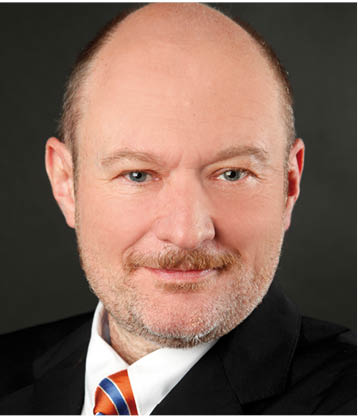
Zu den Knowledge-HubsJens Spahn has been a member of the German Bundestag since 2002 and, since November 2005, chairman of the health working group of the CDU/CSU parliamentary group, chairman of the CDU/CSU parliamentary group in the Committee on Health and health policy spokesman for the CDU/CSU parliamentary group in the German Bundestag. The young politician, a banker by training, who, in addition to his work in Berlin, acquired a Bachelor of Arts (BA) in political science in 2008, was also a member of the coalition working group of the CDU/CSU and SPD, which prepared the last major health care reform Although he is only 30 years old, Catholic and single, he is considered the “father” of the so-called pharmaceutical package and the originator of the “Pharma-Soli”, the ten percent special discount that the pharmaceutical industry has to grant to health insurance companies in addition to the existing compulsory discount of 6 %. Spahn often speaks to service providers, whether doctors, hospital representatives or pharmaceutical managers, as he did a few days ago at the Cegedim annual meeting, and usually leans casually against a pillar or sits at the corner of a table. What he says has substance and - rarely for a politician - sounds honest.
> “It’s about mastering the challenge of the coming years,” says Spahn, dinner speaker at the Cegedim annual conference in Mannheim, making it clear right from the start that what he is about to say will not be easy to digest. Because society and politics have to expect a deficit in statutory health insurance of 10 to 15 billion euros next year alone - "by far the highest deficit that has ever existed in the history of the statutory health insurance" - the size of the challenge is clear : “It almost doesn’t matter which color rules,” says Spahn. If you have to deal with a deficit of 10 or 15 billion euros, “it is of no use to philosophize in terms of worldview”. Spahn lists a few premises for next year:
• Revenue grows by 0 %.
• Spending increases by 5 %, which is a relatively average development in all three major areas (outpatient treatment, hospital and pharmaceutical sector).
• The current system will be further developed, which also means maintaining the health fund in principle.
Where is the paradigm shift?
Since January 1, 2009, when the Morbi-RSA was introduced (coincidentally due to time delays) at the same time as the health fund, the health insurance companies no longer generate their contribution margin primarily by - according to the CDU politician - “as many as possible Young, healthy and high-earning people insure what was previously the most attractive and simplest thing,” but rather through the disease and risk structure controlled by the M-RSA. However, under the M-RSA, a contribution margin is only generated if the chronically ill in particular are cared for “just below the average cost”. Spahn: "Only if a fund installs good supply management - ideally through appropriate regulations with the service providers - can it generate contribution margins." The problem now is that the funds today still look "cameraly at the respective year", although it is them Given the threat of additional contributions, they are not interested in whether they could avoid paying 200 or more euros in 3, 5 or perhaps even 10 years by investing 50 euros in a chronically ill person today. This short-term thinking has changed a little thanks to the health fund (actually the M-RSA); But Spahn is certain that the mental breakthrough will only come “when we get into the situation in which almost all health insurance companies have an additional contribution.” And it is also clear that this will happen soon.
But he actually welcomes it. Because Spahn sees the additional contribution, supplemented by wage-independent elements, which is “neither a fetish nor a fixed idea, but has a justification,” as the only way to get out of the constant debate about cost containment in the long term. “In a society that is getting older and in which there is medical progress, spending on health will constantly increase,” says Spahn and calls it: “The truth is that simple.” But increasing health spending is also always increasing in the current financing system rising labor costs because they have been wage-dependent since Bismarck. However, society would only emerge from this dynamic, indeed from this junction and thus from all the cost containment needs, if health care costs were decoupled from wages, because “all cost containment laws of the last decades were only justified by the development of contribution rates”. The goal of decoupling rising health care costs to some extent from labor costs is a valuable one for Spahn because it represents “a permanent different direction in financing”; and also a goal “that we should also take a little time to tackle.” He can't promise whether it will succeed, but in his opinion society should at least try it and not give up right from the start. Spahn's firm conviction: "We want to start paying premiums, which we have already started with an additional contribution."
Intentional path to price awareness
But also because the additional contribution caused the population to become price conscious for the first time in the history of health care. The numbers-savvy CDU politician calculates that there used to be many citizens who were insured with a health insurance company for 13.5 %, while at the same time there were those who were insured with AOK Berlin for 16.7 %. Spahn: "For 1,000 euros gross, that's a 32 euro difference between one cash register and the other, for 3,000 euros gross, that's a 96 euro difference - divided between employer and employee, which could have been saved with just two letters" - but per month, not every quarter like today! And today the downfall of the West seems to be coming with an additional contribution of eight euros, which makes it clear how important the premium - including tax-financed compensation - is as a price signal. In addition, according to Spahn, with tax-financed social equalization, all privately insured people and, on top of that, all those who are above the assessment limit of 3,750 euros also pay. Spahn: “In the end, this is a fairer system than the one we have today.” That’s why it’s such a shame that this idea is “dressed up in public perception by the headline discussion of the last few weeks.”
Looking for a long-term solution
But it will take a while for parties and politicians to make this big breakthrough. That is why the government, under the thumb of the looming deficit, is preferring some savings approaches, first and foremost in the area of pharmaceuticals. “In drug supply, we are basically combining two things for the first time,” explains Spahn, knowing that so far only the first part has ever taken place: namely the short-term savings approach. “But we want to combine short-term savings with long-term structural changes,” promises the health politician, who is still so young that he will perhaps be able to experience the fruits of his labor one day - perhaps even as an active politician.
In this context, he speaks of a great opportunity for the pharmaceutical industry to end the cost containment debates once and for all; If possible, in such a way that “innovation and research actually continue to be promoted,” which he sees as a “blessing for everyone involved.”
But first comes – as always – saving. The “Pharma-Soli” was officially introduced as an amendment to the current legislative process, with which a statutory manufacturer discount on medicines without a fixed amount of an additional ten % is to be introduced from August 1st of this year - as a “solidarity contribution” from the pharmaceutical industry in view of the large deficit next year. The pharmaceutical manufacturers will not be the only ones who are viewed by politicians as savings banks. Spahn: "We won't be able to simply watch the development of doctors and hospitals - even these areas will not be able to be excluded with a deficit of ten billion euros."
Faster to the fixed amount
The ten % manufacturer discount, in addition to the existing compulsory discount of six %, will come, there is no way around it. Therefore, pharmaceutical manufacturers should focus more on “long-term structural changes”. But not everything is all sunshine and roses here either. Although Spahn describes it as the premise of his civil coalition, according to which research and innovation should continue to exist and be worthwhile, he and his colleagues “already claim that what comes onto the market is not just new, “but also better”, whereby the term “innovative” should not be reduced to “just new”. Spahn: “It is a great asset that new medications in Germany can be reimbursed immediately upon approval; in principle we do not want to undermine this asset.”
What is being questioned, however, is what is innovative and, above all, what it can cost. To this end, pharmaceutical manufacturers should submit a dossier shortly after approval, which, according to Spahn, they already have to do in many European countries. So please don't act as if something really bad is about to happen to the pharmaceutical industry. To his knowledge, 80 to 90 % phase III studies are already being tested against therapy alternatives, since it is easy for the industry to “add an arm to it” in order to gain additional knowledge about the additional benefit to investigate the question of which patient groups are really relevant.
Spahn is also aware that it will not be possible to research everything in such a dossier shortly after approval, which is why the politician calls it an “early assessment”. But based on this dossier alone, a decision should be made as to whether the new drug is an analogue or actually something new, innovative. “During the negotiations, I was sometimes not sure whether everyone understood this straight away,” says Spahn, because this approach will per se increase the number of medications that will be included in the fixed amount relatively quickly. For the politician, this is “the biggest of all clubs in the system” - but the question is whether everyone has recognized this.
Another is what should happen to those new launches for which, despite the dossier, nothing can be said objectively and conclusively - a kind of “refund option” is being discussed here, but it is still at the beginning. The same applies to the question of interim solutions for all those drugs that are already in phase III studies or are about to be approved and that cannot yet meet the requirements of a dossier. Spahn: “We are still in the process of formulating things.”
Once the drug and its dossier are on the market, it must be reimbursed. At what price, however, that is the question. Within the first twelve months after approval, there should be appropriate negotiations with the umbrella association of health insurance companies on the basis of the dossiers and also “taking into account the European price situation”. If the pharmaceutical manufacturer and SpiBu do not come to a conclusion within this period, arbitration proceedings should be initiated, which Spahn describes as a positive: The alternative to arbitration would have been a replacement by the Federal Ministry, which would have been anathema to the bourgeois coalition if it would have had to set prices by the state. Spahn: “Now the question arises as to what we can do if the two contractual partners do not come to a result in the twelve months.” That means: Politicians want to have an instrument so that the two have to negotiate with each other and also come to a result .
Central arbitration board with the right to make proposals
The method of choice for Spahn is arbitration, which in principle should proceed like all other arbitration proceedings; with one small difference: “We will set up a central arbitration board so that, as is the case with family doctor contracts, umpteen different arbitrators across the country come to umpteen different decision-making bases.” This central arbitration board, neutrally staffed and with the right of those affected to make suggestions, is supposed to be within A result can only be reached in three months, so that “after a total of 15 months there is a price that is valid for the time being”. Beyond the negotiation level between the SpiBu and the respective pharmaceutical manufacturer, politicians want there to also be discussions between the manufacturer and individual health insurance companies - about contracts that should not be price contracts, but primarily supply contracts. “We want the pharmaceutical industry to become more of a partner in IV contracts than before,” explains the CDU politician, also because “we believe that particularly through supply contracts in which doctors and specialists, clinics, pharmacies and industry take part sitting at the table, the care is improved.”
The vision of a completely new world of contracts
In order to do this, detailed regulations such as second opinion procedures, performance audits or bonuses/penalties could be eliminated because these could ideally be regulated in the interests of quality and the provision of guidelines. Spahn's vision: "This should be a new contract landscape that can develop around the central contracts of Spibu." To make this possible, Spahn aims to make competition and antitrust law fully applicable and disputes through the civil courts and not to have more regulation through the social justice system. But that also means that what the AOK is currently doing will no longer be possible in the future because that would then be “an abusive exploitation of a dominant market position”.
The new system should also be as transparent as possible, ideally analogous to the phase III studies, for which the BfArM has long had “early dialogues” and “guidance discussions”. “Such discussions should and must also take place at an early stage with the IQWiG and the G-BA,” explains Spahn, who describes this transparency approach as an “opportunity for the industry” because the IQWiG is no longer “worldwide based on whatever criteria studies that form the basis of the evaluation” - and “as a rule not from studies that have ever been done for the German market”. But there should be more transparency not only in the cooperation between industry, IQWiG and G-BA, but in the entire system of IQWiG and the G-BA, which includes leadership, structure and legitimacy. Because: “Transparency is the prerequisite for acceptance.” <<
by: Peter Stegmaier
Subscribe to our newsletter quickly. Then you can be sure that you won't miss anything.