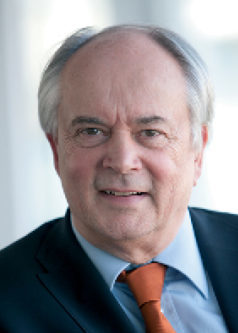
Less centralism, more regionality – these were the core demands of the board of the Bavarian Association of Statutory Health Insurance Physicians (KVB) for the GKV Care Structure Act, which came into force at the beginning of 2012. Dr. Wolfgang Krombholz, the CEO of KV Bayerns (KVB), made this clear in an interview with “Monitor Healthcare Research”. “With the desire for more evidence, you are running into an open door for me: one of my biggest concerns is to finally provide clarity regarding the mandate for primary care,” he says, but also that such evaluations of service providers are guaranteed to create additional bureaucracy the practices would take care of.
>> “Many problems come from Berlin. Decentralization is therefore one of my primary goals,” you say, Dr. Krombholz on your KVB profile page. “For me, it is primarily about maintaining general practitioner, specialist and psychotherapeutic practices...” As a representative of general practitioners, you may have to say that, but why is a family doctor-centered system really better and more sustainable?
Decentralization has nothing to do with family doctor-centered care. In my opinion, both make sense and should actually not only be demanded by the medical profession, but also promoted by politicians, health insurance companies and health economists. First of all, decentralization: By this I mean that the authority to regulate important areas of medical practice must lie at the state level. This includes further education and training as well as fee negotiation and distribution. In my opinion, it is difficult to regulate at the “green table” in Berlin how, for example, emergency care in the Bavarian Forest can be made future-proof. This can only be achieved through initiative and local commitment. The situation with the now widely recognized issue of doctor shortages can be assessed in a very similar way. Here too, you have to look at the local situation and look for regional solutions. The legislature has provided support in the area of family medicine by firmly anchoring family doctor-centered care in law. Section 73 b SGB V clearly states that health insurance companies must offer their insured persons family doctor-centered care. Unfortunately, many health insurance companies still do not feel obliged to act accordingly and conclude such contracts. That's why we can't yet say that we have a family doctor-centered system across the board. However, I would very much welcome such a thing: as an enhancement of the extremely demanding work of family medicine and as a good basis for meaningful cooperation between general practitioners and the specialists specializing in individual fields, who already work primarily on referrals from general practitioners.
Faith is good, knowledge would be better. There are worldwide, as Prof. Dr. Gerd Glaeske in MVF 06/11 emphasizes that there is “no evidence that a general or family doctor-centered system would really be better.” Nevertheless, it was introduced politically - not competitively, but compulsorily - which was not an evidence-based but purely political decision. So isn't it time to provide evidence?
Professor Glaeske should also note that due to the blockade attitude of many health insurance companies as described above, we do not yet have enough data from practice when it comes to the efficiency of family doctor-centered care in Germany. However, I am confident that Mr. Glaeske's criticism can be objectively refuted in the near future with findings from Baden-Württemberg. With your desire for more evidence, you're knocking me into the open: one of my biggest concerns is to finally provide clarity regarding the mandate for primary care. Only by providing a well-founded answer to the question of what a typical family doctor actually does can we arrive at a definition of the family doctor's mandate to provide care. Creating clarity here is a relevant topic for us at the KVB. Initial analyzes have already shown that there are many colleagues working in the primary care sector who do not work as typical primary care physicians, but who specialize in certain fields such as psychotherapy. They certainly do that well, but that means they are no longer a basic provider. However, after they are counted in the requirements planning, a distorted picture of reality emerges. One of my central concerns is to address this in the interests of good patient care.
“The consequences of this ever faster turning reform carousel have also shaped the KV. As a representative of practicing doctors and psychotherapists, it is now further removed than ever from its members. One of the reasons for this is that, as a corporation under public law, it has to implement the requirements of the law and politics, and often enough to the detriment of its members.” You also say that on your profile page. This also includes criticism of the KVB itself. What do you want to do a) differently and b) better than before?
At this point I do not want to judge the work of my predecessors on the KVB board. Because for me it's not about "better or worse than before", but about implementing my ideas about a good KV. I've summed it up in a nutshell: what's good is what's good for the practice. My board colleagues Pedro Schmelz, Ilka Enger and I want to make the KVB service-oriented and transparent towards its members and not act as mere enforcers of laws. This also includes a stronger presence in the regions of Bavaria beyond the metropolises of Munich and Nuremberg. Of course, as the board of directors of a public corporation, we are bound by law and order. But that doesn't mean that you can't represent the interests of your members strongly and effectively to the outside world. Just think of our Berlin presence through the Free Alliance of State KVen, or FALK for short. Here we were able to achieve a number of positive things for the benefit of the medical profession. The feedback from colleagues, for example at general meetings, also shows me that we are on the right track. However, the biggest part of this journey still lies ahead of us.
As a board member of the KVB, you have overall responsibility for the KVB and therefore also for its continued existence. On the other hand, you are close to the Bavarian General Practitioners Association, which wants to divert significant fees - and thus the KVB's income - from the KVs to the general practitioner associations. What is your position in this? For example, are you advocating for family doctor contracts to be billed via the KVen, as pediatricians already do, for example?
I am not close to the Bavarian General Practitioners Association - I am an active member of this association with deep conviction. We have now succeeded in finding constructive cooperation again between the Association of Statutory Health Insurance Physicians and the Association of General Practitioners in Bavaria. This is extremely important because in many areas, such as the promotion of young talent or on-call service, we can only achieve success together - I include the medical association in addition to the professional association and KV. As CEO of KVB, I would of course be very happy if all supply contracts were handled by KVB. I also made corresponding offers to the board of the general practitioners' association. But it is also clear that the association can decide for itself who it commissions to invoice and process its contracts. If there are tenders for general practitioner contracts here in Bavaria, we will apply. After all, we as KVB have a security mandate. And in order to fulfill this requirement, we will continue to need a sufficient number of house owners willing to settle in the future.
doctors. However, we can only win them over if there are appropriate financial incentives for establishing a branch through well-paid family doctor contracts.
What about evaluation and health services research in this context? Don't we need a mandatory evaluation in standard care and also for service providers?
On the one hand, I would like to make it clear that an evaluation after three years was planned for the family doctor contracts that we had in Bavaria with, among others, AOK Bayern until the end of last year. With the cancellation by the health insurance companies in December 2010, this project could of course no longer be realized. On the other hand, I would like to stand up for the practicing doctors and psychotherapists in this country. Just take the length and level of difficulty of your studies, including further training, until you can finally call yourself a “specialist in general medicine”. Please tell me which other professional group has to complete similarly challenging training. I can't think of any other professional group that is required by law to undergo ongoing training and must prove this by achieving certain points. In addition, we have a free choice of doctor in Germany. If patients are not satisfied with their family doctor or specialist, they can change. For me, this is a form of lived evaluation of our activities. Any further “mandatory evaluation” of what you call “service providers” is guaranteed to create additional bureaucracy in the practices - whether this would help patients seems questionable to me. From my point of view, at least one thing is clear: by announcing a “mandatory evaluation” that goes beyond the already comprehensive, constantly checked training requirement and the extensive documentation requirements in the practices, you will hardly be able to inspire young people to work as a doctor.
“KV Bayern is a pioneer in Germany.” That was the headline of our conversation with Dr. Axel Munte, the then CEO of KV Bayern in December 2010 (MVF 6/2010). What does this pioneering role look like today?
If you want to be a pioneer, you should always check whether you are heading in the right direction and whether someone is really following you. I can easily live with not being a pioneer if we have functioning medical care across the board with satisfied doctors, psychotherapists and of course patients. We now have a different orientation on the KVB board than was the case in the previous board. We want to be open to our members and their concerns and represent them well to the outside world - without having to or wanting to compare ourselves with other KVs. Due to the particularly well-developed outpatient structures in Bavaria, we of course have individual areas where we are above average nationwide. Take outpatient operations or the economical prescription of medicines as an example. For example, the vaccination rate is higher in other federal states. We do not rely on confrontation, but rather on cooperation in the KV system. That's why we founded FALK together with other partners and were able to exert our political influence better than ever.
The “Seal of Quality of “Excellent Patient Care” was named as a sign of this pioneering role, which is exactly what the new KVB board has just hired. What was the reason for this?
We on the board looked at the issue very intensively and ultimately came to the decision to continue individual measures, but to discontinue the umbrella brand “Excellent patient care” as such. From our point of view, the chosen terminology alone is unfortunate. In addition, there were not really any projects under the umbrella brand for nearly all groups of doctors. If awards are given out, then everyone must have access to these awards and must not be disadvantaged from the start due to unequal conditions. In addition, only a small part of the care provision was assessed in the program. An example: The focus of the work of the house
Medical activity, the anamnesis and the recording of findings, cannot be properly assessed through any form of electronic documentation and analysis.
Can one seriously claim that all doctors deliver the same quality? Pretty much all the results of health services research speak against this.
Once again: An award must be accessible to all members of the KVB. This was not the case with the Excellent Patient Care program.
Isn't it generally critical to signal that you no longer want transparency about quality? As you can hear, the board didn't agree internally - why was the decision made that way? What were the pros and cons?
Are you actually basing all of your questions on rumors and hearsay? Of course, we still strive for all of our members – doctors and psychotherapists – to deliver good quality. But the content is important and not a pseudo-label that you can pin on your lapel. Our members also see it that way: We received a lot of approval for our decision by email and fax. A counter question: Are you aware that we have published a quality report on the Internet at www.kvb.de in the About us – Our tasks – Warranty order section? We will continue to do this in the coming years. In addition, we often present topics from the areas of quality assurance and management openly and comprehensively, not only on the Internet, but also in our monthly members' magazine “KVB FORUM”. For us, transparency applies to all topics, not just quality.
The Bavarian KV is committed to a “fair distribution of fees”. What are the standards of such a fair distribution? Shouldn't differences in quality also be taken into account?
Fairness in the distribution of fees means, first of all, that one group of doctors does not enrich itself at the expense of the others. It must be clear how much money is available in each pot. Justice is also important within the individual specialist groups, for example that there is a balance between operating and conservative doctors. We then discuss the distribution and the achievement of the greatest possible fairness of fees with the representatives of the individual professional associations. As already mentioned, contact with professional associations is extremely important to my board colleagues and me. We cannot act independently from the grassroots, but need feedback from the medical profession. Since opinions here are often very different, especially when it comes to justice, we see professional associations as a place where majority opinions can be formed and developed. That's why we are in constant contact. Of course, not every wish can be fulfilled under the conditions of a limited budget. But it is clearly our concern to ensure fairness when it comes to the chances of every individual contracted doctor and psychotherapist to achieve an appropriate fee.
What do you think of the Pay for Performance concept?
First of all, I am critical of the adoption of care concepts and structures developed in the USA. The health system there has significant disadvantages for patients and, despite enormous costs - especially when it comes to comprehensive and open access to medical services for all - is currently not comparable to the health systems of many European countries. You watch the movie “Sicko” and you’ll see what I mean. On the other hand, the idea of aligning remuneration with quality indicators, which is subsumed under “Pay for Performance”, is not wrong. However, on the one hand, one must bear in mind that although the structure and process quality can be measured in the broad spectrum of family medicine work, the quality of the results can hardly be measured. On the other hand, financially rewarding compliance with certain indicators always carries the risk of risk selection. Chronically ill patients, whose condition could make the doctor's statistics worse, would suffer from such a development. In addition, to implement “Pay for Performance” you need health insurance companies that are willing to pay for the additional effort. For me there is a very positive example from Great Britain. I quote from an article in the German Medical Journal from September 30, 2009: “The currently most extensive European reference project was introduced in Great Britain in 2004. The stated aim of the UK P4P program is to improve primary care quality through financial incentives. The British government has made additional funds available amounting to 2.5 billion euros for this purpose.” This is exactly how it has to work: coffers and politicians have to provide additional funds. Then we can work in the practices to further optimize the already good care.
Integrated care is intended to achieve a better quality of care for insured persons and patients. Were the disease management programs a success or at least a step in the right direction? Where do you see further development? Regionalization? Newer supply management concepts?
What you stated at the beginning for family doctor-centered care also applies in principle to disease management programs: it is still too early to conclusively assess their effect. There are now many different evaluations, but ultimately there is still no clear evidence as to how good and useful these programs really are. The fact is that the existing DMPs are now quite well established and the participation rates among doctors and patients are quite high. But a quote from the “Ärztezeitung” from September 19th last year: “DMPs are a success story if you count the participation. But even after ten years, there is hardly anything that can be said about their benefits for patients and efficiency” (Editor’s note: From a report on the MVF specialist congress “10 Years of DMP” in Berlin). A lot of health services research is obviously still necessary in this area.
The Supply Structure Act has now been passed. How will the KVB deal with this?
We will deal with it the way we as a public corporation do with any law: we will implement it - with the necessary scope for design and with the firm will to interpret it in the interests of our members. We also have the opportunity because the law provides for greater regionalization. However, it must be said again that many of the regulations that have to be made in advance have been shifted back to the federal level and the Federal Joint Committee. The law also offers some sensible incentives to make setting up a business, especially in rural areas, more attractive again. Of course we want to support that too. We are critical of the creation of a new level of care, outpatient specialist medical care. My two KVB board colleagues are very active in preventing damage to the majority of practicing specialists who probably cannot take part in this.
In the Care Structure Act (GKV-VStG) – contrary to what is written in the draft – doctors are no longer required to code. Politics would have taken this out again under pressure from medical associations, as the deputy chairman of the Barmer GEK, Dr. Schlenker, explained at the 10th German Health Services Research Congress. What do doctors have against an obligation to code?
This is an unfortunately widespread misunderstanding: Doctors usually have nothing against coding. In Bavaria in particular, this has been practiced intensively for a long time, which in the previous system also brought the local health insurance companies corresponding benefits from risk structure compensation. There can certainly be divided opinions as to whether the ICD 10 coding is really the perfect solution, especially in the general practice area. The original requirement to implement the outpatient coding guidelines was problematic for us, primarily for practical reasons. There were even practical tests in Bavaria that showed that the introduction of outpatient coding guidelines would have created a real bureaucratic monster. Advocates on the medical side had spoken of the fact that the introduction of coding guidelines could have given health insurance companies a clearer picture of the “burden of disease” in the population and thus generated more financial resources for care. But these were the same medical officials who had already spoken about the fact that the so-called EBM 2000 plus would finally bring economically calculated, reliable fees and a point value of 5.11 cents for the practices. Everyone can easily find out for themselves what happened.
Finally, back to Bavaria: The Bavarian General Practitioners Association is currently dominated by the conflict between Dr. Geis and Dr. Hoppenthaller the media. As you can hear, Dr. Hoppenthaller, on the other hand, works as a paid consultant for the KVB. What does this mean for the KVB's position in this conflict?
In general, the KVB board does not interfere in topics and problems within a professional association. In this case the situation is something special for me in that I am in the house-
From a professional perspective, I grew up alongside my colleagues Geis and Hoppenthaller in the medical association. Together and with other active colleagues, we have achieved a lot for family doctors in recent years. The fact that around a year ago in Nuremberg over 2,800 Bavarian family doctors were ready and willing to give up their license and thus sent a clear signal to politicians and health insurance companies was a great success. However, the fact that this number was not enough to complete the system change made it difficult for us to get back to business as usual. And since most health insurance companies continue to steadfastly refuse to comply with their legal mandate and conclude family doctor contracts, the major successes that would bring the family doctor community together again are missing. From my point of view, we - the board of the general practitioners' association and the KVB - are working well and cooperatively to get back on the winning road. And just one sentence about your well-informed sources from whom you have heard so much: Colleague Hoppenthaller is a member of the KVB's representative assembly and one of the members of our Advisory Board Commission - a committee that our predecessors on the KVB board set up and which we continue with a different line-up.
Dr. Hoppenthaller has made his allegations to Dr. Geis supported this with very differentiated calculations of the case values of the new family doctor contracts. As we can hear, allegations have been made that he used the KVB databases in an inadmissible manner. Even if this is not true, Dr. As a consultant, Hoppenthaller at least has access to extensive data and resources from the KVB. How do you ensure that this remains within permissible and appropriate limits?
The rumors you want to spread in your question have no basis in reality. In fact, the KVB was and is busy with the contracts for family doctor-centered care, as there were preliminary negotiations regarding possible billing services from us. This required calculations of the contracts in order to be able to accurately calculate our costs and expenses. Colleague Hoppenthaller created this calculation together with our analysts based on his extensive experience in general practice. The results of our investigations are now the basis for the discussions that we have had and will continue to have with the general practitioner association and the general practitioner association.
The conversation was conducted by MVF editor Prof. Dr. Reinhold Roski and MVF editor-in-chief Peter Stegmaier. <<