


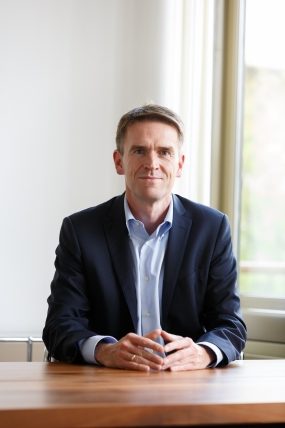
Wolfgang Wick new chairman of the Science Council
06.02.2023 14:28
Wolfgang Wick, Medical Director of the Neurological Clinic at Heidelberg University Hospital and head of a scientific department at the German Cancer Research Center, has been a member of the most important science policy advisory body in Germany since 2021. The results of the election for the chairmanship were announced on January 27, 2023.
Wolfgang Wick, Heidelberg Medical Faculty and Managing Director of the Neurological Clinic at Heidelberg University Hospital (UKHD) as well as head of a clinical cooperation unit at the German Cancer Research Center (DKFZ) and UKHD, was elected Chairman of the Science Council on January 27, 2023 and will take office on January 1 February 2023. He replaces Dorothea Wagner, head of the Institute for Theoretical Computer Science at the Karlsruhe Institute of Technology, who has held this position since 2020. In February 2021, at the suggestion of the Alliance of Major German Science Organizations, Wick was appointed as a member of the most important science policy advisory body of the federal government and the state governments in Germany.
The Science Council (WR) advises the federal and state governments on the further development of the university system in terms of content and structure as well as on state funding for research institutions. Wolfgang Wick cites the main focus of his current term of office as the goal of thinking beyond dealing with current crises and anticipating long-term developments in science and society. “It is important to identify tipping points in the various areas of the science system in order to be able to act in a timely manner. The science system must become more resilient in times of crisis,” he says. A concrete example is the intensive examination of the digitalization of medical teaching and research begun by his predecessor Wagner. “We should seize the opportunity to increase scientific productivity with the help of digitalization. “The high relevance of science is particularly evident in the current crisis situation,” says Wick.
“As Medical Director of the Neurology Clinic, Wolfgang Wick does an outstanding job as a doctor, scientist and manager. “In view of the current challenges to strengthening science in university medicine, we are pleased that he is taking on this important position, that he can make the issue visible and provide new impetus for the political discussion,” says Ingo Autenrieth, Chief Medical Director of the UKHD .
Michael Baumann, CEO and Scientific Director of the DKFZ, says: “Wolfgang Wick is at home in both worlds, in clinical medicine in direct patient contact as well as in research. In doing so, he brings crucial expertise to the Science Council, which will help advance medical progress in Germany. We congratulate Wolfgang Wick on this honorable and responsible position.”
“Wolfgang Wick not only brings outstanding scientific expertise in the areas of neurology and oncology, but also political experience from many years of committee work and senior positions, for example at the German Cancer Society or the European Association for Neuro-oncology. I warmly congratulate him,” says Hans-Georg Kräusslich, Dean of the Heidelberg Medical Faculty. “The Science Council, for example, plays a key role in shaping the German scientific landscape as part of the Excellence Strategy. It is therefore very pleasing that Wolfgang Wick, a well-connected scientist and doctor who knows first-hand the special challenges of university medicine, was elected to the office of chairman.”
The Science Council – the oldest science policy advisory body in Europe
The spectrum of tasks of the members of the Science Council ranges from the development of science policy recommendations and statements with regard to both individual scientific institutions and the German science system, the evaluation of research institutions, competitive assessments such as the Excellence Strategy and the accreditation of non-state universities. The Science Council consists of a scientific commission and an equal administrative commission with representatives from the federal states and the federal government. The 32 members of the Scientific Commission, 24 of whom are jointly proposed by the German Research Foundation, Leibniz Association, University Rectors' Conference, Max Planck Society, Helmholtz Association and Fraunhofer Society, are appointed by the Federal President.
To person:
Prof. Dr. Wolfgang Wick (52) studied medicine in Bonn, London and Harvard and completed his habilitation at the University Hospital of Tübingen. In 2007 he accepted an appointment at the Heidelberg Medical Faculty and took over as Medical Director of the Department of Neuro-oncology at the Neurological Clinic at the UKHD and the National Center for Tumor Diseases (NCT) Heidelberg. He has also been heading the Neuro-Oncology Clinical Cooperation Unit at UKHD and DKFZ since 2007. Since 2014 he has been managing director of the neurological clinic and spokesman for the head clinic center at the UKHD. Since 2019 he has been listed on Clarivate Analytics' “Highly Cited Researchers” list. The international award names researchers whose publications in their respective fields have been cited most frequently worldwide. In 2020, Wolfgang Wick was accepted as a member of the National Academy of Sciences Leopoldina and in 2021 he was appointed to the Science Council, whose Medical Committee he has headed since 2022.