


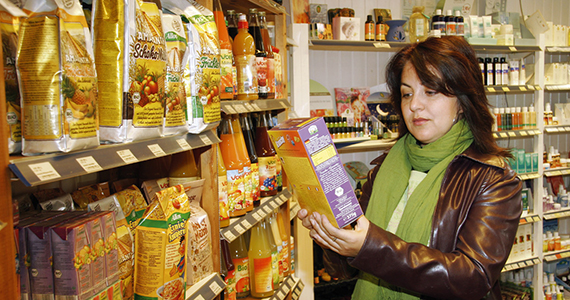
AOK study: Germany needs detention in nutritional competence
17.06.2020 10:40
Food literacy is not doing very well in Germany, as a current study by the AOK Federal Association shows. Accordingly, more than half of German citizens (53.7 percent) have problematic or even inadequate nutritional skills.
For those from the agency “Facit Digital” In the survey carried out, almost 2,000 people were interviewed on eight subject areas. There are clear differences between the genders. While over half of women (53 percent) have sufficient nutritional skills, the figure for men is just 38 percent. However, the results of people with and without a migration background do not differ.
To the Results of the study explains Federal Minister of Nutrition Julia Klöckner: “Nutrition skills need to be learned – throughout life. The results of the study show how important it is to support consumers at all stages of life. We do this with numerous initiatives and programs, from high chairs to seniors. For us, it's about empowerment, not paternalism. The key is to have the knowledge necessary to make an informed choice. This includes nutrition education from an early age as well as truth and clarity in the labeling of products: with the introduction of the Nutri-Score, for example, we are making it easier for consumers. It is also important to me that a healthy diet does not depend on where you come from or your parents' home. I want to break this dependency. To do this, we go with projects exactly where it is most needed: in socially disadvantaged districts.”
According to the study results, younger people in particular are giving cause for concern. In the age group between 18 and 24 years, only 37.1 percent of those surveyed demonstrated sufficient competence. “Only one in three young adults knows how healthy eating works. This is alarming,” emphasizes Martin Litsch, Chairman of the Board of Directors AOK Federal Association. The positive connection between higher educational qualifications and better nutritional skills also illustrates the need for action. Only 37.2 percent of people with a secondary or elementary school diploma can demonstrate sufficient literacy; among people with a high school diploma, the proportion is 56.4 percent. “If we want to change course here, we have to firmly anchor the topic of healthy eating in our education system and curricula. The teaching of nutritional skills must not end with the school bell; it would also be important in youth work and adult education.”
Prof. Berthold Koletzko, Chairman of the Nutrition Commission of the German Society for Pediatric and Adolescent Medicine and practicing pediatrician, is also regularly confronted with this development in everyday pediatric practice. “In general, I see an increasing decline among young parents in their ability to independently prepare meals from basic foods. This is also problematic because ready-made products regularly contain too many calories, sugar, saturated fat and salt. This results in poorer nutritional quality overall in many families with children, especially if they cannot easily distinguish between worse and better finished products.
In fact, of the eight competency areas examined, “healthy comparison” poses the greatest difficulties. Around 72 percent of those surveyed lack the necessary tools, for example to make decisions about the right product choice. The introduction of the Nutri-Score was long overdue, emphasizes Litsch. “However, it is of no use if the food industry is allowed to place nutrient labels on their products as they wish. We need a commitment here,” he adds. The AOK is not alone with this demand. Litsch: “Several well-known companies from the food industry have now joined forces for the mandatory introduction at EU level.”
The AOK Federal Association has once again raised the issue of the high sugar content in food. For example, 80 percent of ready-to-eat foods in German supermarkets contain added sugar. Consumers therefore lack healthy options when shopping. For this reason, the AOK has been committed to reducing sugar consumption in Germany for several years. “Above all, we need binding reduction targets with the industry and also a ban on marketing for children’s foods that contain a lot of sugar,” says Dr. Kai Kolpatzik, study director and head of the prevention department in the AOK federal association.
The weak results for the sub-area of nutritional literacy were also consistent with evaluations of general health literacy. Here too, the value of over 50 percent of people was recently unsatisfactory. Prevention expert Kolpatzik: “This comes as little surprise given that 6.2 million people nationwide cannot read and write properly. As a result, more than twelve percent of our working population lack the basic requirements for understanding health information.” However, conveying this is a task for society as a whole and requires appropriate measures from politicians.