


Zi on COVID-19: Increasing number of cases, but no acute overload of the healthcare system
04.08.2020 14:23
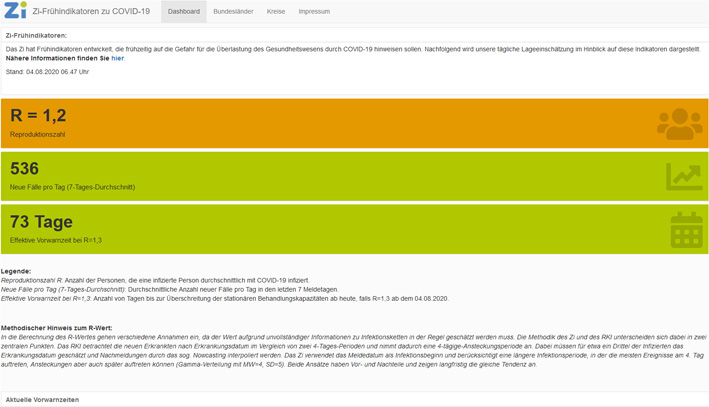
Many small sources of infection, increasing number of cases, unclear chains of infection - according to the Central Institute for Statutory Health Insurance (Zi), these factors give reason to worry about a second wave of the pandemic. In the Zi's opinion, there is currently no reason for hasty political measures to avoid the threat of overloading the healthcare system. The institute refers to its leading indicator on pandemic development. “The effective warning time until the healthcare system is potentially overloaded, which also takes into account the time required to implement pandemic management measures, is currently 73 days. Medical care is therefore not yet affected by the current development. There are hardly any changes here compared to the beginning of July,” said Zi CEO Dr. Dominik von Stillfried.
The effective warning time is calculated as the period of time that remains, given a given spread of infections, until the healthcare system is expected to be overwhelmed. The time required to implement pandemic management measures is already taken into account. The Zi publishes the early warning indicator on a daily updated website, the so-called Zi-COVID-19 dashboard.
At the time of the easing decisions at the beginning of May, the Zi summarizes, the effective warning time was around 76 days and rose to 110 days in June. In the last few weeks the indicator has fallen slightly again. In the Zi's opinion, the applicable hygiene rules should therefore be taken seriously and adhered to. Thanks to the practices' sophisticated hygiene concepts, you don't have to worry about visiting the practice.
The leading indicator of the Zi takes the current one into account Publication on the intensive care treatment of COVID-19 patients in Germany and use the case number reports from the Robert Koch Institute (RKI) as well as the current utilization of the intensive care units in the DIVI register for daily updates. Recently, the Zi is now assuming a proportion of patients requiring intensive care treatment of 7.5 percent and a length of stay of 10 days. Accordingly, 25 percent of intensive care capacity would be required for COVID-19 patients if the number of new daily infections is continuously above 11,000. In addition, the Zi assumes that around six out of seven COVID-19 patients can still only be cared for on an outpatient basis.
A detailed presentation of the Zi zur Leading indicator methodology stands here ready: