


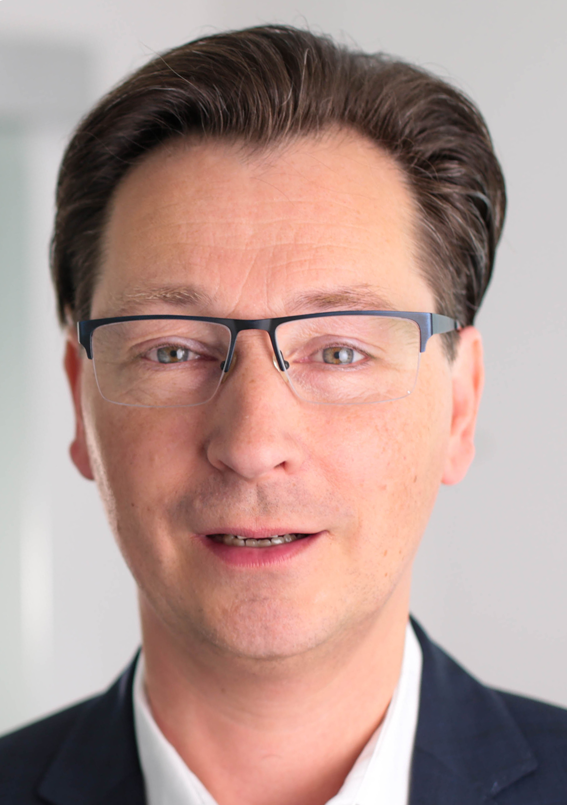
Sven-David Müller new DSMZ communications manager
22.10.2018 13:52
Since mid-September 2018, Sven-David Müller has been Christian Engel's successor as head of the Press and Communication Department at the Leibniz Institute DSMZ-German Collection of Microorganisms and Cell Cultures GmbH at the Science Campus Braunschweig-Süd. He reports to the Scientific Director Prof. Dr. Jörg Overmann and the administrative director Bettina Fischer.
The 49-year-old from Braunschweig was previously responsible for online editing and public relations at the Health Sciences Institute of AOK Nordost in Berlin for three years. After professional training, traineeship, medical editor training and studies, Sven-David Müller, M.Sc., was, among other things, press spokesman and head of the information center at the RWTH Aachen University Hospital from 1997 to 2000 and, between 2011 and 2014, editor-in-chief of medicine/nutrition and head of corporate communications at digital communications agency Cocomore AG in Frankfurt am Main.
“We expect our new head of the press and communications department to expand internal and external communication with a focus on digital media. The scope of work is extensive: Among other things, we will be celebrating our 50th anniversary and our website next year www.dsmz.de will experience a relaunch at the beginning of next year,” says Professor Overmann, summarizing the diverse developments and upcoming work focus of the Press and Communication Office of the Leibniz Institute DSMZ-German Collection of Microorganisms and Cell Cultures GmbH.
Microorganisms and cell cultures for the world from Braunschweig
The Leibniz Institute DSMZ-German Collection of Microorganisms and Cell Cultures GmbH, recognized as a non-profit organization, is the world's most diverse bioresource collection with 66,500 microorganisms and cell cultures. The DSMZ Plant Viruses Department is currently the first and so far only accredited manufacturer of qualitative reference material in Germany. The newly built collection of cyanobacteria and protists at the DSMZ is also unique in Germany. The non-profit organization currently has 198 employees, 86 of whom are scientists.
The DSMZ research focuses include microbial ecology and diversity, bacteriophages and plant viruses. The renowned bioresource center is a partner in numerous national and international third-party funded projects and has access to global expert knowledge. The institute's services used worldwide include, in particular, the identification and characterization of microorganisms and cell lines as well as the provision of metadata in the freely accessible database BacDive (https://bacdive.dsmz.de/).