


Experts discuss the benefits of big data for individual patient care
21.01.2015 13:15
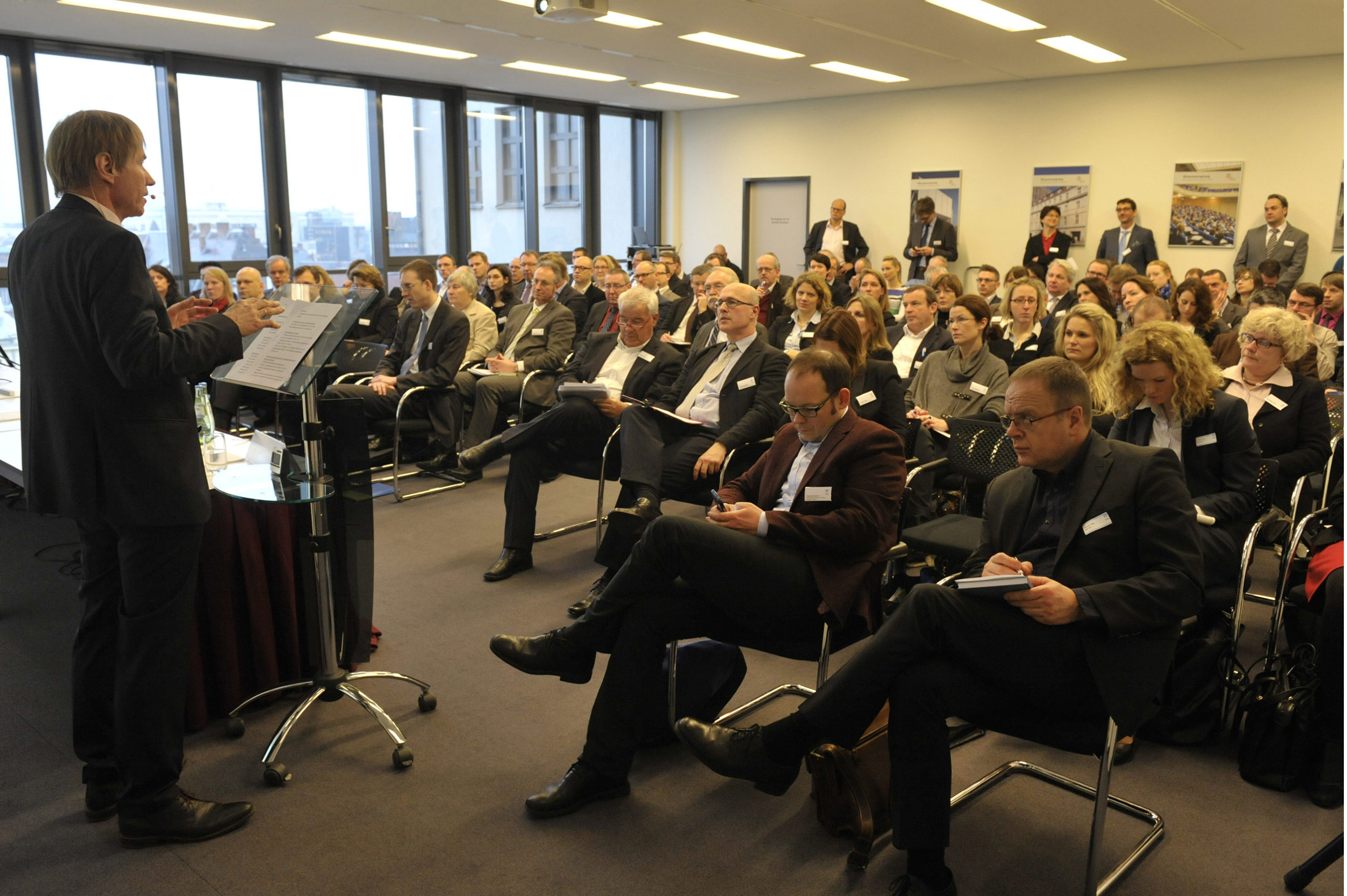
At the Elsevier symposium “Big Data and Patient-Individual Care – Best Practice and Potential”, around 120 experts from politics, the IT industry, service providers and health insurance companies discussed the opportunities and risks of using big data. The high-profile event took place on January 20, 2015 as part of the annual congress of the Federal Managed Care Association in Berlin. Practical examples already clearly show that patient care can be improved through tailored care offerings.
The healthcare system is currently experiencing a qualitative upheaval: This is determined by demographic change on the one hand and by digitalization on the other. Our society is aging and the new possibilities of information technology have the potential to redefine medical operations and establish individual treatment approaches. Around 120 experts from politics, the IT industry, service providers and health insurance companies discussed the opportunities and risks of using big data at the Elsevier symposium “Big Data and Patient-Individual Care – Best Practice and Potential”. The high-profile event took place on January 20, 2015 as part of the annual congress of the Federal Managed Care Association in Berlin. Practical examples already clearly show that patient care can be improved through tailored care offerings.
Five experts presented individual care concepts that were developed using, among other things, routine data. “The models are impressive and the results are promising. But the potential is far from exhausted,” says Olaf Lodbrok, Managing Director of Elsevier Health Analytics. “Both the optimization of medical care and the increase in economic reserves by reducing excess or incorrect care can be significantly increased.”
At the start of the event, Ministerial Director Dr. Andreas Goerdeler from the Federal Ministry for Economic Affairs and Energy (BMWi) spoke about his ministry's plans for the use of big data: “With the BMWi Smart Data technology program, we are concentrating on application areas that are promising for Germany, such as industry, energy, mobility and health. There we want to show best practices what is possible with the new Big Data analytics tools, e.g. B. to significantly improve the ability to diagnose medicine. Our unique selling point is that we pay particular attention to high standards of data protection and data security and the highest level of transparency right from the start.”
Prof. Dr. explained the advantages for the doctor of IT-driven use of big data. Guido Noelle, managing director of the AOK-owned company gevko GmbH (health – care – communication). “According to estimates by the Federal Institute for Vocational Training, medical knowledge doubles every two years. In order to stay “up to date” in the field of internal medicine, a doctor would have to read 17 original papers and at least one key publication per day,” he explained, illustrating the influence of health services research on everyday (family) doctor work. From the perspective of effective patient care by doctors, tools are needed that enable the timely transfer of knowledge from health care research. The expert is certain that IT solutions will accelerate this in the future. Standardized and cross-software tools and processes such as the S3C interface developed by gevko can make an important contribution to this. Among other things, she prepares clinical pathways, guideline knowledge and predictor models and makes them available on the doctor's PC.
A model project on drug therapy safety (AMTS), which focuses on preventing sudden cardiac death, was the topic of Dr. Lutz Hager, managing director of supply at IKK Südwest. Sudden cardiac death is one of the most common causes of death in Europe and the most common reason for revocation of market approvals for medicines in Germany. Without electronic AMTS support, even experienced doctors only recognize every second avoidable risk. Like Dr. Hager explained, the analysis of routine health insurance data shows the deficits in drug therapy. However, the data usage regulations restrict the design of a more patient-specific care offer.
Dr. Elisabeth Siegmund-Schultze, head of the performance and care management department at the Kaufmännische Krankenkasse (KKH), reported on a care program for the early treatment of atrial fibrillation, which is considered the largest risk factor for stroke. Every year, 900 KKH insured people suffer a stroke caused by atrial fibrillation. Data analyzes after four years of the contract show that one in ten participants was diagnosed with atrial fibrillation, but only half of the newly identified patients were referred to a cardiologist and of these, only half received the necessary drug therapy.
As the presentations showed, new care offerings based on analyzes of routine data can save lives through the early identification of high-risk patients. It is now important to expand the use of these procedures.
About Elsevier Health Analytics (EHA) www.elsevieranalytics.de
Elsevier Health Analytics, based in Berlin, is a leader in predictive analytics and data mining on German health data. EHA prospectively identifies high-risk patients and supports health insurance companies and physicians in implementing evidence-based best practices, guidelines and care programs.
EHA is part of Elsevier, a global leader in information solutions that increase the productivity of professionals in science, health and technology, enabling them to make better decisions, deliver better care and make breakthrough discoveries. Elsevier offers web-based, digital solutions, including: ScienceDirect, Scopus, Elsevier Research Intelligence and ClinicalKey count, and publishes almost 2,200 magazines, among others The Lancet and Cell, as well as over 25,000 books, including numerous famous reference works. The company belongs to Reed Elsevier Group PLC.