


Project to increase drug safety started
01.02.2017 11:29
Promoting drug safety in self-medication is the goal of a project launched at the end of January by the Institute of Pharmacy and the Center for Drug Safety at the University and University Hospital Leipzig (ZAMS). With an initial term of three years, empirically compiled and evaluated scientific findings are to be made available for advice in pharmacies on patient self-treatment, thus optimizing advice.
As part of the medically prescribed therapy, the doctor makes his therapy decisions based on guidelines in order to minimize risks. “Self-medication, on the other hand, is essentially based on the patient’s self-diagnosis. In order to choose the right medication, advice from a public pharmacy is particularly important. The pharmacist must also refer a doctor in good time if a serious illness is suspected,” says ZAMS director Prof. Dr. Thilo Bertsche, head of clinical pharmacy at the University of Leipzig. Despite the pharmacist's high level of responsibility, evidence-based, i.e. empirically compiled and evaluated scientific findings are not yet generally available in pharmacy practice in the area of self-medication.
In the project that has now started, Prof. Bertsche's team and its project partners have set themselves the goal of making such scientifically based findings available for self-medication advice in pharmacies. Among other things, regular newsletters and databases for everyday pharmacy work will be designed and examined in studies. Established strategies from the field of evidence-based medicine should also be usable for pharmacy. This should make recommendations from the pharmacy more transparent for the patient, but also for the doctor. “As this strengthens the role of the pharmacist on site as a medication expert, it also fundamentally increases medication safety for patients,” explains Bertsche.
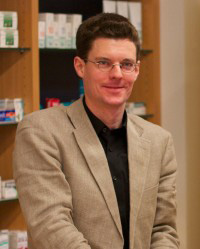
Photo: Prof. Dr. Thilo Bertsche/Hans Jakob Rausch/University of Leipzig