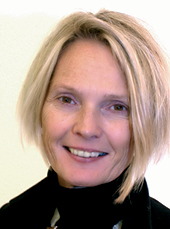
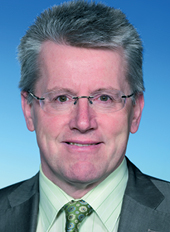
On the occasion of the event “AMNOG - a brake on innovation or a necessary correction?”, organized by the two pharmaceutical companies Boehringer and Lilly, which cooperate in the diabetes sector, Prof. Dr. Beate Kretschmer, Head of Health Care Strategy at Lilly Deutschland GmbH, and Ralf Gorniak, Managing Director of Boehringer Ingelheim Deutschland GmbH, give speeches and answers. The focus was not on looking back, but rather on looking forward, especially in view of the current G-BA resolution (see www.m-vf.de): What can be done better?
>> Mr. Gorniak, while Prof. Kretschmer spoke at the event “AMNOG - brake on innovation or necessary correction?” about sand dunes that are rolling towards the pharmaceutical industry, you are talking about imbalances that, if not eliminated, will result in AMNOG becoming one could outgrow the brake on innovation. Where do you think these imbalances can be located? And what should be done to get these imbalances out of the system?
Gorniak: The biggest imbalance begins right at the beginning of the AMNOG process, namely when determining the comparator therapy. The way the comparator therapy is currently being defined gives the impression that it is being formulated with the sole aim of achieving the lowest possible price at the end of the day. It's probably not about a really useful medication and evidence-based comparative therapy, but rather about the one that prejudices prices that are as low as possible. This is where the biggest problem lies.
Your claim?
Gorniak: We demand a fair discussion process that leads to a reasonable comparative therapy based on evidence and competence.
As is well known, the appropriate comparative therapy is determined by the Drugs Subcommittee of the G-BA, using a random cohort of competencies existing in this group, which certainly cannot correspond to the highest possible evidence class of competencies that exists in Germany.
Kretschmer: But who else can do it? It would be important to integrate more expertise into this circle, but also health professionals who are close to the patient and ultimately the patients themselves. We would therefore like to have a kind of appraisal or appeal office in which experts can be integrated depending on the indication.
Independent experts?
Kretschmer: As much as possible. But let’s be honest: none of us are independent. Neither we, nor the GKV umbrella association, nor the IQWiG or the G-BA - everyone pursues their own interests.
Is the arbitration board independent?
Kretschmer: Of course, the members of the arbitration board also have their history. There is an order to be fulfilled.
To your knowledge, are there such higher-level competence centers abroad to which such definitional tasks could be delegated in good conscience due to their independence?
Kretschmer: At NICE there is a board in which patient representatives, but also nurses, actually take part. In addition, both doctors and manufacturers can appear on this board. At least there seems to be a culture of discussion there that is worth its name.
Gorniak: I could imagine that in Germany the relevant specialist societies are definitely an element that should be included in the process. Their expertise would then have to be supplemented by that of real treating doctors. But we must always be aware that everyone is pursuing their own interests. At the moment, however, we have the impression that the interests of the other side are so strong that we are not making any progress at all with our considerations and even well-intentioned approaches. Perhaps only an additional stakeholder at the table who brings expertise into the system will really help to improve the process. For example, by helping to define sensible comparative therapies, among other things.
According to the G-BA, the additional benefit of their innovative drug could not be proven due to an “incomplete dossier”. This means that they did not adhere to the specified appropriate comparison therapy. Does this mean the dossier is really incomplete?
Gorniak: We firmly reject this statement: The dossier could have been processed because it was complete, including for a comparison with sulfonylureas. However, the assessment of our fully submitted dossier was made without examining the available data solely for formal and not for medical reasons. The specific advantages of gliptins and linagliptin are not taken into account at all: for patients who have been treated with metformin and sulfonylureas, no weight gain, no hypoglycemic phases, long-term vascular protection. Such an interpretation of paragraphs does not do justice to an adequate assessment of innovations.
But what are sensible comparative therapies? In order to determine this, you would first need appropriate evidence.
Kretschmer: Evidence is always an issue. Anyone who would ask about the evidence on sulfonylureas with which we should compare our innovative medicines would realize that there is no evidence that would actually authorize these substances to be comparative therapies. The repeatedly cited UKPD study is not suitable for this. The objective, design and results of the study do not allow a derivation of an endpoint benefit. It must be noted that this study is not an endpoint study at all, but rather only different therapy regimes - i.e. intensified therapy versus conventional therapy - were examined. And that was planned as a study in the 70s. But today we are confronted with the statements of this ancient study because, according to the G-BA, sulfonylurea has proven endpoints and can therefore be used as a comparative therapy. It doesn't seem to matter at all that actually all scientists say that the UKPDS is not suitable for elevating sulfonylureas to the status of a comparative therapy.
How do IQWiG or the G-BA respond to such objections?
Kretschmer: People discuss things in circles. Because the UKPDS has been incorporated into the DMP and is the standard of care here, sulfonylureas must also be the comparator therapy. Breaking this cycle seems impossible.
What if you were to get into the reality of regulations? Sulfonylureas are no longer necessarily the standard therapy.
Kretschmer: Absolutely. The patients who develop type II diabetes today are much younger patients than perhaps 20 years ago or even 10 years ago. Today we are in the fortunate position of having new, more tolerable medications available for therapy, which broaden the therapy options. The selection should therefore be based on the needs of the patient. We therefore need a new medication culture that allows patient-specific medication approaches.
However, I can well imagine that these substances are still anchored in the guidelines.
Gorniak: Right.
This could mean that the specialist societies should finally adapt their guidelines to the current, optimal medication.
Gorniak: That would be desirable.
How do you act there?
Kretschmer: You have to differentiate a little here. All substances are already listed in the guidelines, mostly sorted alphabetically. But when it comes to their use, no distinction is made between different patient populations.
Wouldn't we need adapted guidelines based on the new findings in diabetes research in recent years, which are aimed not only at the rough distinction between types 1 and 2, but also at subgroups?
Kretschmer: The guidelines must finally show which medications are suitable for which type of patient. But so far the guidelines imply: One fits all.
The interim conclusion is that the therapeutic approach must become much more differentiated, precise and individual. This applies to both the medication time and the therapy sequence and path. Now what would be the second imbalance that would have to be eliminated?
Gorniak: The second major imbalance is that in principle it is not possible to reach an agreement in the negotiations between pharmaceutical companies and the federal association. This is because the starting positions are maximally apart. The negotiations over the framework agreements have already shown how little chance there is to actually define meaningful solutions together. The first price negotiations that have now begun with the GKV umbrella association will be extremely difficult. We'll see what results come out in the next few months.
What could one do to eliminate or minimize this imbalance in these maximally diametrical positions?
Gorniak: To do this, both sides first have to throw old ideologies over the fence.
Which one would you throw over the fence?
Gorniak: I think we as the pharmaceutical industry have already gone over the fence a lot. A few years ago, the fact that industry representatives consider a benefit assessment to be useful in principle would have been an impossibility.
And the necessity of price negotiations, thus saying goodbye to free price formation?
Gorniak: The question for us is how these negotiations will be conducted. Is it only used in comparison to the comparative therapy? Are they managed taking into account an overall system with costs for hospitalizations and secondary illnesses? Shouldn't such parameters also play a role? And then comes the point as to whether these price negotiations are also conducted taking European prices into account. In addition, the current decision by the arbitration board to assess European prices includes a number of countries whose drug prices cannot actually be compared with German prices.
Because they are not comparable to the German market?
Gorniak: What does a Greek, Spanish or Portuguese prize have to do with a German one? In all of these countries, drug prices were reduced by the government, among other things due to the financial crisis. And should these prices then be benchmarks for comparison with the prices of a functioning economy like Germany? There is something wrong.
You seem a little panicked.
Kretschmer: That results from this uncertainty. How is the comparison therapy handled? What happens to the IQWiG report? What happens in pricing? For example, we don't know at all how a price is formed. Is there an algorithm? Or a weighted average based on patient groups and volumes? At the moment I can only look into the crystal ball, but I don't even remotely know where we will be financially at some point, which would be my job as a strategist.
That doesn't sound like a good statement for a strategist.
Kretschmer: Right. And my managing director rightly sends me off to do my homework. But how without any facts?
So evidence is zero.
Kretschmer: Evidence minus zero. We are expected to serve a high-risk market, but instead of just poking around in the fog, we have to operate completely blind! Nobody feels comfortable there, it's like walking on quicksand, every step can be wrong.
What about the operationalization of the additional benefit, which IQWiG carried out in the form of a voluntary service, but which was not accepted by the G-BA?
Kretschmer: This threshold discussion has been all sorts of things. We were happy that we had anything at all. But interestingly, the G-BA immediately withdrew the threshold values because they had to come from a standard-setting decision by the G-BA. With the IQWiG model we at least had something to orientate ourselves on, but now we have nothing left.
What would be your wish for Easter?
Kretschmer: My Easter wish is that people don't always immediately assume that the pharmaceutical industry wants to exploit the health system. The pharmaceutical industry is taking on the benefit assessment and is therefore part of the solution and no longer the problem. <<
The interview was conducted by MVF editor-in-chief Peter Stegmaier