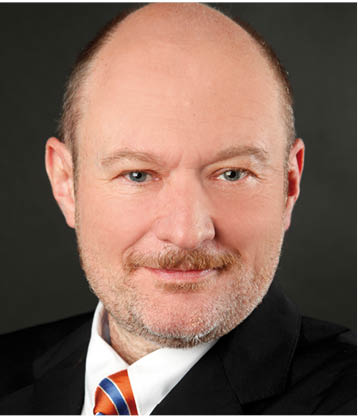
Weil es ein Ziel der Unternehmensstrategie seiner Krankenkasse sei, durch effiziente Versorgungsforschung gemeinsam mit anderen Akteuren das Gesundheitssystem weiterzuentwickeln, unterstützt Prof. Dr. h.c. Herbert Rebscher, Vorstandsvorsitzender DAK-Gesundheit, wie viele andere den seit 2012 jährlich verliehenen MSD Gesundheitspreis. Für die diesjährige Ausschreibung haben sich derzeit schon über 20 interessante Projekte beworben, doch noch ist Zeit bis zum Bewerbungsschluss am 15. April.
> Die großzügige Auslobung – immerhin werden für die fünf Preisträger 100.000 Euro zuzüglich eines Sonderpreises in Höhe von 10.000 Euro für ein Projekt mit der größten Patientenorientierung und einer erfolgreichen aktiven Einbindung von Patienten zur Verfügung gestellt – ist nur ein Aspekt, warum sich so viele Gestalter innovativer Versorgungslösungen für einen Preis bewerben. Doch mehr geht es um die damit verbundene Auszeichnung und die Hervorhebung aus der Masse vieler anderer Projekte, Ideen und Ansätze, die es vielleicht nie schaffen, den hohen Anforderungen des dem Preis zugrunde liegenden Kriterienkatalogs (s. Kasten unten) zu überspringen. Doch die, die das schaffen, zeigen damit, dass sie eine nachhaltige Verbesserung der medizinischen und/oder ökonomischen Ergebnisqualität gezeigt haben, die obendrein auch noch extern evaluiert wurde. Und sie können auch stolz darauf sein, zu den Preisträgern zu gehören, für die diese Auszeichnung eine „stimulierende Anerkennung ist“, wie es Harald Möhlmann, Geschäftsführer Versorgungsmanagement der AOK Nordost, formuliert. Und für alle anderen, die sich nicht bewerben – oder beworben haben, aber nicht auf die ersten Ränge juriert wurden – „zeigt er, was zum Nutzen der Patienten in Deutschland tatsächlich möglich ist.“
Die mit dem – immerhin von der Pharmaindustrie ausgelobten – Preis verbundene Anerkennung ist wohl auch der Grund dafür, warum es so viele Unterstützer wie Rebscher gibt.
Breite Unterstützerschaft
Mit als Unterstützer dabei ist auch Prof. Dr. Volker E. Amelung, der Vorstandsvorsitzender des Bundesverband Managed Care, dem es darum geht, „ein gutes Gesundheitssystem noch besser zu machen. Für ihn, der auch in der Jury mitwirkt, ist das mit dem Gesundheitspreis verbundene „Qualitätsstreben, auch im Bereich der Prozesse und Strukturen, zukunftsweisend“. Ähnlich wie Amelung argumentiert auch Dr. med. Hans-Joachim Helming, der Vorsitzende des Vorstandes der KV Brandenburg, wenn er sagt: „Ich engagiere mich für den MSD Gesundheitspreis, weil auch das hervorragende deutsche Gesundheitswesen weiterentwickelt werden muss – und dies durch ein alle Akteure einbindendes Versorgungsmanagement.“ Dr. Rainer Hess, ehemaliger G-BA-Vorsitzender und ebenfalls Mitjuror, ergänzt: „Ein solcher Gesundheitspreis macht die vielfältigen Aktivitäten sichtbar, die Versorgungsstrukturen zu verbessern und in die Versorgungspraxis zu integrieren.“ Dieses hehre Ansinnen unterstützt auch der Fakt, dass erneut Bundesgesundheitsminister Hermann Gröhe die Schirmherrschaft des Preises übernommen hat. <<
Die Jury des MSD Gesundheitspreises
Prof. Dr. Volker E. Amelung, Vorstandsvorsitzender des Bundesverbands Managed Care (BMC)
Dr. Rainer Hess, Hess & Hohmann Rechtsanwälte
Dr. Rolf Koschorrek, Berlin
RA Mirjam Mann, Geschäftsführer ACHSE e.V.
Prof. Dr. Friedrich-Wilhelm Schwartz, München
Prof. Dr. Dr. Peter C. Scriba, Ehemaliger Direktor der Medizinischen Klinik Innenstadt, Klinikum der Universität München
Dr. Jutta Wendel-Schrief, Direktor Market Access von MSD
Interview mit Prof. Dr. med. Dr. med. h.c Peter Scriba: „Chance für Visionäre“
>> The five criteria that applicants for the MSD health award must overcome are a very high hurdle.
That's a good thing. Because that guarantees what motivates me to have served on the jury for years and thus support the prize.
What do you find so extraordinary?
Firstly, the prize is relatively well-endowed, even though the annual funding of €100,000 is usually distributed among five or six winners. Nevertheless, it's a significant sum for the applicants. The five criteria mentioned above, as well as the work of the jury, ensure that this money is distributed fairly.
Please define "reasonable".
For me, sensible means: It benefits the patient. This usually doesn't involve a new method, procedure, or substance, but rather precisely what is very, very close to the goal of healthcare research: to ensure that every patient receives the best possible quality of care. So that people live longer, recover more quickly, or at least experience an improved quality of life.
Wouldn't that be the responsibility of the self-governing bodies and thus of the G-BA?
Many gaps in healthcare provision cannot be identified or adequately addressed by the healthcare systems defined by the G-BA (Federal Joint Committee). However, the social commitment of a few individuals can certainly help, as they repeatedly manage to fill real gaps in care with good ideas on a regional or even national level.
Who is applying for the health award?
To my great surprise, this prize attracts truly passionate individuals who want to make a difference on their own initiative and who, perhaps for the first time, dare to address a wider public through such a competition. There are some real surprise winners among them, and as a juror, it's truly enjoyable to see what emerges.
Were there any real surprises?
Certainly. I remember very well a project in Hamburg where an internal medicine ward in a small hospital was converted to be suitable for the care of dementia and geriatric patients. Or another project in Swabia and Bavaria that focused on the prevention of geriatric falls, not near geriatric wards, but where the affected people actually live: in the countryside. They went from village to village, visited the elderly residents, and encouraged them to engage with preventative measures. And they did this with the help of the Rural Women's Association, a health insurance company specifically for rural populations, the local singing club, and the sports club. Now that's what I call an original, but also very successful, because patient-centered, multi-faceted, and therefore highly effective prevention project with nationwide impact. I'm already curious to see what the jury will see this time.
Couldn't such ideas be given more space within the innovation fund?
Whether one calls the people applying for the health prize amateurs, true believers, entrepreneurs, outsiders or lateral thinkers, or perhaps better yet visionaries: their ideas have little to no chance in a system of evaluating public funds and their use in the field of research funding.
Why then?
Visionaries simply get lost in a funding system because, due to its democratic legitimacy, it must distribute either tax revenue or, as in the case of the innovation fund, funds raised from membership fees. This places an enormous responsibility on self-governing bodies to ensure that the money invested is spent in the best possible way, which requires sufficient evidence.
And what about the health award?
This involves a kind of altruistic venture capital investment. And that's a good thing, because it allows for the rewarding and support of exceptional ideas. The prize is therefore a kind of translation award, recognizing great ideas that can sustainably improve healthcare provision. Incidentally, this is also a very important criterion of the competition.
Is a pharmaceutical company acting altruistically?
This type of funding is largely pure altruism, but cleverly combined with an act of knowledge management. Every call for proposals, especially one so highly endowed, attracts numerous applications and thus a wealth of new information. Seen in this light, a research prize is an extremely cost-effective way to gain access not only to important information but also to the sources of innovative ideas. After all, nobody does anything purely for free; neither pharmaceutical companies nor health insurance companies do that.
Shouldn't the pharmaceutical industry be given far more opportunities to actively participate as a system partner?
Pharmaceutical companies have certainly done some less-than-ethical things in the past. However, on the other hand, the reputation of this sector is far worse than most of those working in it today deserve. Furthermore, any honest scientist will have to admit that they have collaborated quite reasonably and ethically with the pharmaceutical industry for decades – and, if at all, have very rarely been confronted with requests to withhold certain data. One simply mustn't give in to such demands, because lies usually have very short legs.