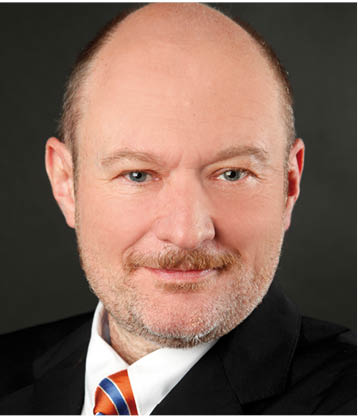
On the occasion of the tenth anniversary celebration of the “Scientific Institute of TK for Benefits and Efficiency in Health Care” (WINEG), which was founded ten years ago, Hamburg's Senator for Health and Consumer Protection, Cornelia Prufer-Storcks, found clear words about the relationship between health care research and politics. She herself would like to have “a rational basis” for her decisions more often, but what politicians then do with the results produced by health services research is a different topic. Examiner Storcks, with a dose of political self-criticism: “I am of the opinion that we could draw conclusions from the results of healthcare research more quickly and decisively.”
>> Prufer-Storcks thinks it is absolutely right, as she explained in her presentation on the tenth anniversary of WINEG, that the statutory health insurance companies would carry out health care research and use their treasure trove of data for this purpose. But also that the major types of health insurance companies “raise their voice audibly in the concert of those who deal with health services research”. These are the universities with their corresponding institutes, but also the new, state-legitimized institute IQTiG, which is authorized to accept and evaluate routine data. That's a good thing and she worked hard for it. There is one main reason for this: If politicians want to base decisions on health services research, this undertaking should not only be based on insured data from a specific health insurance company, but must – according to Schecker-Storck’s opinion – “be able to use the data base of all insured persons and patients”. That's why she is happy that the start of the IGTiG has brought the topic of use of routine data to the fore, because the knowledge of previous health services research as well as that of quality assurance in the hospital sector is still far too limited. Examiner-Storcks: “We know that patients spend an average of eight days in hospital, but not what happens afterwards! Like the issue of regional differences in care, this is still a black box, which is why the only data that is available here - that of the statutory health insurance companies - must be used.
As is well known, this legislative period, continues Examer-Storcks, is clearly under the guiding principle of quality, or more precisely: the will of politicians to orient political decisions towards quality. “We have finally replaced old thinking,” explains Hamburg’s Senator for Health and Consumer Protection. For a long time, the prevailing political thought in Germany was that good care was dense care and that care close to home was therefore the be-all and end-all. The fact that being close to home isn't everything, especially when hospitals don't try certain treatments often enough, is not part of politics really advanced, who for a long time thought that what medical institutions produced on their own was quality enough because those working there had ultimately studied medicine. For this reason, says Schecker-Storcks, one must appreciate what has happened during this legislative period when quality is suddenly made the basis for political decisions; all the more so because many people are not even aware that quality has not yet appeared as a criterion in the federal hospital law. Examiner-Storcks: “So far it has been about cost-effectiveness and supply close to home and nothing else.”
It is gradually dawning on many people that the politically desired project of quality-oriented demand planning has suddenly brought about a paradigm shift. But now the corresponding consequences must also be drawn, to which health care research has already made some contributions by pointing out deficits and differences in regional care as well as problems in various institutions. Their demand: “We want to base future decisions even more strongly on the evaluation of care models and the testing of new models.”<<