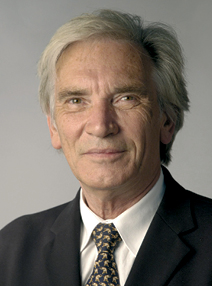
>> Mr. Dr. Schily, the basis of evidence-based medicine is epidemiology, which includes a whole set of scientific rules. But many scientists basically reduce the existing modular system of control measures to randomization. What do you personally think of EBM?
If EBM were based on medical experience and rational medicine were to be further developed from this, that would be a very fine thing. But it is precisely the aim of the representatives of the so-called EBM to keep the doctors and patients as subjects - since they are subjective - out of the process of reaching a verdict. Because this appears to be achieved in a double-blind, random-assignment trial (RCT), this is considered the gold standard. The criticism of RCT is old and well founded. The fact that people still stick to it indicates that we are dealing here with thought collectives in the sense of L.Fleck or with paradigms in the sense of TS Kuhn.
Is there a coherent argument for RCT?
I have yet to find an example in which the randomized double-blind trial has produced anything safe. The examples that IQWiG lists on its website are either ridiculous – like the spoon in the bottle – or show cynicism, like the blindness caused by excessive oxygen enrichment in the air of the incubators in premature babies. It has been known for over 100 years that oxygen can be harmful to life. A proper examination would have clearly revealed the cause, no further study would have been necessary and many more children would have been spared blindness. In my opinion and experience, those who really do medicine do not feel comfortable in the complex of evidence-based medicine, with all the evaluations that go with it.
Why is that?
They are medically committed. You have specific patients in front of you and not collectives. In your medical practice you must take into account exactly everything that the studies try to exclude. On the other hand, they are required to follow the instructions given to them with the help of these studies. They should not prescribe medications with which they have worked successfully because their effectiveness has not been proven in studies. It would be ideal if they – as a defined part of a higher-level system – functioned in a defined manner.
This corresponds to the lack of – including financial – recognition of medical and nursing work. Empathy is difficult to evaluate. This is easier with technical services. The specialist earns better than the general practitioner and among the specialists, the radiologists and laboratory doctors, i.e. doctors who do not necessarily have to see a patient, have the best position. The closer the doctor is to the patient, the less he earns. And the pediatrician is often at the bottom, even though a particular level of clinical skill is required of them.
Where do you think this imbalance is leading us?
To discord, resignation or, in the worst case, cynicism. Incidentally, it is similar in science, or rather in the so-called scientific community: it is not the originality of the research that is judged, but rather the publications per unit of time. Those who are in the middle of the mainstream, who are well connected and who know when to write which applications and how are successful.
How many “good” doctors are there?
I think there are quite a few, or at least more than people generally realize. If this were not the case, the patients would be worse off.
And how is the doctor?
The really good doctors suffer in our healthcare system just as much as patients do. And massively so. All my life I have asked myself how one can get out of this predicament.
Have you found an answer?
We will have to come up with new solutions. I know that this is difficult. We want to provide people with the best possible technology and scientifically evolving medicine. This will not be possible with a volume-based and economized healthcare system. Doctors would be challenged by society here; it would also be a good task for health services research if it does not see itself as a scientific - positivist sociotechnics when applied to medicine.
What does the reality look like in the practice area of 5-minute medicine or in the hospital post-DRG?
The DRG are their own thing and, in conjunction with the morbidity-oriented risk structure compensation, a very special one. I read an article about the emergency department in the “Monitor Health Care Research”: For economic reasons, at least six patients per hour would have to be cared for. That means that with six patients per hour - even in the emergency area - the doctor is only given ten minutes. This can't be done!
Apparently, in a highly economized medicine in which such requirements can be enforced at all.
That's possible - but you can predict that it won't be any cheaper and certainly won't be any better.
Who determines the rules of this “game,” which unfortunately isn’t one?
In our “health care economy” we have three players in front of us: the state in its legislative and executive functions, the health insurance companies and the medical establishment. And the patient representatives are allowed to watch. Do you know the triple pendulum? You can push a single pendulum arm, which triggers a fairly simple pendulum movement to the left and right. If you hit two or even three of the interconnected pendulum arms, it becomes impossible to predict what the pendulum movements will be. This just goes to show how difficult the situation is.
The idea of competition implanted in the health system is a deliberate political instrument with the aim of introducing an economic barrier. The self-administration institutionalized by politics is required to move within the specified 330 billion euro area per year, with the exception of the regulations for the future made in the “Law for the further development of the financial structure and quality in statutory health insurance “ – it doesn’t really matter what quality the result is.
Competition over quality would be good, competition over quantity and market power is pernicious. Clean competition only works under clear and clear regulations and does not work when market participants and supervision are closely linked. The result can be seen in the energy transition or diesel fraud. Politicians are afraid to call the fraud fraud, but even sit down with the fraudsters at summits.
Health services research and evidence-based medicine are now increasingly finding their way into precisely this complex, unpredictable construct.
As I said, if an EBM is developed that takes into account medical experience, which draws conclusions not from laboratory situations but from real circumstances, the EBM would be able to fulfill its goal of providing doctors with scientifically proven knowledge. This goal can only be supported. However, as long as attempts are made to obtain “evidence” using unsuitable means, it is unsuitable and often hostile to progress.
An example?
Honey and sage are still good remedies for sore throats and tonsillitis. But which beekeeping association would invest a few hundred thousand euros for an RCT?
Which is difficult per se and which is not recognized by IQWiG anyway because the bees were not properly randomized.
That's definitely a problem in itself. But what applies to honey also applies to most medications in the so-called existing market, which have hardly been researched.
Is EBM itself an obstacle to innovation?
Current EBM tools drive research into industry. This is and must be profit-oriented. However, research for people must be oriented towards people and not towards markets.
How would EBM have to change so that it has no or fewer negative side effects?
EBM representatives must seriously ask themselves what they have achieved and what they have not achieved. But as long as they remain in their ideologically shaped paradigmatic community - with a claim to power - nothing will change. Something could also change if politicians enforced ideological diversity.
You sound a bit frustrated now.
A little yes - or rather: I was. But I also have to digress a little about this: I enjoy being a doctor and had the great advantage of being able to study in Basel for a semester before studying medicine in Tübingen and being able to listen to lectures by Karl Jaspers, Adolf Portmann, Adolf Muschg and Karl Barth. That was an inspiring, great time. Then the counter-proposal: I came to Tübingen to study medicine and the first thing I did there was the anatomical dissection course. The course was led by a professor who was certainly very nice, but - as I thought at the time - also completely one-sidedly educated. Please don't misunderstand me: I looked up to the professor, he knew everything about anatomy, but the dead specimen seemed far removed from the living organism that I would have to deal with as a doctor.
Does a doctor have to be a philosopher?
No. But to become a scientifically educated doctor, one should practice thinking. The best way to do this is with your own head and philosophy.
Doing this better was certainly the reason for Witten/Herdecke.
Exactly. On the one hand, early practice, on the other hand, fundamental studies. All Witten/Herdecke graduates had to engage in philosophical activity at some point and, on top of that, deal with history and, ideally, with art.
Did it just happen that way?
Secure. We started doing this in 1983, long before there was even a corresponding model paragraph in the licensing regulations.
Like that?
We had a motto coined by G. Kienle: “Enabling progressively more comprehensive assistance”. This goes well with the so-called learning spiral and problem-oriented learning. We didn't develop it, we adopted it. To put it simply, problem-oriented learning means that you have to learn to ask the questions yourself, to ask them correctly, in accordance with the subject matter and to work out the answers yourself. This requires and practices your own activity, imagination and work in a team. It exercises the ability to criticize and strengthens the confidence in judgment. There is a significant difference whether I learn this way or whether I am filled with answers in frontal lectures for which I am then supposed to find the questions later in life to which the answers I learned years ago could probably fit.
But the learning spiral also means that I am led from simpler, manageable problems to increasingly complex problems.
Acquiring knowledge, encountering practice, practicing assistance in nursing, thinking about how I relate to the world and how the world relates to me - that's roughly how you could summarize my studies at the time. The students' days in the first semesters began with nursing and patient observation at 7 a.m. Then the problem-oriented learning events. Practical days with the resident doctors and the fundamental studies on Thursday - the day was kept free from other events - were added.
Were there no reviews?
Of course there were measurement data, even though the corresponding exam formats were not immediately available.
How were the requirements of the licensing regulations met?
The students took their physics exams – and later their final exams – like the others. The exams were and are the same for everyone and are carried out centrally. Fortunately, Witten/Herdecke was always at the top in medicine in the exams.
Is there any insight into whether these graduates also became better doctors?
There are no findings from Witten/Herdecke. That's why I'm glad that the reform course at the Charité, which existed from 1999 to 2009, was evaluated. This course had many similarities with Witten/Herdecke. Unfortunately, the results have not been published. One thing that these courses have in common is that the graduates were professionally qualified and almost all graduates worked in curative care.
And what about the “normal” medical course?
There should be significantly fewer people taking curative action. There are also complaints that these graduates often need more than a year to be able to really be used professionally.
What impact does this have on the entire supply system? Such model projects as in Witten/Herdecke and in Berlin at the Charité, which attempt to provide different, better training for doctors, are certainly honorable...
... because without Witten/Herdecke there would have been no model paragraph at all. And then nothing would have changed!
But has this had an impact on the system?
Not really. However, it has been possible to draw attention to the deficiencies in medical training and to show that there is another way.
Is this also the approach of the Brandenburg Medical School (MHB)?
Essentially safe. The Brandenburg Medical School has essentially relied on the concept of the Charité's reform course, the quality of which must be recognized.
Is health services research also taken into account? Many doctors don’t even understand what “p” means, for example.
What would only be important if health services research became more fundamental.
Lots of subjunctive II.
Put quite carefully: If health services research wants to be taken more seriously by doctors, it must analyze the important medical questions.
Should health services research become more medical?
I would formulate it loosely and expanded on Naunyn and Virchow: Medicine is a science, a social science and also art, whose methods must do justice to the complexity of people and their environment.
As is well known, health services research aims to describe “the last mile”, as Professors Pfaff and Schrappe put it.
This means that she wants to be present and decisive in the consultation room and at the sick bed, so to speak. But she can only do that if she is supportive. For example, she can ask how the care of the diabetic foot is going and she will find that here too the progress is based on medical commitment. You should ask whether and what different treatment options are available and who achieves the best results with which method for which patients. But health services research must also ask, loudly and publicly, why it is tolerated that - with the constant increase in cases of obesity and diabetes in the population - the sugar content in our industrially produced foods is allowed to constantly increase, which is the case.
Health care researchers see themselves as having a duty “to examine the care structures and processes of health care, paying particular attention to the patient and population perspective, and to focus on the appropriateness of treatment and the improvement of care as well as the complexity of context and intervention.” , as can be read in the updated health services research textbook.
On the one hand that sounds very scientific, but it also smells a lot like the Reich insurance regulations and describes the proximity to the state administration. They expect health services research to produce results that could be used to better control the system.
Surely this doesn’t just apply to medicine?
Definitely not. The problems are fundamentally in all so-called supply areas. So you want to find options for intervention and control everywhere.
Which type?
We have legal rights in the RVO, we have their regulations in countless paragraphs of the social codes. We have competition and contractually regulated benefit claims in private health insurance. We have addressed the complexity and confusion. The whole thing is just too big. We can tell 80 million people to walk on the right side of the street, but if one cannot walk, providing assistance becomes a highly individual matter. As far as I know, protecting people in the event of illness only works in cooperatively organized solidarity communities.
Are we in the early solidarity communities before Bismark, in Barmen, Elberfeld or Freiberg?
No, but for example in Bremen or Münster. And not in the 19th century either, but in the present.
With a catalog of services?
Exactly not. These registered cooperatives have no catalog of services at all, but rather - as Bremer Samarita puts it, for example - they replace demands with encouragement.
Not entitled to any benefits?
Not “just any services”, but rather those that the treating doctor – in dialogue with the patient – considers to be the right ones for the individual patient. Samarita, for example, calls this an “encouragement”: Whatever you need, we will say it to you! No more, but certainly no less, which means there is complete trust that both patients and doctors want to do the best possible.
And that works?
Surprisingly good.
And how?
Members only seek help when they really need it. The surplus of the contributions paid flows into the solidarity pot, the “collection basin” for members in need.
Do you have an example?
A man, a member of a solidarity community since 2012, broke his pelvis twice when falling from a ladder in August 2015 and two muscles in his right shoulder joint tore. The man describes it like this: “The attention and care I then experienced from Samarita and my regional group was unprecedented.”
You rarely hear something like that from health insurance companies.
But it goes further. Because not only were the man paid for six operations without any problems, which is what normal health insurance companies usually do, no: the clinics he chose himself were able to bill the services provided at a private rate! During the recovery period, he not only received several calls from Samarita inquiring about his condition and asking if there was anything they could do for him, but members of his regional group also offered him their help.
That much attention is certainly unusual.
And how. That was not all. When the man needed follow-up treatment after two months in a wheelchair and strict bed rest, the solidarity community helped him quickly and unbureaucratically. While the pension insurance, according to the man's statements, rejected the costs of the rehabilitation with ever new hair-raising reasons, the solidarity community once again paid for the stay in the rehabilitation clinic without any problems. His conclusion: “After more than four years of membership, I am happy and happy to be a member of the Samarita solidarity community. I feel like a person who is respected and valued here. I feel supported by solidarity in the community. For me, this alone is part of healing in a world ruled by capital.”
How high is the contribution of such a solidarity cooperative?
Significantly cheaper than private health insurance companies.
That would be an approach to renovate the GKV, which is slowly becoming outdated.
Would it be. Because it is the actual solidarity model as it was originally intended.
Can one seriously assume that 80 million German citizens can be organized into solidarity communities and that Germany could be transformed into a model similar to that of Switzerland within - let's say - five years?
Not in 5, but maybe in 10 or even 15 years. That is still my hope. The current system has been in place for 135 years and those involved will resist change. Nevertheless, I believe that we have to come up with fundamentally new forms.
Would you say the G-BA is a helpful institution?
In a way, yes. However, if the Federal Committee is to carry out its tasks, it would have to be given even more competence - especially medical ones - and a much greater ability to intervene at the state level; But please do so with clear, very clear legal announcements.
Is the G-BA properly staffed for this?
What is not possible at all is that in the G-BA only the so-called benches - i.e. the central association of the federal government and the so-called "service providers" - are entitled to vote, but the patients have the right to apply, but do not have an impartial member to appoint themselves, like him, for example Reform Commission of the Münch Foundation calls for reform proposals that make sense overall. That the representation of the patients is currently has no voice, but it is logical when you see where the Federal Committee and our entire health system has its roots: with Bismarck, whose paternalistic worldview is thus made concrete.
Where does this all lead us?
Counter-question: Where is unlimited egoism leading us in the environment and where in the automotive industry? And: Why should things be different, especially in the healthcare system?
Because it says “solidarity system”!
You can also be deceived by this. Egoism is the most common way of being and capitalism and environmental destruction are unfortunately related to it. This is something I never admitted before: As you get older, you just have to admit that the world and humanity is what it is.
And yet we are all living longer and dying healthier.
But certainly not only thanks to the achievements of medicine. This is primarily due to better nutrition, reduced physical work, more efficient hygiene measures and safe social environments.
How can it be that we all live in one of the best healthcare systems in the world, in which 330 billion euros are spent annually, but within the city of Hamburg, comparing the highly deprived districts of Billstedt and Horn to the wealthier Harburg, the people are in the top two die around 12 years earlier?
Some people just don't get the benefit of a longer lifespan: social environments, sensible nutrition and efficient hygiene are not the same everywhere in Germany. We would know this more accurately across Germany if we did sensible epidemiology. The solution here goes beyond medicine; it is a task for society as a whole. But of course the approach in Hamburg should be supported.
Health services research could also do this very well.
Not could, not should: She has to! We need a sensible, clever, non-agitated epidemiology, supplemented with the necessary and courageous health care research conclusions and instructions for action.
Is it possible that doctors and all their questions don't get involved enough in health care research?
If I remember correctly the interview in your magazine with Mr. Hildebrandt, it was doctors from the affected districts in Hamburg who approached Mr. Hildebrandt.
But they want to help and not necessarily do research.
Once again: As a doctor I should and want to heal, help and alleviate. I shouldn't practice on patients, I shouldn't experiment on them and I shouldn't make any random assignments. If a doctor and scientist develops a new drug in the laboratory based on biomolecular considerations that promises to cure or alleviate an illness, he or she should be allowed to use it with the patient's consent. If the treatment is also successful in the second patient, this speaks against coincidence. But to undertake a double-blind study now would be reprehensible, because the evidence is already apparent. Possible side effects can also be recognized by carefully observing the progression. In this sense, doctors and researchers – even in one person – can work together.
Dr. Schily, thank you for the conversation. <<
The interview was conducted by MVF editor Prof. Dr. Reinhold Roski and MVF editor-in-chief Peter Stegmaier.