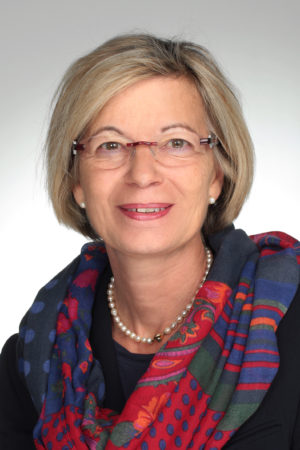
The Regensburg Tumor Center, founded in 1991, is a neutral and independent quality assurance center with a network of around 1,500 doctors* in Upper Palatinate and Lower Bavaria as well as 50 regional hospitals - including the Regensburg University Hospital. In accordance with the requirements of the Cancer Registry Act, the facility is responsible in its function as an “Institute for Quality Assurance and Health Services Research” for the structured collection and evaluation of the disease data aggregated in the tumor center. The “manager” of this data treasure is private lecturer Monika Klinkhammer-Schalke. The director of the tumor center, who has a doctorate (medicine) and a diploma (theology), and her team of around 30 people would like to draw conclusions about the development and progression of individual cancers and use the resulting findings to further develop the quality of care.
>> Why Regensburg? Two factors come together here: on the one hand, private. Her husband's career change ultimately led her and her family to Regensburg, with the small side effect that her two children now speak Bavarian, which sounds and still sometimes sounds strange to the Münster-born doctor and theologian. But she has come to terms with it quite well, because Regensburg is a really beautiful city with a high quality of life and, on top of that, a region that is characterized medically by a strong network structure between urban and rural areas. That means: New ideas and strategies find fertile ground here.
The tumor center, which was founded as a registered association in 1991, 27 years ago, was and is exactly such a new idea. This was initially a model project that was initially founded and funded by the Federal Ministry of Health for just two years to improve oncological care for tumor patients in the Upper Palatinate. However, the financing was subsequently taken over by the health insurance companies, the Regensburg University Hospital and the Bavarian Ministry of Health, Environment and Consumer Protection. In December 2015, the Regensburg Tumor Center became a central scientific institution of the University of Regensburg as an institute for quality assurance and health services research.
Since 1998, Monika Klinkhammer-Schalke, who had been working as a doctor at the University Women's Hospital in Würzburg for five years, has headed the tumor center initially as managing director and now as director. “My wish as a doctor has always been to know whether what I do is sufficient enough to improve and preserve lives,” she explains back.
looking at their decision to move from real care to research. In addition, it was very young at the time: Health services research was still in its infancy at the time and many doctors had little or nothing to do with this term. This changed over time when, after a development phase, first the clinical and epidemiological cancer registry and later the Institute for Health Services Research began to be established at the University of Regensburg.
This created the best foundations for translation-oriented health services research. On the one hand, a valuable treasure trove of data: Since 1991, over 550,000 oncological patients* have been documented from diagnosis to aftercare in the Regensburg Tumor Center. On the other hand, the institute, which presents care analyzes for individual tumor entities and gives feedback to doctors, both for care within the entire Upper Palatinate and Lower Bavaria, as well as for their own patients. And in between: 50 regional hospitals, including the Regensburg University Hospital, as well as around 1,500 resident doctors in the Upper Palatinate and Lower Bavaria. Monika Klinkhammer-Schalke says: “Through the constant collaboration with treating doctors from different specialist areas – both inpatient and outpatient – many questions that are important and relevant to care for people suffering from cancer were able to be analyzed together.” The transparency that is possible in this way is possible Not only to show the reality of treatment, but also to make deficits visible, which can then be improved together.
That is exactly the goal of the tumor center: to improve the survival of oncological patients through guideline-based therapy and the implementation of new therapy options. This is done, on the one hand, through the structured collection and evaluation of disease data in accordance with the requirements of the Cancer Registry Act and the continuous exchange with the treating doctors. On the other hand, the existing network structure of treating doctors is used to a large extent through joint quality circles, project groups and symposiums to improve quality, which in turn is particularly suitable for health care research studies. This is reflected in the scientific work of more than 20 doctoral students who, together with clinicians, work on specific questions regarding the care situation of oncological patients, but also the outcome of new therapy options.
With success? Absolutely: As an example, the administration of the indicated chemotherapy in colon cancer patients was increased from 45 to 80 percent after barrier analyzes showed that the information about this further and necessary therapy from the inpatient area was not continuously passed on to the outpatient doctors. After this was communicated and the necessary information was routinely included in the doctor's letter, all patients received this therapy, which has since resulted in more than 10 percent better survival.
Since 2003, the tumor center has also had a study center for quality of life diagnostics and therapy, which was set up using classic implementation methods (outreach visits, interactive continuous medical education and opinion leaders). The project was carried out from 2003 to 2007 by the “Healthy. Life. Bavaria.” of the Bavarian Health Association
Ministry supported, and further studies to test the effectiveness of quality of life diagnostics and therapy were supported by the German Cancer Aid eV and the Federal Ministry of Education and Research. The institute also works in the health care research group of the Comprehensive Cancer Center East Bavaria (CCCO); with the declared aim of networking the individual clinics and institutes and their ongoing projects more closely and launching joint studies in the field of health services research in multidisciplinary collaboration. Health care research, if it is transferred into the reality of health care, definitely has the power to protect lives!
It was therefore an important success for the tumor center team that the development of an intervention for the systematic diagnosis and targeted therapy of the quality of life of oncological patients could be completed as part of a complex intervention. Their effectiveness was tested and proven in two randomized studies, on the one hand for patients with breast cancer and on the other hand for patients with colon cancer. “The long-term goal is the long-term and sustainable implementation of the intervention in the routine outpatient and inpatient care of oncological patients,” explains Monika Klinkhammer-Schalke.
The Regensburg Tumor Center and thus the Institute for Health Services Research cover various complementary work areas:
• Comprehensive, cross-sectoral and population-related documentation and evaluation of the progression of tumor diseases in the Upper Palatinate/Lower Bavaria
• Documentation of tumor diseases for the epidemiological and clinical cancer registry
• Implementation of oncological health services research and quality of life research projects
• Further training for resident doctors in quality circles (7 quality circles regularly carry out further training and case consultations in the districts of Upper Palatinate)
• external quality assurance in oncological care
• Certification support for oncological organ cancer centers (e.g. breast cancer, colon cancer, prostate cancer, lung cancer, skin cancer centers)
• Continuous transfer of information between science and practice in oncology
And what is personally important to Monika Klinkhammer-Schalke? On the one hand, this is the consideration and introduction of patients' quality of life into routine medical care. “We talk a lot about this topic, but widespread implementation usually fails due to the methodological diversity of questionnaires, the lack of known or existing experts in the health sector and - in my opinion - also a lack of determination.” There are randomized studies in this area that show significant improvements show that make recommendations and yet – according to their criticism – “we remain in discussion mode”. Your personal goal is to use one or a maximum of two questionnaires to record and build regional networks whose experts are available to people with a reduced quality of life. <<
>> Why do you work at the “Institute for Quality Assurance and Health Services Research at the University of Regensburg”?
After my specialist training as a doctor in gynecology and obstetrics and more than ten years of practical work in this field in the clinic, I have been working at the Institute for Health Services Research for several years. The interdisciplinary orientation of the institute is very valuable for me, as I can contribute my expertise from the practical clinical area to various projects.
In your opinion, what sets the Regensburg Institute apart?
Collaboration with medical colleagues in practices and clinics, scientific research doctors and therapists in the field of oncology and, above all, the connection to the affected patients and relatives are possible here in an environment with a truly motivating director. Other research projects at the institute are carried out, for example, with certified organ cancer centers or oncology centers. Or even exciting projects in which we employ doctoral students, for example population-based analyzes on questions of surgical procedures for specific carcinomas and here the comparison with prospective randomized studies that have been carried out.
What topics and questions are you currently working on?
I am particularly interested in quality of life research in patients with oncological diseases. My current research focus is on the areas of quality of life in patients with breast cancer and quality of life in patients with colorectal cancer.
What would you personally like to achieve with health services research?
I hope that our research work and results will contribute to the (faster) improvement of the quality of life in patients with oncological diseases.
diseases, through specific therapeutic measures, not only in our region but nationwide. <<
Why do you work at the “Institute for Quality Assurance and Health Services Research at the University of Regensburg”?
Since completing my psychology degree, I have been working as a research assistant at the Regensburg Tumor Center. I was immediately enthusiastic about the thematic focus of quality of life research, especially because of its specific connection to improving the care of oncological patients. Due to the varied and exciting work, but also the collegial cooperation and the very committed and motivating management, I will continue to work at the tumor center even after completing my doctorate. For me, the scientific work offers a valuable balance to my parallel further training as a psychological psychotherapist.
What, in your opinion, sets the institute where you work apart?
The institute is particularly characterized by its proximity to the treating doctors in the inpatient and outpatient areas in the region, as a clinical cancer registry is integrated. This opens up a direct, practical connection to the reality of care and also makes it easier to carry out studies.
What topics and questions are you currently working on?
After proving the effectiveness of the quality of life intervention for patients with breast cancer, we are currently testing the generalizability of the results for patients with other tumor diseases, for example for patients with colon cancer, in another randomized study. The study results are currently being evaluated. In addition, we are currently examining the implementation of a digital form of quality of life measurement in inpatient and especially in outpatient settings using tablets and digital fax evaluations for patients with breast cancer.
What would you personally like to achieve with health services research?
I hope that our research will bring even greater focus to the quality of life of oncology patients in all phases of treatment, so that it receives the necessary attention and treatment in standard care for the benefit of the patient. <<