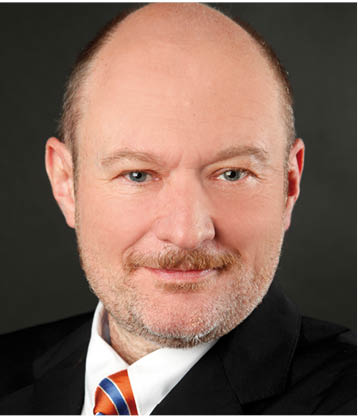
The Institute for Community Medicine at Greifswald University Medical Center under the leadership of its Managing Director, Prof. Dr. med. Wolfgang Hoffmann, not followed. On the occasion of the second edition of the “Germany-wide forecast of population-related morbidity expectancy for common cancers. Effects on care”, Hoffmann presented current figures on the future development of prevalence and incidence of cancer at the capital congress, as well as a comparison to his first work for the DGHO, the study “Challenge of demographic change” published in 2013. Stocktaking and future requirements for oncological care”. The result: The prediction at the time for the year 2020 - based on the data available at the time from 2008 - was amazingly correct: except for just a few percent!
>> “The prognosis at the time came true quite well,” Hoffmann said with a little pride when presenting the updated DGHO study on oncological care needs at the capital city congress. But, as he explained, there are various reasons for this, but it also has different connotations. First, the accuracy of the prediction at the time meant that demographics as such were actually the key predictor of the number of cancer cases to be expected. This means: Because society is getting older, the number of new cancer cases is rising inexorably.
The good news and this is where Hoffmann and his Greifswald team were a little wrong in the first study from 2013: Because there is initial evidence over time that survival is improving, especially through therapeutic advances, the prevalences are increasing more strongly, especially in younger patients, than was predicted at the time. “Something is happening in terms of care,” said Hoffmann. One can also be relatively certain that this difference in favor of survival time will increase in the next few years. In this respect, there will be many more prevalent cases in the future than were predicted based on demographics. Hoffmann: “We assessed the probability of survival rather pessimistically, but we underestimated the frequency of comorbidities.”
Nevertheless, both forecasts are as good as forecasts are rarely possible. Which is also important because the figures are important planning data for the DGHO. In contrast to other, comparable projections, the DGHO study uses different data sources such as population registers and epidemiological cancer registers and models the expected development of important indicators such as new cancer cases and prevalence down to the district level. “This makes it possible to make very precise and very differentiated statements about the trends in cancer care in Germany that would otherwise not be readily apparent,” emphasized Prof. Dr. med. Carsten Bokemeyer, Chairman of the DGHO and Director of the II Medical Clinic and Polyclinic for the area of oncology, hematology and bone marrow transplantation with the Pulmonology Section at the University Hospital Hamburg-Eppendorf. For Hoffmann, it is also about being able to plan such a project early on, and long-term, but still reliably enough. Hoffmann: “The point is that we don’t just start planning when the problem is already there, as often happens in the healthcare system.”
To do this, you have to know quite precisely how high the number of new cases (incidence) will be and, on the other hand, how the total number of people living with cancer (prevalence) will change because, fortunately, survival time with cancer is increasing . But it is also about considering the expected number of comorbidities, which is a new and particularly important finding of this report. According to this analysis, not only will the number of cancer patients increase overall, but also the number of those who also have diseases such as diabetes mellitus, chronic obstructive pulmonary disease, coronary heart disease, obesity or dementia. All of this poses very special challenges for individual treatment concepts and professional, interdisciplinary care structures today, and even more so in the future.
Based on the population data from the state statistical offices, a clear aging of the population can be seen: the age groups of those over 60 and those over 80 in the population are increasing disproportionately. If you combine this statement with the data from the Center for Cancer Registry Data (ZfKD), which collects and processes epidemiological data on new cancer cases from all federal states, with the associated tumor- and age-specific survival rates at the district level, the prevalence rates can be calculated from the absolute number of new cases: Accordingly The number of annual new cancer cases in 2025 will increase by 52,720 cases to 522,500 compared to 2014, while the prevalence of cancer will increase by a total of 243,585 to 2,846,400 cases in the same period.
There is a certain drama in these numbers. Hoffmann is less concerned with the incidence, which will increase by a few thousand compared to today, but more with the total number of older people in our society who live with cancer and need to be properly cared for. In the forecast period, which will be reached in just a few years from today, there will be an increase of around four million people over 60, including around 1.6 million people over 80 - that is a 20 to 30 percent increase in the proportion of people over 60 compared to the comparative figures from 2014! Because cancer occurs more often in older people than in younger people, this development will automatically lead to an increase in the number of people affected by cancer.
The types of cancer vary by gender and will also increase somewhat differently. Prostate cancer, colon cancer and lung cancer occur primarily in men, and breast cancer, colon cancer and lung cancer occur in women. As observed worldwide, an increase in pancreatic cancer is also significant.
The number of people suffering from cancer, ie prevalent cases, will increase by around 250,000 during this period. And it also varies regionally. “We have districts in which the number of new cases will increase by 30 percent,” said Hoffmann, explaining the difference between only 500 new cases in one district, while in another there will be over 7,100. However, due to the calculation methodology, this can only be attributed to the different proportions of older people living in each district. <<
by: MVF editor-in-chief Peter Stegmaier