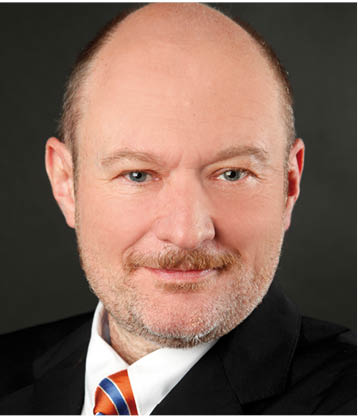
>> The National Action Alliance for People with Rare Diseases (SE) provides care for those affected in specialized centers, of which there are at least 31 in Germany to date. However, although, according to SE-Atlas 32, their most important task is to establish suitable cross-disease structures and processes for diagnosing people with an unclear diagnosis and suspicion of a rare disease, this is only partially successful in the standard care that has been established so far. This is mainly due to the basic problem that people who turn to a center for rare diseases with suspicion of a rare disease have usually already completed a diagnostic odyssey in which no doctor was able to find a suitable diagnosis and treatment for the symptoms . “Experience has shown that people with very complex symptoms often have accompanying psychological illnesses, with the associated symptoms in turn masking the signs of a rare disease and thus making diagnosis and treatment more difficult or delayed.” Prof. Dr. Helge Hebestreit, head of the Center for Rare Diseases - Northern Bavaria Reference Center at the Würzburg University Hospital, explains the problem of finding a diagnosis.
This always occurs when patients describe their symptoms, which have primarily organic or psychiatric causes, and the psychiatric ones in turn arise secondary to or as part of a rare disease or may even have been acquired independently of it. In standard care, however, an SE patient usually first encounters a doctor who finds it extremely difficult to classify and assign existing symptoms in a somatic patient, especially in the area of neurology, in the case of pain or exhaustion or even panic attacks may be primarily part of the problem or may have been acquired over the course of a long-term patient odyssey. If the admitting doctor recognizes the need for psychosomatic, psychiatric or talk therapy, he will refer the patient to an appropriate specialist. The problem is that the patient feels misunderstood or even sent away again. And if in doubt, you also have to wait up to a year for an appointment with a practicing psychosomatician. “This may delay the patient’s time until a confirmed diagnosis is made by years,” points out Hebestreit.
With and in the (probably worldwide) new form of care ZSE-DUO, things should be different. It examines whether joint patient care – consisting of a somatic specialist, e.g. B. for internal medicine or neurology, and a specialist in psychiatry and psychotherapy or for psychosomatic medicine and psychotherapy - the proportion of patients with a confirmed diagnosis increases and the time until this diagnosis can be shortened. “Our guidance system is intended to help a patient with a rare disease find their way into and through the medical system and to find the right contact person for their individual illness, no matter where they are, one door away, 3 or even 6,000 kilometers away,” Hebestreit explains the basic idea behind ZSE-DUO.
The primary endpoint on which statistical power is designed is the number of substantiated diagnoses that can truly explain patients' symptoms. So far, such reliable diagnoses (genetic diagnosis, organic diagnosis and additional psychiatric diagnosis) can be made in 30% patients. This percentage, the initiators hope, can be increased by 10%; although they certainly have hope for significantly more. Even so, even a ten percent increase would be not only statistically but also clinically relevant. “If we can make a reliable diagnosis in every tenth patient that we would not have had otherwise, that is definitely clinically relevant,” says Hebestreit in an interview with “Monitor Healthcare Research”. He would be happy about an even higher increase, but he also knows that this is not just a question of the effort required, but is also primarily due to the often very diffuse symptoms that accompany a large number of rare diseases. But also that something can simply be overlooked, “not often, but also not completely ruled out”.
But with the ZSE-DUO project, less than before. True to the motto that four eyes see more than two, the initial team (somatic doctor and psychosomatician/psychiatrist) can very quickly differentiate between which symptoms belong to SE or which have developed as a result of the suffering. This means that patients can be transferred to “continuing care, in the truest sense of the word” (Hebestreit) right from the start and without any further waiting time. To this end, a half-position position was created at each of the participating eleven centers for rare diseases for a specialist in psychiatric-psychosomatic diseases, who will support the clarification of the complaints from the start and, above all, on a long-term basis. An additional psychiatric/psychosomatic guide was also installed who, on the one hand, is intended to provide the patient with advice and support, but also to offer support to the resident doctor who does not know exactly where to best send a patient with a rare disease can, especially if it may have a multi-organ problem. The pilot must therefore know as precisely as possible what competencies are available in his own center, but also have a good overview regionally, throughout Germany or even worldwide in order to find the best individual options for each patient.
The treating centers are not afraid that patients could possibly be lost from their own home. The reason: The person affected should be looked after where they know best. And there are no financial constraints either, as the treatment of SE patients cannot be carried out cost-effectively in the current system.
That is why the new form of care that is being tested with ZSE-DUO is also relatively expensive. On the one hand, an additional psychosomatician/psychiatrist must be available, and on the other hand, the examination and anamnesis are carried out by both somatically oriented physicians and the psychosomatician/psychiatrist. This raises questions: How much time should/must this team have with the patient? How and who writes a doctor's letter? Or: How can established, evaluated standard screening questionnaires such as PHQ (Patient Health Questionnaire) or EQ5D (European Quality of Life 5 Dimensions) estimate the need for time with the psychiatrist? All of this flows into the manual to be created as part of ZSE-DUO, in which not only the goal of the project is explained, but also the dual pilot structure (non-psychiatrist and psychiatrist) is enriched with important detailed knowledge. This is intended to make it easier to transfer this new form of care into standard care after the end of the project (including evaluation) in mid-2022.
How this can happen is completely unclear. Because so far ZSE-DUO has been set up as a selective contract. The peculiarity of this type of contract is that it can be concluded with one or some, but not all, health insurance companies. “If the dual pilot structure of ZSE-DUO were to be permanent at some point, it should be available to all patients of all health insurance companies,” Hebestreit points out a contradiction in terms: Because that is exactly what is not possible with selective contracts. Politicians must act here if they want to.
But the project is far from there yet. Since October 2018, all people who turn to one of the eleven participating centers for rare diseases because of an unclear diagnosis and who are at least twelve years old have been invited to take part in the project. However, by September 2019, only 682 patients had been included in the control group (CG). The recruitment of the same number of patients for the intervention group (IG) has been ongoing since October 1, 2019 - around 200 have been included so far. Nevertheless, Hebestreit hopes to reach the necessary number by the end of the already extended recruitment period in September this year, despite the negative influences of the corona virus.
Once this phase is completed, the patients in the intervention group will be cared for with the new form of care for one year. And then, if it makes sense, given to a standard care provider as close as possible to your home. Since patients often live far away from the respective treatment centers and sometimes have severe mobility restrictions, in addition to the established structures of face-to-face consultations or psychosomatic care, telemedicine approaches are also being established as part of standard care.
Telemedicine is also intended to support the transition to standard care. For the patient communication required here, the Würzburg University Hospital (one of the few in Germany) has been using Skype for Business for years, with all communication running via and on a highly secure university hospital server. This option was offered to all ten other participating centers within the project so that they could use the software. <<
by: MVF editor-in-chief Peter Stegmaier