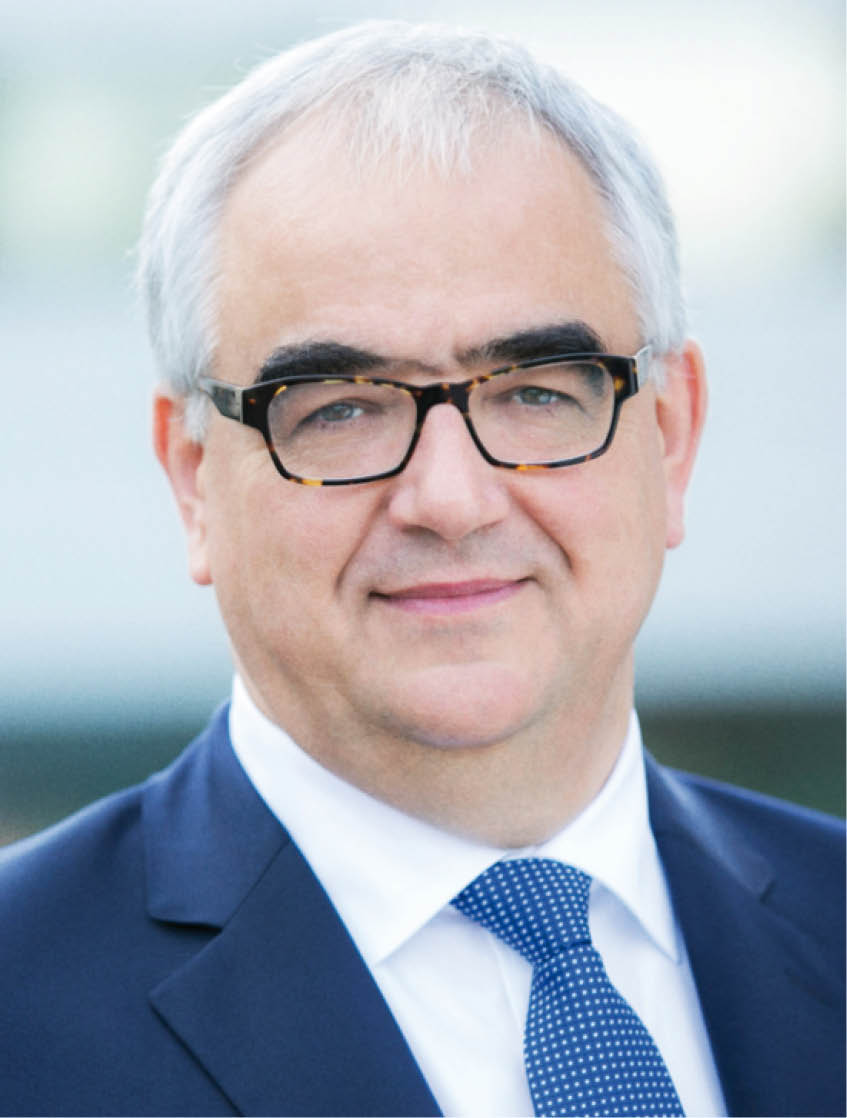
>> On July 10, 2020, Johns Hopkins University reported the current number of Covid-19 deaths: 555,166. Tragically, the number of deaths continues to rise, but it pushes out pretty much all other medical issues. Google currently (July 23, 20) provides 7,120,000,000 search results on this topic. On the other hand, let's take the no less important topic of antibiotic resistance (AMR): Google reports “only” 220,000 search hits here. What do you think is the reason for this discrepancy, given that it has been known for years that around 700,000 people die from AMR every year?1
And the situation is likely to get worse: by 2050, ten million people worldwide could die from uncontrollable infections.2 One reason for the discrepancy you mentioned is certainly that Covid-19 has been very close to us for months. Since then, Covid-19 has shaped our everyday lives and is also very present in the media. The pandemic reminds us how vulnerable we are to infectious diseases.
We have known about the SARS-CoV-2 pathogen since January 2020. We have known for many years that AMR seriously threatens health systems and societies worldwide. Nevertheless, without knowing the Google traffic numbers, I would claim that search results for AMR were not significantly higher before Covid-19 than they are today. Very few people are aware of how antibiotics are used everywhere and what dramatic effects it can have when they no longer work. It is taken for granted that research companies are constantly developing new antibiotics because resistance to existing antibiotics develops faster than new antibiotics come onto the market. Our health systems also do not recognize the value of new antibiotics.
How explosive are we talking about?
AMR causes global individual suffering for those affected and puts a strain on societies and health systems worldwide. However, there is no viable market for new antibiotics. Without a profitable market, however, there is no financing for corresponding research projects. Biotech companies developing new antibiotics often cannot find funding for clinical development. The consequence is that many research projects cannot be completed. Potentially effective antibiotics do not reach patients. That's dramatic!
And you now want to change that with the AMR Action Fund?
The AMR Action Fund aims to promote the development of innovative antibiotics. Our goal is to provide patients with two to four new, urgently needed antibiotics by 2030. To achieve this goal, we will target innovative biotech companies
support their research and development activities so that the antibiotics they develop have a chance of being used by patients
to arrive.
Briefly about the history: In 2018, seven major industrial nations came together to jointly research AMR. At the international level, countries work together as part of an intergovernmental task force on antibiotic resistance. In addition, the EU and the United States have set up a transatlantic task force on antibiotic resistance issues. The German Antibiotic Resistance Strategy, or DART for short, has also existed in Germany since 2011. Apparently that's not enough, why?
Combating antibiotic resistance is one of the most pressing challenges of our time. More and more bacterial pathogens are developing resistance to existing antibiotics. Antibiotic resistance not only claims countless lives worldwide. They undermine the achievements of modern medicine: common diseases that are actually easy to treat become untreatable. If we want to effectively contain this global threat, we must mobilize all our forces. The initiatives you mentioned are important. However, they are not enough. AMR are evolving faster than new antibiotics are coming onto the market. This forces us to continually look for new paths and opportunities and to forge new, strong alliances to accelerate the development of innovative antibiotics. The AMR
Action Fund is one such new, powerful alliance.
Has Covid-19 helped to create new attention here?
The Covid-19 pandemic has shown that research-based pharmaceutical companies have a crucial role to play in dealing with health threats and crises. AMR has the potential to pose even greater challenges to societies and healthcare systems worldwide than the current Covid-19 pandemic. More than 20 partners have come together in the AMR Action Fund to work together to counteract this threat. It is the largest collective risk fund ever set up to combat AMR. The partners have committed to collectively investing nearly $1 billion in the development of new antibiotics.
Johnson & Johnson is one of 23 companies contributing $100 million to the AMR Action Fund as a founding partner. Why are you doing that?
The founding of the AMR Action Fund shows the willingness of research-based pharmaceutical companies to work together to overcome the global challenge posed by antibiotic resistance - for the benefit of patients around the world. Together, with the AMR Action Fund, we can do so much more against AMR than any company alone!
Johnson & Johnson has long been committed to combating antibiotic resistance. Why is your company doing this when it is always said that - although antibiotic resistance causes enormous economic costs - there is currently no viable market for new antibiotics?
Our participation in the AMR Action Fund is the latest and a very important building block in our comprehensive commitment against AMR. But he is far from the only one. The current Antimicrobial Resistance Benchmark Report confirms that Johnson & Johnson has one of the largest antimicrobial pipelines of the major research-based pharmaceutical companies and is particularly committed to the global fight against drug-resistant tuberculosis.3 In addition to our own research activities, we work with various partners on effective ones Strategies and solutions against AMR. We want to help achieve the United Nations goal of ending tuberculosis by 2030.
For example, how?
For example, in September 2018 we launched a 10-year initiative to combat tuberculosis. The goal of this initiative is to prevent around 12 million tuberculosis infections and save 1.8 million lives by 2030. Together with our partners, we are committed to facilitating access to modern therapies and advancing the research and development of the “next generation” of TB therapies. The focus is on combating drug-resistant tuberculosis (MDR-TB), the world's only drug-resistant infection that is transmitted through the air. With approximately 230,000 deaths per year4, it accounts for a third of all global annual deaths related to AMR. The European Innovative Medicines Initiative AMR-Accelerator, which we have joined, pursues a similar goal. Here, too, the aim is to significantly accelerate the development of new active ingredients worldwide for the prevention and treatment of drug-resistant infections, including new drugs against DR-TB. As part of the PAN-TB Collaboration, we are also working with the Bill & Melinda Gates Foundation and other research companies to develop a universal treatment regimen to treat all forms of TB.
The tough question: Does J&J itself benefit from the find? The Director General of the IFPMA, Thomas Cueni, as co-initiator of the AMR Fund, stated in the online “Global Launch Event” that the donation volume should not benefit the donors, but rather many small start-ups and medical technology companies that are in... get involved in this field.
None of the companies involved in the AMR Action Fund benefit financially from this commitment. The aim of the AMR Action Fund is expressly not to promote research activities by member companies. The AMR Action Fund will support biotech companies' clinical research into innovative new antibiotics that address health needs defined by the World Health Organization (WHO) and the Centers for Disease Control (CDC). These include, for example, resistant bacteria and life-threatening infections. The AMR Action Fund will support these companies in their research and development activities so that the antibiotics they develop have a chance of reaching patients. Part of the investment will consist of providing technical support to the selected companies or giving them access to the expertise and resources of large pharmaceutical companies.
What criteria does the AMR Action Fund use to select the companies to support? And: Who ultimately decides which companies to invest in?
All AMR Action Fund investments are monitored by an independent scientific advisory board. The members of this advisory board are international experts from the fields of public health, antibiotic research and development, production, authorities and of course clinicians from the field of infectious diseases. The Advisory Board is tasked with monitoring the global antibiotic pipeline and recommending suitable candidates for investment to the AMR Action Fund. The AMR Action Fund will only invest in companies and compounds recommended by this Advisory Board.
The AMR Action Fund is certainly a right step towards tackling the AMR challenge. What measures are needed at the political level?
The AMR Action Fund can accelerate the development of innovative antibiotics through targeted investments for a period of time. We will also work with governments to ensure the development of a sustainable antibiotic pipeline. However, it is the responsibility of politicians to create market-oriented framework conditions that allow sustainable investments in the research and development of innovative antibiotics and ensure that the antibiotic pipeline meets patient needs. By closing a funding gap and guiding innovative pipeline candidates through the most difficult later stages of drug development, the AMR Action Fund is giving governments more time to initiate necessary policy reforms.
Dr. Stoffels, thank you very much for the interview. <<
The interview was conducted by MVF editor-in-chief Peter Stegmaier.
Establishment of the AMR Action Fund
On July 9, 2020, the AMR Action Fund, an initiative of the International Federation of Pharmaceutical Manufacturers & Associations (IFPMA), was announced with two simultaneous virtual events in Berlin and Washington, DC. With this online-only “Global Launch Event,” the largest initiative to date against antibiotic resistance was announced, which takes on the challenge of antibiotic innovation: 23 pharmaceutical companies from all over the world have joined forces and raised over $1 billion in donations. The fund is expected to be operational in the fourth quarter of 2020.
This pioneering partnership aims to make two to four new antibiotics available by 2030. However, as Thomas Cueni, Director General of the IFPMA, explained in his opening statement, the cumulative donations should not benefit the donors, but rather many small start-ups and medical technology companies that are active in this field. The Action Fund is a “real public health initiative” because the world is at risk of losing its most powerful healthcare tool: antibiotics. The reason for this is rapidly increasing antibiotic-resistant infections – also known as antimicrobial resistance or AMR. However, despite the enormous social costs of AMR, there is currently no viable market for new antibiotics. But in contrast to Covid-19, AMR is a foreseeable and avoidable crisis for which measures must be taken now.
AMR represents an emerging global crisis that has the potential to dwarf Covid-19 in terms of deaths and economic costs. While the death toll from Covid-19 tragically continues to rise, around 700,000 people are already dying from AMR every year. In some of the most alarming scenarios, it is estimated that AMR could kill up to 10 million people annually by 2050.
This is exactly what the new antibiotics are intended to prevent, which are to be supported by the Action Fund, which IFPMA, EFPIA and vfa announced with an online launch event. Joining us online were Hubertus von Baumbach, Chairman of the Board of Managing Directors of Boehringer Ingelheim, Emma Walmsley, CEO of GSK, Deborah Dunsire, President & CEO of Lundbeck, Vas Narasimhan, CEO of Novartis, Severin Schwan, CEO of the Roche Group and Dr . Paul Stoffels, MD, Vice Chairman of the Executive Committee and Chief Scientific Officer of Johnson & Johnson. While Schwan spoke of “breaking through the silos,” Stoffels warned that we should learn from the lesson of Covid-19 in order to be better prepared for global challenges. Stoffels continued: “The founding of the AMR Action Fund impressively shows the willingness of the leading research-based pharmaceutical companies to overcome this global challenge together – in the interests of patients all over the world. As a founding partner, Johnson & Johnson is investing $100 million to bring two to four urgently needed new antibiotics onto the market by 2030.”
Also present at this online event were Dr. Tedros Adhanom Ghebreyesus, Director General of the World Health Organization, Werner Hoyer, President of the European Investment Bank, and Jeremy Farrar, Director of the Wellcome Trust.
Biopharma companies and foundations supporting the AMR Action Fund: Almirall, Amgen, Bayer, Boehringer Ingelheim, Chugai, DaiichiSankyo, Eisai, Eli Lilly and Company, GlaxoSmithKline, Johnson & Johnson, LEO Pharma, Lundbeck, Menarini, Merck, MSD, Novartis, Novo Nordisk, Novo Nordisk Foundation, Pfizer, Roche, Shionogi, Takeda, Teva, UCB.