>> Why is telemonitoring useful for heart failure?
Heart failure is the most common reason for admission to hospitals, not as an elective admission, but through the very complex emergency department. Around five percent of patients in a hospital emergency room receive a diagnosis of heart failure. Telemedicine is a great advance at this point because it allows us to identify patients at risk in a timely manner and to provide them with appropriate treatment - on an outpatient or inpatient basis - at an early stage. If we succeed in this, we will prevent the ineffective admission of heart failure patients via the emergency room, which has been ineffective for many years. That is why the G-BA decision leads to a win-win situation for both sides. This is even more true when you consider the effects of demographics, as the prevalence of heart failure increases as the population ages.
How quickly will this new care option become widely established in practice?
The G-BA's decision of December 15, 2021 was - if you like - the announcement signal and the now published agreement on quality assurance measures for telemonitoring in heart failure was the actual starting signal. Corresponding offers will be consolidated over the next one to two years and will result in suitable patients receiving these offers. Above all, it remains to be seen who can actually provide the appropriate resources.
Who can and who can't?
The G-BA has clearly stated that
The indication for telemedical care can only be made by the so-called primary treating doctor. This means that a doctor with KV approval must prescribe this application in a similar way to a medication and - if he is not a cardiologist himself - refer the patient to a telemedicine center - a so-called TMZ. The TMZ, in turn, is operated by practicing cardiologists who are able to maintain a telemonitoring system as set out in the quality assurance agreement agreed between the KBV and the Federal Association. As cardiologists, we take on an important role in the care system because we can offer very low-threshold outpatient appointments from which patients with heart failure will benefit. Fortunately, the treatment options for these patients in the area of medication, pacemakers and catheter-supported interventions have expanded massively in recent years. The new guidelines for heart failure therapy, which were republished at the European level last autumn and which are now available in German translation via the German Society for Cardiology, reflect this development.
That means?
Now that we have new, more effective medications available, we can not only formulate a monitoring offer, but also a therapeutic offer, which will mean that we can stabilize patients much better than before. We can already see that. With the options currently available, we can give these patients a much better quality of life and maintain their independence, especially in old age. I see this as a central task that we as practicing cardiologists have to fulfill.
What does it take for the new care to become established in practice?
Many colleagues are currently working on the topic. In many cases it is important to formulate a joint offer with the local clinics. It is currently unclear how many telemedicine centers make sense. We assume that at least 300 patients should be cared for per center to ensure an effective structure. We started here in Hamburg on behalf of the Cardiologicum in March because we can rely on an established structure with well-trained non-medical employees.
What are the basic requirements?
Above all, it must be ensured that the technical requirements are met: this includes the trouble-free daily transmission of weight, blood pressure, heart rate and personal well-being. Alternatively, it involves transferring the function of modern pacemaker units. Incoming alarms from these measurements must be processed daily; there are various options here. A tried and tested solution is to install some kind of pre-filtering by non-medical staff. Each practice can set this up itself or use appropriate providers and service companies. For this purpose, we use the services of Health Care Systems GmbH (HCSG) from Pullach near Munich. The latter solution allows us cardiologists to devote ourselves to our core mission: to provide critical patients with the best possible medical care.
How do you manage telemonitoring on weekdays in the telemedical center, especially when you think about new processes such as device logistics, data transmission and evaluation?
The framework is clearly set through the quality assurance agreement for telemedicine in heart failure. Every cardiologist who wants to operate and use this system must think about how the additional effort involved in connecting this patient clientele can be guaranteed. The effort should not be underestimated, as the G-BA, for example, requires data viewing every working day, as this was a prerequisite in the studies on which the decision was based. We must now try to get as close as possible to the study conditions under which the benefit was demonstrated in routine care.
Can a cardiology center like yours do this without help?
The question is not whether we could, but whether it would make sense. We will certainly not become technical service providers to ensure the supply of patients with appropriate devices such as external monitoring monitors or ensuring the transmission of internal data. External service providers such as HCSG, who make their technical systems available to us, will do this for us. Of course, these must be platforms that are as easy to use and clear as possible, that are as secure as possible, reliably available and as easy as possible to establish in our everyday practice. It is important that my employees and I have direct access to the patient data in order to have an overview of when a patient should be called in or perhaps just referred to the family doctor closer to home.
Are you actually starting from scratch now?
No, that would be fatal. We were able to rely on both established internal structures and a very experienced service provider who has been practicing telemonitoring for years as part of selective contracts with health insurance companies. We can now benefit from this knowledge.
Which tasks does the doctor take on personally and which tasks can be better carried out by a service provider?
For example, I don't want to have anything to do with it if our patients' devices malfunction or - for whatever reason - there is a problem with the transmission of data because some server or some data transmission is not available. But I would like to know very precisely and very promptly if one of my patients is actually getting worse, which can be seen from the data transmitted daily. These peaks need to be filtered out, but this is already relatively possible today.
Finally, a look into the future. Where do you think telemedicine will be in 2030?
It won't take that long. Today, in cardiology, we rely heavily on image data such as ultrasound examinations; In addition, biomarkers of heart failure from the blood are available to us. It will certainly take a while before we get such data via video consultation. In many cases we still have patients in the practice who have a known heart disease but are basically stable and are well cared for by their family doctor. Telemedicine now helps us to use our resources even more effectively than before with unstable patients who can benefit from the new therapy options. Better pre-filtering of patients based on the transmitted data can be used to decide whether a personal appointment is really necessary. We want to use the resources that will be freed up to establish early contact with new complaints at any time. This is the way forward with which we can not only sustainably improve the care of our patients, but also conserve resources because unnecessary hospital admissions can be avoided. The absolute prerequisite is a motivated and responsible patient who is willing to cooperate. However, we can often assess this quite well in close cooperation with the family doctors in charge. <<
Prof. Bergmann, thank you for the interview.
The interview was conducted by MVF editor-in-chief Peter Stegmaier.
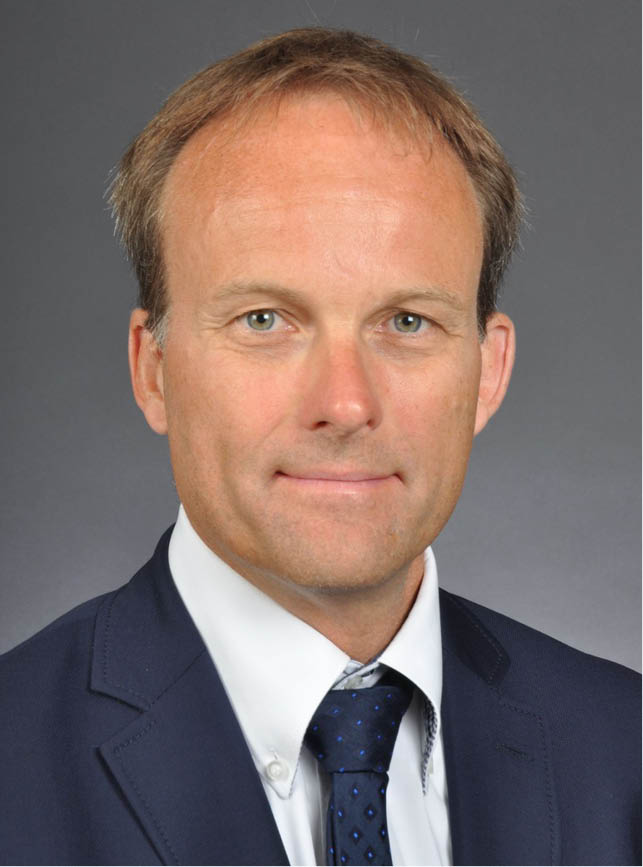
Prof. Dr. Martin W. Bergmann
is a specialist in internal medicine, cardiology and intensive care medicine at the Cardiologicum Hamburg. He has further training in heart failure and interventional cardiology. His specialty is catheter-supported therapies for heart diseases, including the implementation of complex coronary and valve interventions, the treatment of heart failure including structural heart diseases with optimized drug therapy, interventional correction of valve defects and options for interventional therapy for diastolic heart failure