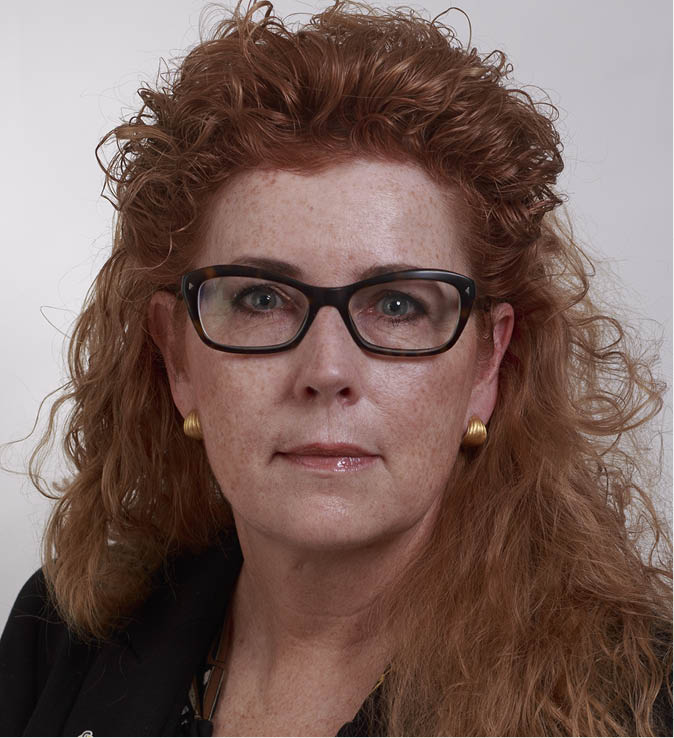
Dr. Diehl, you were Digital Change Manager from 2018 to 2021 and have been Chief Transformation Officer of Essen University Hospital since 2022. Apart from the title, what has changed for you personally?
This entails, above all, a much higher emphasis on the topic of Di-
Digitalization within our organization is taking place. Previously, as Digital Change Manager, I was practically a one-woman show; now, as CTO, I lead a staff unit for digital transformation. Since this unit also has dedicated staff, our reach within the organization is expanding. And: We're becoming faster!
How many employees do you have?
There are four full-time staff members directly on site, as well as fairly generous access to a whole staff of other people who are primarily employed in other organizational units.
It's surprising for a hospital, even a university hospital, to maintain such a staff position at all. Where are you structurally integrated?
I am located directly within the executive board, between the medical and the commercial directors. This demonstrates, firstly, the importance we place on digitalization, and secondly, that we are meant to fulfill a cross-cutting function – not only as a connecting element between the board departments, but also between our locations – from the university hospital itself to several other hospitals belonging to the group. Digital transformation as such affects us all, the group as well as each individual hospital and ultimately every single employee.
At which EMRAM (Electronic Medical Reports Adoption Model) level would you classify your house?
The international EMRAM system has already proven itself in
What DigitalRadar has shown is not applicable to Germany – and therefore not to us either.
Because Germany – as is so often the case – is simply very different from all other countries in the world?
Not this time. The main problem with EMRAM lies in its very system. In other words, with EMRAM, you can only advance from one level to the next if you have fully completed the level below it. The key attribute is "fully.".
Please explain this using an example.
Let's take radiology as an example. Here, there's the picture archiving system, which EMRAM only expects to be implemented at a higher level. In Germany, over 95 percent of all hospitals have such an electronic archiving system, whereas very few hospitals have a closed-loop medication system installed. Given this, one has to classify virtually all German hospitals as being at level 0.
Do you have a closed-loop medication system in Essen?
Not yet, but we have already submitted a corresponding funding application under the Hospital Future Act (KHZG). All kinds of assessments and, above all, classifications, such as those that can be carried out via EMRAM or DigitalRadar, are quite helpful because they at least provide a point of reference and a benchmark, but unfortunately not much more than that. The important thing is that the processes within the individual digital systems function and are interconnected, which cannot be represented by any simple and therefore rather generic IT comparison tool.
Could the EMRAM classification, which originated in the USA, be adapted for Germany?
DigitalRadar itself is very good and significantly more suitable for us than EMRAM. Therefore, I welcome it very much, even though it makes it abundantly clear that the majority of German hospitals still rank very low.
In the DigitalRadar Hospitals project – project partners according to § 14b of the Hospital Financing Act are HIMSS Europe, the Institute for Applied Health Services Research (inav), Lohfert & Lohfert, the Leibniz Institute for Economic Research (RWI) and the University of St. Gallen – most German hospitals are currently at the predicted EMRAM level „0“ due to a lack of equipment for digital documentation and a lack of implementation of interoperability.
Which simply means that – to put it negatively – German hospitals are not doing particularly well when it comes to digitalization. Or – to put it positively – there is considerable room for improvement.
What about data security?
This data is not yet being collected here, but it could certainly be collected in a second wave of data collection. As a university hospital, we have been audited as a so-called KRITIS facility, meaning a hospital with critical infrastructure. This audit involved a significant amount of work for us, but it will eventually be required of all German hospitals, as KRITIS will increasingly include other hospitals with different bed sizes.
This means that every hospital must comply with special security guidelines regarding its IT infrastructure, primarily to protect itself against hacker attacks.
Exactly. Initially, this only applied to maximum care hospitals, based on bed size. Since these minimum requirements are mandatory, significant resources must be pooled to make everything as secure as possible against external attacks. However, this is just one aspect of digitalization, a negative one that must always be considered, but it shouldn't distract us from the opportunities digitalization can offer in the future. And I haven't even mentioned the integration of AI applications, which is sure to come our way in the near future.
In connection with the Hospital Future Act, well over 6,000 applications have now been submitted. The main focus of these applications is quite clear – for example, patient portals and digital documentation, which together account for around a third of the applications. In your opinion, are these the digital areas where one can quickly score points in order to provide the required proof of digitalization as quickly as possible, or are they precisely the categories that are truly important?
Every hospital would be well advised to build its digital strategy on a sound foundation. This means that the first priority must be to create an electronic documentation system for the entire patient journey in a hospital – from admission to discharge and ideally beyond. A hospital that doesn't yet have an electronic patient record system where everything is comprehensively documented electronically would be well advised to create precisely this foundation. And everything else can be built upon this, whether it's patient portals, which we've been working on for years, or closed-loop medication.
Which is hidden in the KHZG funding area "Medication Management".
Closed Loop is much more than just a medication management system. It refers to a closed-loop system in which the correct medication for each individual patient is prepared, blister-packed, and then delivered to their bedside. This is intended to replace the often error-prone manual process on the wards, where, ideally, a four-person team has long been involved.
The eye principle has been introduced when medicines are manually filled into containers for each patient, but everyone knows that mistakes can happen under stress.
Since December 2021, you have been a member of the "National Expert Panel for Interoperability in Healthcare".
The abbreviation sounds a bit simpler: Interop or IOp Council.
Interoperability simply means that data which you want to document electronically, exchange with each other and possibly even store in a research database, must be structured in a certain way.
First, it's crucial to distinguish precisely what kind of data we're talking about: internal data within an organization or data generated anywhere in the healthcare process? The most important data by far naturally originates from the healthcare process itself, yet in Germany, we're unfortunately still in the very early stages when it comes to interoperability. Everyone pursues their own particular interests, cultivates their own projects, and policymakers have allowed far too little benefit from readily available data for far too long. Therefore, the establishment of the Interop Council by the Federal Ministry of Health (BMG) is a very welcome initiative. Its aim is to define international nomenclatures as well as semantic and syntactic standards and, accordingly, to design interoperable processes.
With only seven members.
The fact that the Council only has seven official members is not a problem at all, because there are working groups for various use cases, to which a large pool of experts has already responded. These include not only IT specialists and users, but also representatives from health insurance companies, associations, professional societies, and research institutions. Therefore, I am hopeful that the Interop Council will quickly lead to something in terms of reusable inter-
This involves developing operable standards that can then be integrated into other processes. Incidentally, anyone who feels qualified can apply via the national knowledge platform for interoperability, or INA for short (1).
Does something like this exist abroad?
Not to my knowledge; that would truly put us at the forefront in Germany. The first two working groups have already started, and from the more than 70 confirmed experts, two working groups have been formed for an inventory and oncological interoperability.
What to do until there are initial results?
Above all: don't wait! We in Essen have solved the problem for ourselves by establishing our own technical platform based on an open, universally recognized standard that will certainly prevail here as well. This is the Fast Healthcare Interoperability Resources standard, or FHIR for short, pronounced like "fire." Incidentally, this is a standard that is also reflected in the new ISiK basic profiles of gematik.
These "Information Technology Systems in Hospitals," or ISiK for short, are intended – according to gematik – to connect all IT systems used on-site in hospitals, ensuring that important information reaches its intended recipients directly. The ISiK standards are also binding and must be implemented within a 24-month transition period, with the first phase of implementing the basic profile to be completed by summer 2023.
It's good that we're already using FHIR. But we've gone even further, having developed the FHIR specification for patient questionnaires last year as part of gematik's ISiK Open House process, which can then also be used by other hospitals. Incidentally, all our other internal data systems are also interconnected via our FHIR platform – from the radiology information system and the laboratory information system to the electronic patient record. This means that the data within our university hospital is interoperable and can be processed together.
Has the IOp Council, created by the Health IT Interoperability Governance Regulation (GIGV), already met?
The Interop Council has held two public meetings so far. At the first meeting, it was decided, among other things, to establish the aforementioned working groups: one for the oncology developer journey and the other for mapping FHIR resources.
Is there no overview of this?
Not at all. Everyone collects their own data and uses many, often proprietary, formats that are certainly not compatible with interoperability. Further working groups will be established successively in upcoming public meetings. Each working group will be chaired by a member of the Council, and experts who have previously registered via INA can participate. We have already received a gratifying number of applications for these expert groups, so I am hopeful that we can implement seamless, interoperable pathways, as free as possible from vested interests.
Another major initiative was the medical informatics initiative, launched in 2016, in which all 33 university hospitals joined forces to form four consortia. The aim was, among other things, to establish data integration centers and create specialized IT solutions for specific applications.
The application process for the next funding period is currently underway. This period departs from the strict division into four consortia by allowing applications for over 20 cross-cutting application examples – the use cases – in which medical informatics processes for specific applications will be developed across the four consortia. In my view, this is the right approach because many aspects cannot be clearly assigned to a single cluster, but rather to a "patient journey," which, in addition to interoperability, must also ensure appropriate patient orientation and information.
Wasn't that taken into consideration from the start?
This aspect has already been considered, but is very difficult to implement in Germany's federal system. While there is a clear "Broad Consent" form for patient information, developed by the National Steering Committee of the Medical Informatics Initiative in a working group, this alone took a good two and a half years to complete. This was because not only did each state data protection commissioner want to contribute their own proposed changes, but the Federal Data Protection Commissioner also had suggestions that had to be taken into account. Unfortunately, this has turned the intended "one-pager" into an eight-page document that every patient has to read, understand, and sign. I really wonder to what extent this alone might give patients the impression that their data is being sold or used for some other purpose. That would be a shame, because it would ruin something good that could lead to entirely new and important research approaches.
Is this about personalized data?
Not at all, the data is pseudonymized and anonymized. The research isn't about what Mr. Müller or Ms. Schmidt have, but about insights that can be gained from many similar or identical datasets using artificial intelligence, for example, to identify specific risk factors. However, this requires as much data as possible and, consequently, a large number of patients who must actively consent to the use of their data.
There is frequent talk of a research data structure that spans Germany or even Europe. How far along are we in that regard?
Much too far away than we would like from a scientific perspective.
And certainly much further removed from the actual wishes of the patient than many data protection advocates think.
It is perfectly understandable, especially for oncology patients, that their data is used, not for their personal benefit, but rather to help in addressing disease patterns, whether for prevention, early detection, or future treatment. In Germany, we are certainly right to have an extremely critical view of the restricted release of health data. Although most people accept all cookies without question, use loyalty card systems, and are completely unaware of why they receive personalized advertising, they must give their explicit consent for every use of their health data, even if it is pseudonymized. This should not be interpreted as an argument against data protection, but rather as a call for greater public awareness about the importance and benefits of health data.
How do we get to a point where health protection is given a similar level of importance as data protection?
The fact that the coalition agreement of the current federal government states that it wants an opt-out solution for the electronic patient record and not an opt-in as before is already a sign of the famous right step in the right direction.
If I had been treated at the University Hospital Bonn and – for whatever reason – were subsequently admitted to your hospital in Essen, would my data be available electronically – as of today?
Unfortunately, we're not there yet. While we could, we're only permitted to do so if it explicitly involves the co-treatment of a patient, not in the case of re-hospitalization, which is likely what this will be. Furthermore, there is currently no seamless data transfer system in Germany – whether between university hospitals, other hospitals, or even between different sectors.
There are quite a few interconnected research consortia, especially in the field of cancer.
Of course, comprehensive cancer centers, for example, exchange data when it involves direct co-treatment. In such cases, however, the patient in question has given their consent, and a secure data exchange mechanism exists that must be set up, monitored, and continuously backed up.
Since this is something that has been practiced, one might think that such systems could simply be scaled up if there were the political will.
That would certainly be possible. And it would also be in the patients' interest if not only university hospitals, but all other hospitals and also private practitioners had access to all the data they need to treat a patient. But we still have a long way to go.
What about the electronic patient record?
If it were widely available, the electronic patient record (ePA) would be a tool that would allow every patient to transfer their data from one healthcare provider to another. Not just in the form of PDFs, but in a truly structured data format.
When will we have a telematics system that deserves the name?
At the latest in ten years. The pandemic has drastically shown us that we have a huge deficit in digitalization. The next generation of patients, whose digital lives have long been established, will further contribute to the fact that we will see initial results within the next two to five years.
Are there any countries where it works better than here?
If you subtract the exchange of health data from health data protection and, above all, the protection of personal data, then yes. But none of us want that. I much prefer the rather pragmatic solution of some Scandinavian countries. They have a more relaxed approach to data protection, and they also generally have much smaller populations and far fewer healthcare providers, and therefore fewer vested interests.
Dr. Diehl, thank you for the interview.
The interview was conducted by MVF editor-in-chief Peter Stegmaier.
1) https://www.gematik.de/telematikinfrastruktur/iop
Dr. Anke Diehl, MA.
She is Chief Transformation Officer at Essen University Hospital and heads the Digital Transformation Unit. A licensed physician with extensive clinical and scientific experience (neurology, psychiatry, neuroradiology, and radiology), she is responsible for implementing innovative projects within the framework of the Smart Hospital's digitalization strategy. Since March 2021, she has been the consortium leader of the leading-edge AI in Medicine cluster "SmartHospital.NRW." She is a member of numerous committees, such as the scientific advisory board of Medizin.NRW, the board of SMITH (Medical Informatics Initiative), the scientific advisory board of the Institute for Artificial Intelligence in Medicine (IKIM), and the medical advisory board for the development of a telematics infrastructure for the healthcare system in North Rhine-Westphalia. In December 2021, the digital health expert was appointed by the Federal Ministry of Health (BMG) and gematik to the seven-member expert panel "Interop-Council.".