


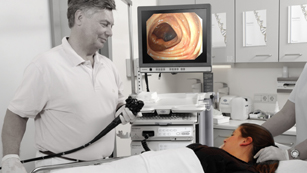
New study confirms high effectiveness: preventive colonoscopy reduces mortality rate in women by 40.5 percent
28.04.2021 10:20
In autumn 2002, preventive colonoscopy was introduced as a statutory health insurance benefit. This examination can be used to detect and remove precursors of colon cancer. In this way, new cases can be reduced and the chances of recovery improved. Researchers at the German Cancer Research Center (DKFZ) have now calculated the success of this cancer prevention measure.
From 1977 to September 2002 in Germany there was only the guaiac-based test for occult blood in the stool as a service provided by statutory health insurance companies for the early detection of colon cancer. After Felix's death in 2001, the Felix Burda Foundation and other partners began to bring colon cancer prevention to unprecedented attention in the public eye and intensively promoted the improvement of colon cancer prevention through colonoscopy in the media and politically Precautionary benefits introduced for all legally insured people aged 55 and over.
Thanks to preventive colonoscopy, which is now available to men aged 50 and over, polyps (precursors to colon cancer) can be discovered and removed painlessly. In addition, one percent of preventive colonoscopies detect colon cancer, most of which is in an early stage, which in turn significantly improves the chances of recovery.
Fewer people affected, fewer deaths
Scientists at the DKFZ have now calculated how the rate of new cases and mortality have changed since the introduction of statutory preventive colonoscopy:
-
From 2000 to 2016, the age-standardized rate of new cases fell by almost a quarter for both sexes.
-
Between 2000 and 2018, the mortality rate for men fell by 35.8 percent, from 29.6 to 19.0 per 100,000. For women it even increased by 40.5 percent, from 19.0 to 11.3 per 100,000.
“We are observing declines in new cases and mortality particularly in the age group aged 55 and over, for whom colonoscopy is offered. Together with the results of existing studies, these figures no longer leave any doubt that the offer of statutory colon cancer screening and in particular colonoscopy is a highly effective tool for cancer prevention,” says Prof. Hermann Brenner from the German Cancer Research Center.
From the perspective of epidemiologists, this significant decline in colon cancer incidence and mortality, despite demographic developments, is primarily due to the effectiveness of colon cancer prevention.
Around 8 million insured people have used preventive colonoscopy since 2002, which has prevented around 145,000 deaths and 306,000 new cases. But around 61,000 people are still diagnosed with colon cancer every year and almost 24,600 people die from the disease.
Numbers that are shocking, given the existing preventive options for this disease.
Hermann Brenner is convinced that the numbers could be halved within the next ten years if more people took advantage of the colon cancer screening offer. His appeal to politicians: “We urgently need to improve the invitation process for colon cancer screening in order to motivate significantly more people to take the opportunity to prevent cancer.”
Christa Maar, board member of the Felix Burda Foundation, finds it difficult to contain her displeasure: “If you see these success figures from the last 19 years and at the same time hear how many people could be protected from colon cancer in the future, the attitude of the GBA, the blocking all changes to the invitation system so far is all the more incomprehensible. The current participation rates of 2-3 percent of those eligible are unacceptable. We need to focus on increasing participation rates in colorectal cancer screening. We can no longer allow so many people in our country to unnecessarily suffer the same fate that cost my son his life!”