


Fewer and fewer women are taking birth control pills
25.10.2021 11:16
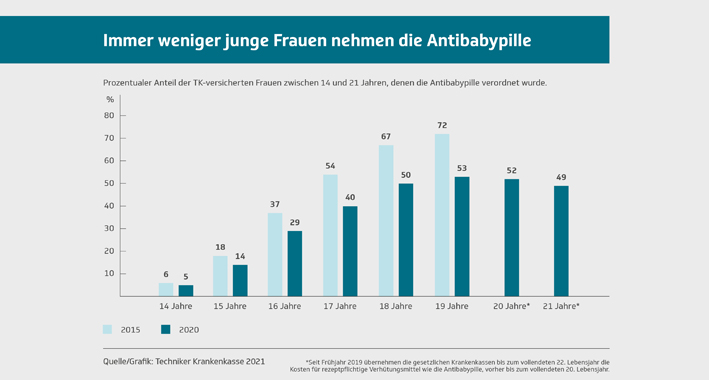
The proportion of young women using contraceptive pills continues to decline. This is shown by a current evaluation by the Techniker Krankenkasse (TK). According to this, a third (33 percent) of female 14 to 19 year olds were prescribed the birth control pill last year. Five years ago this figure was 44 percent.
The decline is particularly strong among 18 and 19 year olds - i.e. in the age groups that take the pill most often: In 2015, 67 percent of 18-year-old TK-insured women received at least one pill prescription, but in 2020 the figure was only 50 percent . A similar change can be seen among 19-year-olds - the proportion of those who were prescribed the birth control pill in this age group fell from 72 percent to 53 percent.
Discuss and weigh risks
“We have seen that prescriptions have been steadily declining for several years. We can only speculate about the exact reasons. In any case, the attention on the topic is higher than it was a few years ago,” says Tim Steimle, pharmacist and head of the pharmaceutical department at TK. This is also related to the reporting on pills of the so-called newer generation (3rd and 4th generation), which have a higher overall risk of thrombosis. The analysis shows that the proportion of prescriptions for birth control pills of the newer generations has decreased somewhat. In 2020, almost 47 percent of TK-insured pill users took a pill from this generation. “It is important to us that young women discuss and weigh up risks together with their doctor,” says Steimle. “And not just with the pill. Other hormonal contraceptives also develop their contraceptive effect with so-called gestagens from different generations.”