


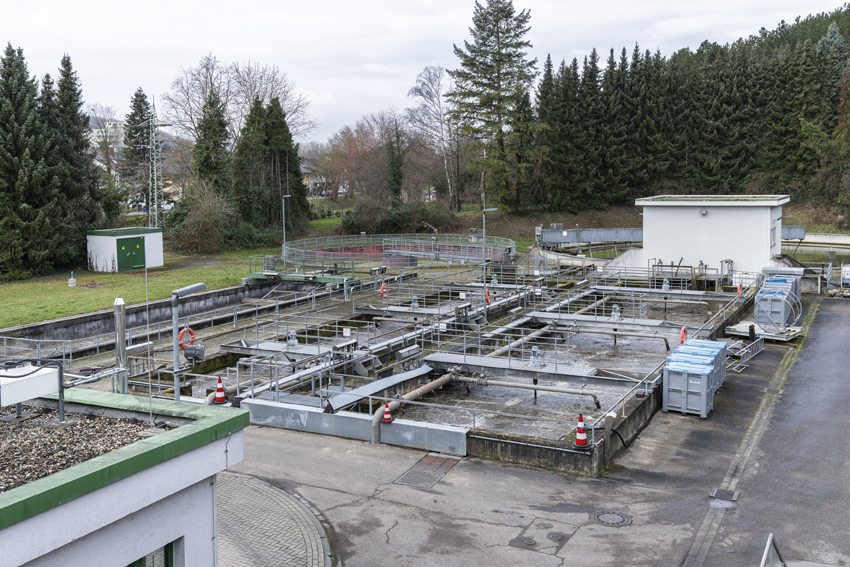
Nationwide pilot project for Corona detection in wastewater
23.02.2022 10:21
Coronaviruses can already be detected in wastewater several days before the first symptoms of illness appear. This offers the opportunity to collect the number of cases more quickly, to map the infection process more precisely and to detect new COVID-19 variants and their spread earlier. The “Systematic monitoring of SARS-CoV-2 in wastewater” project group coordinated at the Karlsruhe Institute of Technology (KIT) wants to leverage this potential and examine whether and, if so, how a wastewater-based COVID-19 early warning system can be implemented in Germany. The European Union is funding the project with around 3.7 million euros.
“This cross-departmental research project offers the opportunity to pool scientific know-how and previous experience in wastewater monitoring across Germany and to systematically use it to contain the COVID-19 pandemic,” says Dr. Verena Höckele, project coordinator at the Karlsruhe Project Management Agency (PTKA) at KIT.
20 locations nationwide are gradually joining the pilot project, which started in February and will run for a year. Twice a week and over a period of 24 hours, mixed water samples are taken from the inflow of the sewage treatment plants, processed and analyzed using a PCR test. The results should then be linked to the pandemic data from the local health authorities and, if possible, incorporated into the pandemic situation assessment.
Detect virus variants faster with wastewater monitoring
“The process of determining the frequency and dynamics of SARS-CoV-2 viruses via municipal wastewater has already been successfully tested in Germany in the course of individual research projects,” says Professor Harald Horn, head of the water chemistry and water technology department at Engler-Bunte- KIT Institute. Horn is convinced that it could not only help to better estimate the number of unreported cases of infected people, but also to detect the spread of variants and mutations more quickly than is possible by testing individual people.
In the project, the researchers now want to use comparable results to analyze which methods could be suitable for comprehensive monitoring and which data need to be collected in order to be able to detect coronaviruses in complex wastewater. This is currently evident in the detection of the Omicron variant, whose virus fragments are primarily excreted via the upper respiratory tract and, compared to the Delta variant, only a third of which ends up in the wastewater. A particular challenge for scientists is therefore to further improve the quality of sample taking, laboratory analysis and data evaluation.
At the end of the pilot phase, the decision is made as to whether comprehensive wastewater monitoring or more representative monitoring should be recommended for Germany. Such a comprehensive early warning system against COVID-19, which would also be suitable for other pathogens such as polio or flu viruses, is already in use in the Netherlands, Canada and Australia.
ESI-CorA: Funding and project partners
The European Union is funding the “Systematic monitoring of SARS-CoV-2 in wastewater” (ESI-CorA) project with around 3.7 million euros as part of the ESI (Emergency Support Instrument). It was initiated by the Federal Ministry of Health, the Federal Ministry for the Environment, Nature Conservation, Nuclear Safety and Consumer Protection and the Federal Ministry of Education and Research. The project sponsor Karlsruhe (PTKA) at KIT coordinates the project; in addition to KIT, partners include the Technical University of Darmstadt, the Federal Environment Agency and the Robert Koch Institute. A steering committee made up of representatives from the federal government, states and associations will decide on whether to consolidate the results after the pilot project ends in February 2023.