


Zi: High proportion of new cases among new patients
09.09.2022 11:03
Previous analyzes by the Central Institute for Statutory Health Insurance (Zi) have shown that around 20 million people with statutory health insurance were treated as new patients in a contracted doctor's office in the fourth quarter of 2021. New patients are those with statutory health insurance who have not been treated by the respective practice for at least two years (eight quarters). In a further study, the Zi investigated the question of which patients and which practices the new patient regulation could be particularly important for. In addition to a worsening of the course of the disease, which may require additional diagnostics or treatment, the focus is particularly on the group of patients who have been treated as new patients because of a newly diagnosed illness.
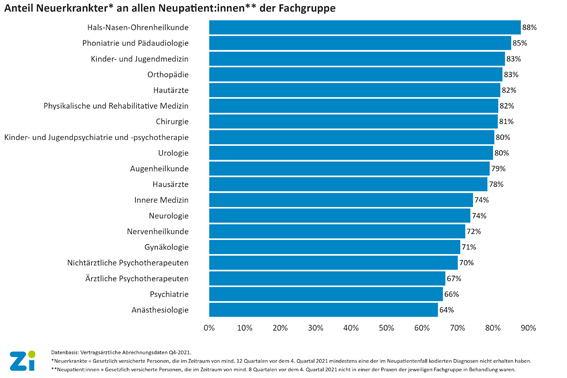
The Zi comes to the conclusion that 82 percent of all new patients are newly ill patients. Depending on the specialty of the practice, there are also different proportions of newly diagnosed patients among new patients due to the different treatment spectrum. In otolaryngology, their proportion is 88 percent (maximum), and in anesthesiology it is 64 percent (minimum).
Further analyzes also make it possible to examine individual causes of treatment. In ear, nose and throat medicine, one in three of a total of 1.9 million new patients were treated for diseases of the outer ear. Of these patients, 76 percent were newly diagnosed. For dermatologists, benign neoplasms dominate the illnesses of new patients. Around 630,000 of the 1.7 million new patients of dermatologists (38 percent) were diagnosed with this diagnosis as part of new patient care. 76 percent of those affected were newly diagnosed.
The results for child and adolescent psychotherapists (KJPT) show that the new patient regulation also initiates the start of a longer treatment process. Of the total of around 58,000 new patients at KJPT, more than 18,000 children, i.e. around one in three children, received a diagnosis of a behavioral and emotional disorder. 60 percent of these children were newly diagnosed. “The results show very clearly which groups of patients in the practices of the individual disciplines benefit from the new patient regulation: It is primarily new patients who need prompt medical treatment. Abolishing the regulation cannot be in the interest of medical care for this group of patients,” said Zi board chairman Dr. Dominik von Stillfried.